
We’ve all heard the adage, “garbage in, garbage out.” In the world of artificial intelligence and machine learning, this sentiment rings truer than ever. The performance of even the most sophisticated algorithms hinges on the quality of the data they are trained on. And in many cases, especially for tasks involving perception, natural language understanding, or complex decision-making, raw data needs to be meticulously labeled and annotated. This isn’t a simple, automated process; it’s a human-intensive endeavor, often requiring specialized knowledge and careful management. We, as practitioners and innovators in the AI space, understand that building robust and scalable AI systems means mastering the art and science of data labeling and annotation pipelines, particularly in how we manage the “human-in-the-loop” supply chain.
We recognize that the foundation of modern AI is built upon vast datasets. Without labeled data, supervised learning, the dominant paradigm in AI today, simply wouldn’t exist. We rely on humans to bridge the gap between raw information and machine-understandable insights.
What is Data Labeling and Annotation?
For us, data labeling and annotation refer to the process of assigning descriptive tags or annotations to raw data. This can involve anything from drawing bounding boxes around objects in images, transcribing audio files, categorizing text, or segmenting medical scans. We’re essentially teaching machines to see, hear, and understand the world as we do.
Why Do We Need Humans in the Loop?
We are keenly aware that while AI excels at pattern recognition, it struggles with ambiguity, nuance, and contextual understanding. Humans bring these critical cognitive abilities to the table. We can interpret complex scenarios, apply common sense, and make subjective judgments that are currently beyond the capabilities of even the most advanced algorithms. We view the human-in-the-loop approach not as a temporary workaround, but as a fundamental and enduring component of responsible AI development.
The Impact on Model Performance
We’ve seen firsthand how high-quality labeled data directly translates to superior model performance. Conversely, poorly labeled or inconsistent data can lead to biased models, erroneous predictions, and ultimately, a failure to achieve desired outcomes. We understand that investing in quality labeling is not an optional expense, but a strategic imperative.
In the realm of data labeling and annotation pipelines, understanding the intricacies of managing the human-in-the-loop supply chain is crucial for optimizing machine learning workflows. A related article that delves deeper into this topic is available at Shilotri, where you can explore various strategies and best practices for enhancing the efficiency and effectiveness of your data annotation processes. This resource provides valuable insights that can help organizations streamline their operations and improve the quality of their labeled datasets.
Designing an Effective Annotation Pipeline: Our Strategic Approach
Building an efficient and scalable annotation pipeline is a complex undertaking. We approach this challenge with a structured methodology, recognizing that a well-designed pipeline is crucial for maintaining quality, controlling costs, and accelerating development.
Defining Annotation Guidelines and Ontologies
We begin by meticulously defining our annotation guidelines. This is perhaps the most critical step, as it sets the standard for consistency and accuracy. We collaborate closely with domain experts to create comprehensive, unambiguous instructions that leave no room for misinterpretation.
The Importance of Clear Instructions
We emphasize clear, concise, and illustrated instructions. We’ve learned that ambiguity in guidelines is the primary source of annotation errors. Therefore, our guidelines include examples of correct and incorrect annotations, edge cases, and decision-making flowcharts.
Iterative Refinement of Guidelines
We don’t see guidelines as static documents. They are living artifacts that evolve alongside our understanding of the data and the model’s requirements. We continuously collect feedback from annotators and machine learning engineers to refine and improve them.
Selecting the Right Annotation Tools
We understand that the choice of annotation tools significantly impacts efficiency and quality. We carefully evaluate tools based on their features, usability, scalability, and ability to integrate with our existing workflows.
Open-Source vs. Commercial Solutions
We consider both open-source and commercial solutions. Open-source tools offer flexibility and cost savings but may require more internal development resources. Commercial platforms often provide richer features, better support, and managed services, which can be advantageous for complex projects.
Custom Tool Development
In some specialized cases, we develop custom annotation tools tailored to our unique data formats or annotation requirements. This allows us to optimize the user experience for our specific tasks and integrate directly with our internal systems.
Quality Assurance and Control Mechanisms
For us, quality assurance is not an afterthought; it’s an integral part of the entire pipeline. We implement robust quality control mechanisms at every stage to ensure the highest possible data quality.
Inter-Annotator Agreement (IAA)
We frequently measure Inter-Annotator Agreement (IAA) to assess the consistency of our annotations. Low IAA often indicates ambiguous guidelines or a need for further annotator training. We strive for high IAA scores to validate the reliability of our labeled data.
Gold Standard Datasets and Spot Checks
We establish “gold standard” datasets – expertly annotated subsets of our data – against which we evaluate the performance of our annotators. Regular spot checks by experienced reviewers also help us identify and correct errors proactively.
Active Learning and Model-Assisted Labeling
We leverage active learning techniques where the model identifies ambiguous examples for human review, thus optimizing the labeling effort. Model-assisted labeling, where the model provides initial annotations for human correction, significantly boosts efficiency and reduces manual effort.
Managing the Human-in-the-Loop Supply Chain: Our Workforce Strategy
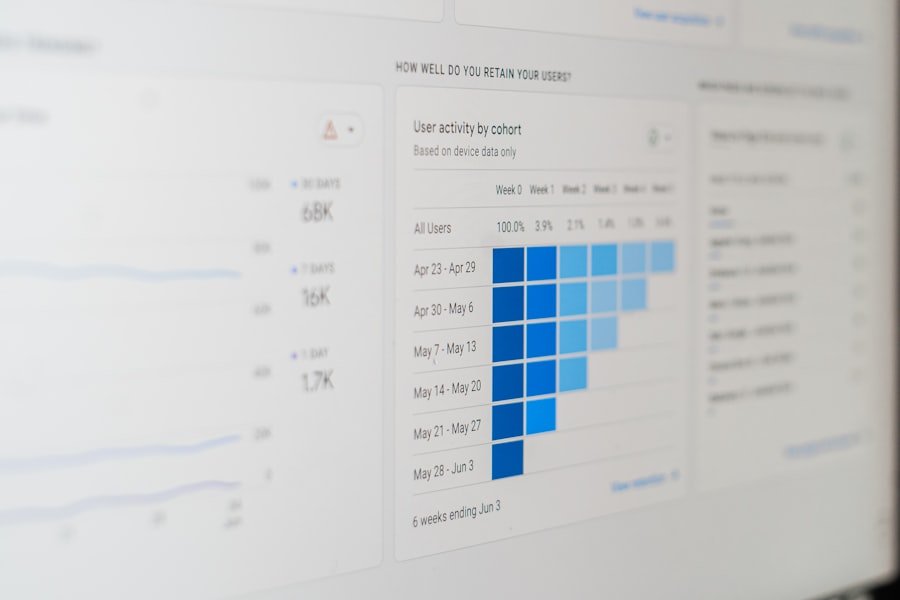
The human element is the most dynamic and often the most challenging aspect of the annotation pipeline. We meticulously manage our human-in-the-loop supply chain, recognizing that the success of our projects hinges on the skills, motivation, and ethical treatment of our annotators.
Internal vs. External Annotation Teams
We carefully weigh the pros and cons of internal annotation teams versus outsourcing to external annotation services. Each approach has its merits depending on the project’s complexity, sensitivity, and scale.
Benefits of Internal Teams
For highly sensitive data or tasks requiring deep domain expertise, we often prefer internal teams. This allows for closer collaboration, easier knowledge transfer, and better control over data security.
Advantages of External Vendors
For large-scale projects or tasks that are less sensitive, we frequently partner with external annotation vendors. These vendors offer scalability, cost-effectiveness, and specialized expertise in managing large workforces. We meticulously vet these partners, focusing on their quality processes, security protocols, and ethical labor practices.
Training and Onboarding Annotators
We understand that even experienced annotators require thorough training for each new project. Our training programs are designed to instill a deep understanding of the guidelines, tools, and project-specific nuances.
Comprehensive Training Modules
Our training modules combine theoretical explanations with hands-on exercises. We use real-world examples and interactive sessions to ensure annotators grasp the concepts thoroughly before they begin live production work.
Continuous Feedback and Skill Development
We foster a culture of continuous learning and improvement. Annotators receive regular feedback on their performance, and we provide opportunities for skill development and specialization.
Ethical Considerations and Fair Compensation
We firmly believe that ethical labor practices are non-negotiable. Our commitment extends to ensuring fair compensation, safe working conditions, and respect for all annotators, whether internal or external.
Ensuring Fair Wages and Working Conditions
We advocate for fair wages that meet or exceed local standards and ensure safe and comfortable working environments. We recognize that well-treated annotators are more productive, accurate, and engaged.
Data Privacy and Security for Annotators
We implement stringent data privacy and security measures not only for the data being annotated but also for the annotators themselves. This includes protecting their personal information and ensuring secure access to tools and data.
Scalability and Optimization: Growing Our Annotation Capabilities

As our AI projects mature and data volumes increase, we constantly seek ways to scale our annotation capabilities without compromising quality or ballooning costs.
Automation and Machine Learning Integration
We actively explore and implement automation and machine learning techniques to optimize the annotation process. This allows us to offload repetitive tasks and empower human annotators to focus on more complex, high-value decisions.
Pre-labeling and Smart Curation
We leverage pre-labeling models to generate initial annotations, significantly reducing the manual effort. Smart curation techniques help us prioritize data for human review, focusing on examples that are most beneficial for model improvement.
Semi-Supervised Learning Approaches
We explore semi-supervised learning, where models learn from both labeled and unlabeled data, reducing the need for extensive human annotation. This iterative process allows us to continuously improve our models while minimizing the human labeling burden.
Workflow Management and Productivity Tools
Efficient workflow management is paramount for scalability. We utilize dedicated workflow management systems and productivity tools to streamline the annotation process from data ingestion to output delivery.
Task Distribution and Load Balancing
Our systems are designed to efficiently distribute tasks among annotators, ensuring optimal load balancing and minimizing idle time. This helps us maximize throughput and meet project deadlines.
Performance Monitoring and Analytics
We implement comprehensive performance monitoring and analytics to track annotator productivity, identify bottlenecks, and gain insights into the efficiency of our pipeline. This data-driven approach informs our optimization efforts.
Cost-Benefit Analysis and ROI
We continuously perform cost-benefit analyses to ensure that our investment in data labeling and annotation yields a positive return on investment. This involves evaluating the trade-offs between speed, quality, and cost.
Measuring Annotation Throughput and Cost Per Annotation
We track key metrics such as annotation throughput (annotations per hour) and cost per annotation. These metrics help us assess the efficiency of our pipeline and identify areas for cost reduction without sacrificing quality.
Quantifying the Impact on Model Performance
We strive to quantify the direct impact of our labeling efforts on model performance. By demonstrating how high-quality data leads to better models and tangible business outcomes, we justify our investments in the human-in-the-loop supply chain.
In the realm of data labeling and annotation pipelines, the importance of efficiently managing the human-in-the-loop supply chain cannot be overstated. A related article that delves into optimizing product development processes can be found at Catch Up with Your Product Development, which highlights strategies that can enhance collaboration and streamline workflows. By integrating insights from such resources, organizations can better navigate the complexities of data annotation while ensuring high-quality outputs.
Future Trends and Our Vision for Data Labeling
| Stage | Metrics |
|---|---|
| Data Collection | Number of raw data sources |
| Data Preprocessing | Percentage of missing data |
| Annotation Guidelines | Number of annotation categories |
| Annotation Quality Control | Inter-annotator agreement score |
| Model Training | Training data size |
| Model Evaluation | Model accuracy score |
We recognize that the field of data labeling and annotation is constantly evolving. We keep a keen eye on emerging trends and actively participate in shaping the future of this critical domain.
Synthetic Data Generation
We are exploring the potential of synthetic data generation as a complementary approach to traditional data labeling. For certain scenarios, generating realistic synthetic data can reduce the reliance on extensive human annotation, especially for rare events or sensitive data.
Addressing Data Scarcity and Bias
Synthetic data offers a promising solution for addressing data scarcity, particularly in domains where real-world data is hard to acquire. It also presents opportunities to mitigate bias by creating balanced datasets.
Challenges and Limitations
We are also aware of the challenges associated with synthetic data, such as ensuring its realism and diversity, and avoiding the introduction of new biases. We see it as a powerful tool when used judiciously and in conjunction with real labeled data.
Edge Annotation and On-Device Labeling
As AI increasingly moves to the edge, we anticipate a rise in edge annotation and on-device labeling. This involves performing annotation tasks closer to the data source, potentially leveraging local resources and specialized expertise.
Real-time Labeling for Edge AI
For real-time AI applications, we foresee scenarios where data is labeled and annotated almost instantaneously at the edge, feeding directly into local model retraining loops.
Privacy and Security Implications
Edge annotation presents unique challenges and opportunities regarding data privacy and security. We are actively researching best practices to ensure that on-device labeling is conducted securely and ethically.
The Evolving Role of the Human Annotator
We believe that the role of the human annotator will evolve from purely repetitive labeling tasks to more complex, decision-making roles, closely collaborating with AI systems.
Expert Review and Anomaly Detection
Humans will increasingly focus on expert review, resolving ambiguities, and detecting anomalies that AI systems might miss. Their cognitive abilities will be leveraged for critical oversight and validation.
Teaching and Guiding AI
We envision annotators becoming “AI teachers,” providing nuanced feedback and guidance that helps AI models learn complex concepts and improve their understanding of the world. This symbiotic relationship between human and AI will be central to future AI development.
In conclusion, we firmly believe that effective data labeling and annotation pipelines, with a thoughtfully managed human-in-the-loop supply chain, are the bedrock of successful AI development. By prioritizing clear guidelines, robust quality control, ethical labor practices, and continuous optimization, we can unlock the full potential of AI and build intelligent systems that truly serve humanity. We are committed to pushing the boundaries of what’s possible, understanding that behind every groundbreaking AI innovation lies the diligent and invaluable work of countless human annotators.
FAQs
What is data labeling and annotation?
Data labeling and annotation is the process of adding metadata or labels to raw data to make it understandable and usable for machine learning algorithms. This process involves human annotators who manually label or annotate the data based on specific guidelines.
What is a data labeling and annotation pipeline?
A data labeling and annotation pipeline is a systematic approach to managing the human-in-the-loop supply chain for data labeling and annotation. It involves defining the data labeling tasks, sourcing human annotators, setting up quality control measures, and integrating the labeled data into machine learning models.
Why is managing the human-in-the-loop supply chain important for data labeling and annotation?
Managing the human-in-the-loop supply chain is important for ensuring the quality and efficiency of data labeling and annotation. It involves managing the workflow, ensuring the accuracy and consistency of annotations, and optimizing the use of human annotators to meet the demands of machine learning projects.
What are the challenges of data labeling and annotation pipelines?
Challenges of data labeling and annotation pipelines include ensuring the quality and consistency of annotations, managing the scalability of labeling tasks, dealing with diverse data types and formats, and addressing the potential biases of human annotators.
How can organizations optimize their data labeling and annotation pipelines?
Organizations can optimize their data labeling and annotation pipelines by implementing automated tools for data preprocessing, establishing clear annotation guidelines, providing continuous training for human annotators, leveraging quality control mechanisms, and integrating feedback loops for improving the labeling process.