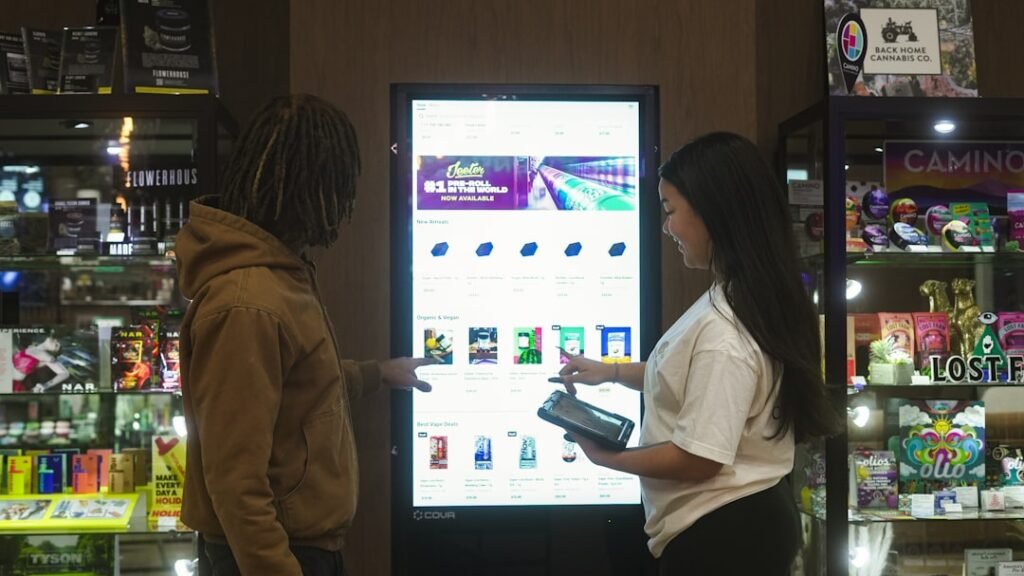
We are embarking on a transformative journey in how we engage with our customers, driven by the pervasive influence of self-service technology. Gone are the days when every customer interaction required a human touch. Today, we have the tools to empower our patrons, allowing them to navigate their support journeys, access information, and resolve issues independently. This shift is not merely about cost reduction; it is fundamentally about enhancing the customer experience, fostering deeper relationships, and building a more resilient and scalable business. By strategically implementing and optimizing self-service technologies, we can unlock a new echelon of customer success, where our clients feel valued, informed, and in control.
At its heart, self-service technology is about transferring agency. It’s about providing our customers with the keys to unlock solutions rather than waiting for us to hand them the map. This requires a multi-faceted approach, encompassing various digital tools and platforms designed to anticipate and address customer needs proactively. We must view these technologies not as replacements for human interaction, but as powerful complements that augment our service offerings.
The Foundation: Knowledge Bases and FAQs
Perhaps the most ubiquitous form of self-service is the humble knowledge base, often accompanied by a Frequently Asked Questions (FAQs) section. These are the bedrock upon which effective self-service strategies are built. A well-structured and comprehensive knowledge base acts as a digital library, meticulously cataloging solutions to common problems, product information, and procedural guides.
Building a Robust and Accessible Knowledge Base
The effectiveness of a knowledge base hinges on its accessibility and comprehensiveness. We need to invest in robust search functionalities that allow users to quickly pinpoint the information they need, employing natural language processing where possible to understand user queries more intuitively. Content must be regularly updated, reflecting product changes, new features, and evolving customer pain points. Think of it as a living document, constantly being refined and expanded based on real-world usage.
The Power of Community: User Forums and Social Support
Beyond structured information repositories, we can foster a vibrant ecosystem of peer-to-peer support through user forums and active engagement on social media platforms. These digital town squares allow customers to connect with each other, share their experiences, and offer solutions. Our role here is not to dictate, but to facilitate and moderate, ensuring a positive and productive environment.
Cultivating an Engaged User Community
Nurturing a strong user community requires more than just setting up a forum. We need to actively encourage participation, perhaps through gamification, recognition programs for active contributors, or by directly engaging with users to answer complex questions or clarify information. Social media channels, when leveraged for support, can also act as a powerful public demonstration of our commitment to customer satisfaction, addressing issues openly and efficiently. This is where empathy meets digital efficiency, turning potential frustrations into opportunities for brand advocacy.
In exploring the benefits of self-service technology for enhancing customer success, it’s valuable to consider related insights on optimizing customer engagement strategies. For a deeper understanding of how to effectively implement these technologies, you can refer to the article on customer value optimization available at this link. This resource provides additional strategies that complement the use of self-service tools, ensuring a comprehensive approach to improving customer experiences and outcomes.Designing for Empathetic Self-Service Experiences
Self-service technology is not solely about technology; it’s about the human experience facilitated by that technology. We must move beyond simply deploying tools and instead focus on designing intuitive, empathetic, and user-centric experiences. The customer should feel supported and understood, even when they are navigating systems independently.
Intuitive User Interface and Navigation
The success of any self-service tool is directly proportional to its ease of use. A clunky interface or convoluted navigation is a sure way to frustrate customers and drive them back to more traditional support channels. We need to prioritize clean design, logical information architecture, and clear calls to action. It’s like building a well-signed highway; the clearer the paths, the smoother the journey.
User Testing and Iterative Design
To ensure true intuitiveness, we must commit to rigorous user testing. Gathering feedback from actual customers at various stages of the design process is paramount. This iterative approach allows us to identify pain points, address usability issues, and continuously refine the user experience. We should envision our self-service portals not as static entities, but as dynamic platforms that evolve based on user interaction and feedback.
Personalization and Contextual Assistance
Generic self-service solutions can feel cold and impersonal. True customer success with self-service lies in our ability to personalize the experience. This means leveraging customer data to offer relevant information and solutions based on their specific product usage, purchase history, or past support interactions. Contextual assistance, delivered at the right moment, can preemptively answer questions before they are even fully formed.
Leveraging Data for Tailored Support
Our customer data is a treasure trove of insights. By analyzing this data, we can understand individual customer journeys and identify common patterns or potential roadblocks. This allows us to tailor the self-service experience, offering personalized recommendations, proactive alerts, or targeted guides. For instance, a customer who recently purchased a complex product could be automatically presented with setup guides and troubleshooting tips relevant to their specific model.
Integrating Self-Service into the Customer Journey

Self-service technology should not operate in a vacuum. It must be seamlessly integrated into the broader customer journey, from initial discovery and onboarding to ongoing use and eventual renewal. By weaving self-service options into every touchpoint, we create a consistent and empowering experience.
Proactive Onboarding and Education
The early stages of a customer relationship are critical for setting the tone. Self-service tools can play a significant role in proactive onboarding, guiding new customers through product setup, initial configurations, and core functionalities. This empowers them to achieve early wins and build confidence, reducing the likelihood of early churn. We can think of this as providing a clear instruction manual that doesn’t just sit in the box, but is actively presented and explained.
Interactive Tutorials and Walkthroughs
Interactive tutorials and guided walkthroughs are highly effective in this regard. These can be embedded directly within the product or accessed via a dedicated onboarding portal. By allowing customers to learn by doing, we make the learning process more engaging and memorable. Short, digestible video tutorials can also be invaluable, offering visual demonstrations of how to perform specific tasks.
Seamless Escalation Pathways
While the goal is to empower self-service, we must acknowledge that some issues will inevitably require human intervention. Therefore, clear and seamless escalation pathways are crucial. Customers should be able to easily transition from a self-service channel to a human agent when needed, without having to repeat information or start the support process anew.
Contextual Handoffs to Human Agents
When a customer does need to speak with an agent, the self-service system should ideally provide the agent with the full context of the customer’s interaction. This means passing along any information the customer has already provided, the problem they are trying to solve, and the troubleshooting steps they have already taken. This “warm handoff” drastically improves efficiency and customer satisfaction, preventing frustration from having to re-explain.
Measuring and Optimizing Self-Service Performance

The deployment of self-service technology is not a one-time event; it’s an ongoing process of measurement and optimization. To truly maximize customer success, we must establish clear metrics and continuously iterate based on performance data.
Key Performance Indicators (KPIs) for Self-Service
We need to define specific KPIs that reflect the effectiveness of our self-service initiatives. These might include:
Ticket Deflection Rate
This measures the percentage of customer inquiries that are resolved through self-service channels, preventing them from escalating to human agents. A high ticket deflection rate indicates that our self-service resources are effective and comprehensive.
First Contact Resolution (FCR) within Self-Service
This KPI focuses on how many self-service interactions result in a complete resolution for the customer on their very first attempt. It speaks to the quality and accuracy of the information and tools provided.
Customer Satisfaction Scores (CSAT) for Self-Service Interactions
Directly surveying customers about their experience with self-service channels provides invaluable qualitative feedback. We need to understand if they found the solution they needed and if the process was satisfactory.
Usage Analytics and Completion Rates
Tracking how customers interact with self-service tools, such as which articles are viewed most frequently, which searches yield no results, or the completion rates of specific guided processes, can highlight areas for improvement. Where do users get stuck? What information is missing?
Data-Driven Iteration and Improvement
Once we have our KPIs established, we must use the data they generate to drive continuous improvement. This means regularly analyzing performance reports, identifying trends, and making proactive adjustments to our self-service offerings.
Content Audits and Refinement
Regular content audits are essential for ensuring that our knowledge base and FAQs remain relevant, accurate, and up-to-date. Outdated or incorrect information can be more detrimental than no information at all, eroding customer trust.
Identifying and Addressing Content Gaps
Usage analytics will often reveal “content gaps” – topics for which customers are searching but for which we have no adequate resources. These are prime opportunities to create new self-service content, directly addressing unmet customer needs.
In today’s fast-paced digital landscape, businesses are increasingly turning to self-service technology to enhance customer success and streamline operations. A related article that delves deeper into this topic is available at Shilotri, where you can explore various strategies and tools that empower customers to find solutions independently. By leveraging these technologies, companies can not only improve customer satisfaction but also drive efficiency and reduce operational costs.Fostering a Culture of Empowered Customers and Empowered Employees
| Metric | Description | Example Value | Impact on Customer Success |
|---|---|---|---|
| Self-Service Adoption Rate | Percentage of customers using self-service tools | 65% | Higher adoption reduces support tickets and improves customer satisfaction |
| Average Resolution Time | Time taken to resolve customer issues via self-service | 3 minutes | Faster resolution enhances customer experience and loyalty |
| Customer Satisfaction Score (CSAT) | Customer rating of self-service experience | 4.5/5 | High CSAT indicates effective self-service tools |
| Reduction in Support Tickets | Decrease in number of tickets due to self-service usage | 30% | Less workload on support teams, allowing focus on complex issues |
| Knowledge Base Usage | Number of views or searches in self-service knowledge base | 10,000/month | Indicates customer engagement and resource effectiveness |
| First Contact Resolution Rate | Percentage of issues resolved on first self-service attempt | 80% | Improves customer trust and reduces repeat contacts |
| Customer Effort Score (CES) | Measure of ease of using self-service tools | 2/7 (low effort) | Lower effort scores correlate with higher customer retention |
Ultimately, the success of self-service technology is about creating a virtuous cycle where empowered customers contribute to a more efficient and rewarding experience for our employees, and vice versa. This cultural shift is as important as the technological implementation.
Shifting the Employee Mindset
We need to foster a mindset among our employees that views self-service not as a threat, but as an enabler. When customers can resolve routine issues independently, our support agents are free to focus on more complex, high-value interactions that truly require their expertise. This elevates the role of our human support team.
Empowering Employees to Champion Self-Service
We can empower our employees to become champions of self-service by training them on its benefits and mechanisms. They can then evangelize these tools to customers, guiding them towards the most effective resources. This creates a unified front, where both technology and human interaction work in concert.
The Customer as a Partner in Problem-Solving
By providing robust self-service options, we position our customers as active partners in their own problem-solving journey. This fosters a sense of ownership and autonomy, leading to greater satisfaction and loyalty. They are no longer passive recipients of support, but active participants in achieving their desired outcomes.
Building Trust Through Transparency and Accessibility
When we make it easy for customers to find answers and solve problems themselves, we demonstrate transparency and a genuine commitment to their success. This builds trust, which is the cornerstone of any strong customer relationship. The accessibility of our self-service tools becomes a direct reflection of our accessibility as a company.
In conclusion, maximizing customer success with self-service technology is an ongoing strategic imperative. It is about thoughtfully integrating digital tools to empower our customers, providing them with the resources and autonomy they crave. By focusing on intuitive design, seamless integration, continuous optimization, and fostering a culture of shared responsibility, we can transform customer support from a cost center into a powerful engine for customer loyalty, advocacy, and ultimately, sustained business growth.