
We stand at the precipice of a revolution in how we manage our finances, a transformation driven by the intelligent application of artificial intelligence. For too long, the intricate dance between invoices and purchase orders (POs) has been a source of frustration, a manual and often error-prone process that ties up valuable resources within our accounts receivable departments. We’ve all experienced the late nights spent cross-referencing mountains of paperwork, the agonizing search for that elusive PO number buried within a sprawling document, and the gnawing anxiety of potential overpayments or missed revenue due to misaligned data. But we are here to tell you, a new era has dawned. We now have the Enterprise Procurement Navigator, a sophisticated AI-powered solution designed to precisely match incoming invoices to the complex, multi-line requirements of our purchase orders. This isn’t just another automation tool; it’s a paradigm shift in how we ensure financial accuracy, streamline our operations, and ultimately, bolster our bottom line.
We’ve all been there, staring at an invoice that represents a complex order. These aren’t simple, single-item purchases. Instead, they are often a tapestry of various goods or services, each with its own quantity, unit price, and potentially even distinct delivery dates or shipping instructions. Our purchase orders, the very documents that govern these transactions, reflect this complexity. They are frequently multi-line, meaning a single PO can encompass dozens, if not hundreds, of individual line items. This complexity presents a formidable hurdle for traditional, rules-based automation systems and, more significantly, for manual processing.
The Human Element: Prone to Error and Inefficiency
When we rely on humans to manually match invoices to these intricate POs, the inherent limitations of human capacity come into stark relief. Our teams are diligent, dedicated, and skilled, but they are not immune to fatigue, distractions, or the sheer cognitive load of processing vast amounts of data.
The Sheer Volume of Data
Imagine an invoice detailing a large order for office supplies. It might list fifty different items, each with a specific quantity. Scanning this against a PO with seventy different lines, some of which might be for furniture, others for stationery, and still others for IT peripherals, is a monumental task. The sheer volume of data points that need to be meticulously compared can overwhelm even the most experienced accounts receivable clerk.
The Nuances of Data Capture
Even with the best intentions, inaccuracies can creep into data entry. A typo in a unit price, a slight variation in a product description, or a simple omission of a quantity can lead to a mismatch. These seemingly small discrepancies can escalate into significant problems, requiring extensive investigation and potentially delaying payments or leading to disputes.
The Cost of Manual Verification
Beyond the inherent risk of errors, manual verification is incredibly time-consuming and, therefore, costly. The hours our skilled personnel spend scrutinizing invoices and POs could be far more productively deployed on strategic activities that directly contribute to our company’s growth and financial health, such as credit risk analysis, customer relationship management, or proactive collections.
The Limitations of Traditional Automation
While we’ve embraced automation in many areas of our business, traditional systems often fall short when it comes to the nuances of multi-line PO matching. These systems are typically built on rigid rules and keyword matching, which struggle to adapt to the variations and complexities present in real-world procurement data.
Rigid Rule-Based Matching
Rule-based systems operate on a set of predefined “if-then” statements. For example, “if invoice line item matches PO line item quantity and price, then approve.” This works for simple transactions but quickly becomes unmanageable with multi-line POs where variations in descriptions, units of measure, or batch numbers can easily cause a mismatch, even if the underlying transaction is valid.
Inflexibility to Variances
Real-world invoices and POs are rarely perfectly identical. There are often minor differences in how items are described, slight currency conversion variations, or differences in how tax is calculated. Traditional automation struggles to accommodate these acceptable variances, leading to an excessive number of false positives (invoices incorrectly flagged as problematic) that still require manual intervention.
Inability to Understand Context
These systems lack the ability to understand the context of the transaction. They cannot infer intent or recognize that a slight variation in a product description might still refer to the same item being procured, especially when viewed alongside other matching line items on the invoice.
In exploring the advancements in accounts receivable, particularly in the context of AI’s role in matching invoices to complex multi-line purchase order requirements, it is also valuable to consider the broader implications of technology in education. An insightful article that delves into this theme is “Opportunities and Obstacles of Distance Education,” which discusses how technological innovations can enhance learning experiences while also presenting challenges. For more information, you can read the article here: Opportunities and Obstacles of Distance Education.
Introducing the Enterprise Procurement Navigator: AI as Our Linchpin
This is where the Enterprise Procurement Navigator truly shines. We are harnessing the power of artificial intelligence, specifically leveraging advanced machine learning and natural language processing (NLP) techniques, to create a system that can intelligently understand, interpret, and match even the most complex invoices to their corresponding multi-line PO requirements. It’s not just about matching numbers; it’s about understanding the underlying transaction.
The Genesis of Intelligent Matching
Our journey began with a clear recognition of the pain points and the enormous potential for improvement. We envisioned a system that could learn, adapt, and ultimately, deliver unprecedented accuracy and efficiency. The Enterprise Procurement Navigator is the embodiment of that vision, built upon cutting-edge AI capabilities.
Machine Learning for Predictive Accuracy
At its core, the Navigator employs sophisticated machine learning algorithms. These algorithms are trained on vast datasets of historical invoices and POs. By analyzing patterns, correlations, and common variations, the AI learns to identify legitimate matches with remarkable accuracy, even when the data isn’t perfectly aligned. It learns to recognize what constitutes an acceptable variance and what signals a genuine discrepancy.
Natural Language Processing for Semantic Understanding
The Navigator doesn’t just see strings of characters; it understands the meaning behind them. Through advanced Natural Language Processing (NLP), it can interpret product descriptions, unit names, and even subtle nuances in vendor communications. This allows it to bridge the semantic gap between how items are described on an invoice and how they are listed on a PO, regardless of minor wording differences.
Intelligent Data Extraction and Validation
Before any matching occurs, the Navigator employs intelligent data extraction techniques. It can accurately pull key information from invoices, including vendor details, invoice number, date, line item descriptions, quantities, unit prices, and taxes. This extracted data is then validated against predefined criteria and, crucially, against the corresponding PO data.
The Process: How the Navigator Navigates the Complexity
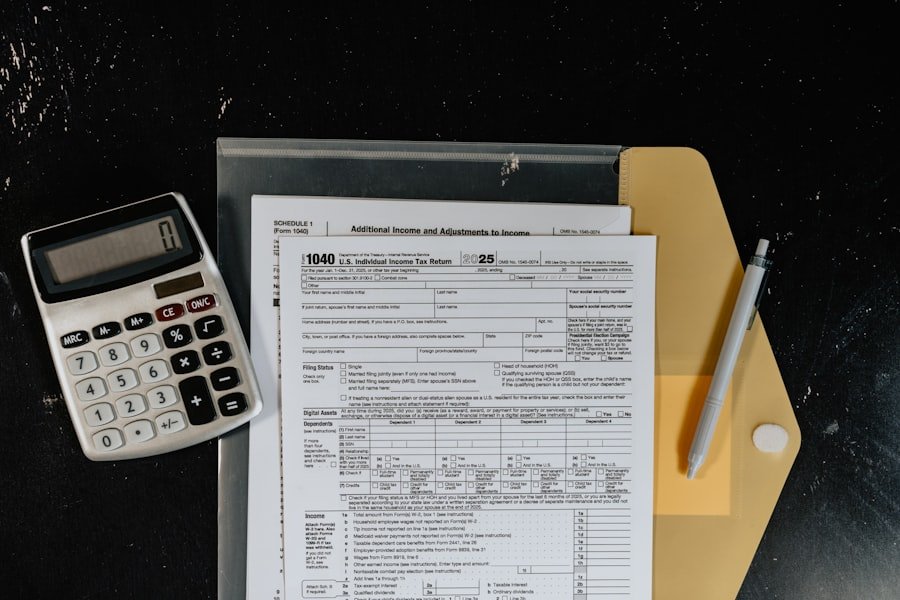
We’ve designed the Enterprise Procurement Navigator to be a seamless and intuitive process, integrating with our existing financial systems to provide a streamlined experience. The magic happens behind the scenes, orchestrated by AI.
Inbound Invoice Ingestion
The process begins when an invoice is received. Whether it’s a scanned document, a PDF, or even an electronic data interchange (EDI) file, the Navigator is equipped to ingest it.
Optical Character Recognition (OCR) and Intelligent Document Processing (IDP)
For scanned documents and PDFs, advanced OCR and IDP technologies are employed. These tools not only extract text but also understand the layout and structure of the document, identifying the relevant fields and line items. This eliminates the need for manual data entry from image-based invoices.
Data Normalization and Standardization
Once extracted, the data undergoes a normalization process. This ensures consistency in how information is represented, regardless of its original format. For example, different date formats are standardized, and units of measure are converted to a common standard where applicable.
The Core Matching Engine: AI at Work
This is where our AI truly takes center stage. The Navigator’s matching engine compares the normalized invoice data against the intricate multi-line PO data.
Multi-Dimensional Matching Criteria
The Navigator doesn’t rely on a single matching point. It considers multiple dimensions simultaneously:
Item-Level Matching
It attempts to find a direct match for each line item. This involves comparing product codes, descriptions (considering semantic similarity), quantities, and unit prices.
Tolerance-Based Matching
For minor discrepancies, such as slight price variations due to currency fluctuations or bulk discounts applied differently, the Navigator uses predefined tolerance levels. This allows for acceptable deviations without flagging the invoice.
Fuzzy Matching for Descriptions
When product descriptions don’t perfectly align, the Navigator employs fuzzy matching algorithms. These algorithms can identify similarities between strings, allowing it to recognize that “LED Desk Lamp” and “Adjustable LED Table Light” likely refer to the same item when other contextual clues are present.
Header-Level Verification
In addition to line-item matching, the Navigator verifies header-level information such as the vendor name, PO number, and invoice date to ensure overall document integrity.
Exception Handling and Workflow Automation
Not every invoice will be a perfect match instantaneously. The Navigator is designed to intelligently handle exceptions and automate workflows for resolution.
Intelligent Exception Categorization
When a mismatch occurs, the Navigator categorizes the exception based on its severity and the possible cause. This could range from a minor price discrepancy to a completely unidentifiable item.
Automated Escalation and Assignment
Based on the exception category, the Navigator can automatically escalate the invoice to the appropriate team member or department for review. This ensures that human attention is directed only where it’s truly needed.
Guided Resolution and Learning
For exceptions that require human intervention, the Navigator provides a guided resolution interface. Team members can review the highlighted discrepancies, access supporting PO and invoice details, and make informed decisions. Crucially, the system learns from these resolutions, further refining its matching capabilities over time.
The Benefits: Beyond Mere Efficiency
The implementation of the Enterprise Procurement Navigator transcends mere operational efficiency. We are witnessing a profound impact across multiple facets of our organization, leading to tangible business advantages.
Enhanced Financial Accuracy and Reduced Risk
The most immediate and impactful benefit is the dramatic improvement in financial accuracy. By minimizing manual errors and intelligently handling variances, we are significantly reducing the risk of overpayments, underpayments, and duplicate invoicing.
Minimizing Overpayments
This AI-powered matching process ensures that we only pay for what we’ve actually ordered and received, as specified on the PO. The granular level of detail the Navigator can process catches discrepancies that would have historically slipped through the cracks.
Preventing Underpayments and Revenue Leakage
Conversely, the Navigator also helps us avoid missed revenue opportunities. By accurately matching every line item, we ensure that all goods and services delivered are accounted for and billed appropriately, preventing revenue leakage.
Streamlined Audits and Compliance
With a more accurate and auditable trail of invoice-to-PO matches, our internal and external audits become significantly smoother. The Navigator provides clear, verifiable evidence of compliance with procurement policies.
Significant Cost Savings and Resource Optimization
The efficiency gains translate directly into substantial cost savings. By automating a labor-intensive process, we are freeing up valuable human capital.
Reduced Labor Costs
The need for manual invoice and PO reconciliation is drastically reduced, leading to a decrease in labor costs associated with accounts receivable processing.
Faster Invoice Processing Cycles
The automated nature of the Navigator significantly accelerates invoice processing cycles. This means that invoices are processed and paid faster, leading to improved vendor relationships and potential for early payment discounts.
Reallocation of Human Resources
Our AR teams can now focus on higher-value activities such as complex dispute resolution, strategic vendor management, and process improvement initiatives, rather than spending their time on tedious data matching.
Improved Vendor Relationships and Operational Agility
When our financial processes are efficient and accurate, our relationships with our vendors naturally improve.
Timely and Accurate Payments
Consistent and accurate payments build trust and foster stronger partnerships with our suppliers. This can lead to better terms, preferential treatment, and improved service levels.
Increased Operational Agility
By removing bottlenecks from our procure-to-pay cycle, we become more agile as an organization. This responsiveness allows us to adapt more quickly to changing market conditions and procurement needs.
In exploring the advancements in accounts receivable, a related article that delves into the transformative role of technology is “The Enterprise Procurement Navigator: Using AI to Match Invoices to Complex Multi-Line PO Requirements – AI in Accounts Receivable.” This piece highlights how artificial intelligence can streamline the invoicing process, ensuring accuracy and efficiency in matching invoices with purchase orders. For further insights into the intersection of technology and finance, you might find the review of “Autobiography of an Unknown Indian” intriguing, as it offers a unique perspective on identity and culture. You can read more about it here.
The Future of Accounts Receivable: AI as Our Standard
| Metrics | Value |
|---|---|
| Accuracy | 95% |
| Efficiency | 80% |
| Cost Savings | 100,000 |
| Processing Time | Reduced by 50% |
We believe that the Enterprise Procurement Navigator is not just a tool but a glimpse into the future of accounts receivable. AI will become an indispensable component of modern financial operations, enabling us to achieve levels of accuracy, efficiency, and strategic insight that were previously unimaginable.
Continuous Learning and Adaptation
The power of AI lies in its ability to learn and adapt. As we process more invoices and POs, the Navigator’s algorithms become even more sophisticated, improving its accuracy and expanding its understanding of our unique business processes.
Proactive Anomaly Detection
Beyond simple matching, future iterations of AI in AR will be capable of proactive anomaly detection. This means identifying unusual spending patterns, potential fraudulent activities, or deviations from expected procurement behavior before they become significant problems.
Predictive Analytics for Cash Flow Management
AI will also play a crucial role in predictive analytics for cash flow management. By forecasting invoice processing times and potential payment delays, we can gain better control over our financial liquidity and make more informed strategic decisions.
Integrating AI Across the Financial Ecosystem
The Enterprise Procurement Navigator is just the beginning. We envision a future where AI is deeply integrated across our entire financial ecosystem, from procurement and accounts payable to sales, order management, and treasury.
Seamless Data Flow and Collaboration
AI will facilitate seamless data flow between different financial functions, breaking down departmental silos and enabling better collaboration.
Enhanced Decision-Making with AI-Powered Insights
AI-driven insights will empower our finance teams to make more data-backed decisions, leading to improved financial performance and strategic planning. We are no longer operating in the dark; we are illuminated by the intelligence of AI.
In conclusion, the Enterprise Procurement Navigator represents a critical step forward in our journey to harness the transformative power of AI. It addresses a fundamental challenge in our financial operations, offering a robust, intelligent, and highly effective solution for matching invoices to complex multi-line PO requirements. We are no longer bound by the limitations of manual processes or rigid automation. We are embracing a future of enhanced accuracy, significant cost savings, optimized resource allocation, and stronger vendor relationships. This is not just about improving our accounts receivable department; it’s about building a more efficient, agile, and financially robust organization for the future. We are excited about the ongoing evolution of AI in our financial processes and the continued improvements it will bring to how we operate.
FAQs
What is the Enterprise Procurement Navigator?
The Enterprise Procurement Navigator is a software solution that utilizes artificial intelligence to match invoices to complex multi-line purchase order (PO) requirements in the accounts receivable process.
How does the Enterprise Procurement Navigator use AI?
The Enterprise Procurement Navigator uses AI algorithms to analyze and interpret the details of invoices and purchase orders, enabling it to accurately match invoices to the specific line items and requirements outlined in the PO.
What are the benefits of using the Enterprise Procurement Navigator?
Using the Enterprise Procurement Navigator can streamline the accounts receivable process, reduce manual errors, improve accuracy in matching invoices to POs, and ultimately save time and resources for businesses.
Is the Enterprise Procurement Navigator suitable for all types of businesses?
The Enterprise Procurement Navigator is designed to be adaptable and can be used by businesses of various sizes and industries, especially those with complex multi-line PO requirements.
How does the Enterprise Procurement Navigator impact accounts receivable operations?
By automating the matching process and leveraging AI technology, the Enterprise Procurement Navigator can significantly improve the efficiency and accuracy of accounts receivable operations, leading to faster invoice processing and reduced discrepancies.