- Stars:
- Pages: 304 Pages
- Time to Read: 6 hours
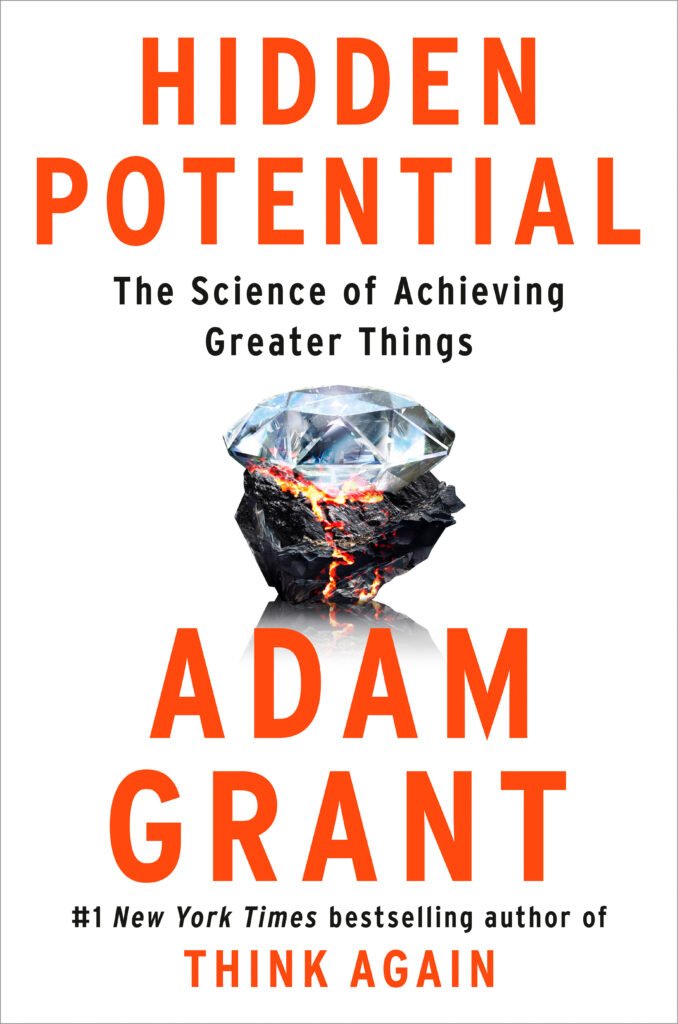
- Authors: Adam Grant
- Type of Book: Non-Fiction / Organizational Psychology / Personal Development
TL;DR
In Hidden Potential, organizational psychologist Adam Grant dismantles the myth that innate talent is the primary driver of success. Instead, he argues that “character skills”—the ability to embrace discomfort, seek feedback, and persist—are learned behaviors that allow us to travel greater distances than we ever thought possible. It is a hopeful, evidence-backed manifesto on how to elevate yourself and those around you.
What is the book about?
Grant shifts the focus from “where you start” to “how far you travel.” The book is structured into three main sections: building character skills, setting up scaffolding to sustain motivation, and building systems of opportunity.
Through a mix of rigorous social science and diverse storytelling—featuring everyone from Golden State Warriors superstar Stephen Curry to polyglots and classroom teachers—Grant illustrates how we often fail to recognize potential in ourselves and others. He introduces concepts like “imperfectionism” and “scaffolding” to explain how ordinary people achieve extraordinary things by turning practice into play and viewing awkwardness as a sign of progress rather than failure.
Key Takeaways!
Become a Creature of Discomfort: The most effective way to accelerate growth is to abandon tried-and-true methods and put yourself in the ring before you feel ready. As Grant notes, “Summoning the nerve to face discomfort is a character skill.”
The Difference Between Critics, Cheerleaders, and Coaches: A critic attacks your worst self; a cheerleader celebrates your best self. However, you need a coach: someone who sees your potential and helps you become a better version of yourself.
Override Imposter Syndrome: When you feel like an imposter, you are likely underestimating yourself while others are not. Grant advises that “when multiple people believe in you, it might be time to believe them.”
Character > Talent: What looks like raw talent is often a set of learned skills. Proactivity, determination, and discipline are not innate traits but muscles that can be developed.
Worth the Read?
Yes, with a minor caveat.
If you enjoyed Think Again, this is a worthy successor that applies Grant’s signature blend of counter-intuitive psychology and warmth to the concept of achievement. The book is incredibly practical; the advice on “turning practice into play” and taking “focus breaks” is immediately applicable to daily life. It successfully avoids the trap of looking like a corporate manual, offering genuine life advice instead.
However, the book is not without flaws. While the first two sections are tight and compelling, Part III feels slightly disjointed and redundant compared to the strength of the opening chapters. Additionally, readers who are tired of sports analogies in self-help literature might find the references a bit heavy-handed. Despite this, the impact of the book is high—it leaves you with the distinct, energizing feeling that your ceiling is higher than you think.
Read this book if:
You struggle with imposter syndrome and feel you aren’t “gifted” enough to pursue a new skill.
You are a leader, teacher, or parent who wants to understand how to build scaffolding to help others grow.
You feel stuck in a plateau and are willing to become a “creature of discomfort” to break through.
You want a scientifically grounded alternative to standard “hustle culture” advice.

Join to get sneak peek into what's happening
I write about books, experiences, product, UX, EdTech, early stage growth, validation – mostly tech. Subscribe if these topics interest you. Once every 15 days emailer. I promise – No spam. (I am known for it otherwise) 😉