Executive Summary
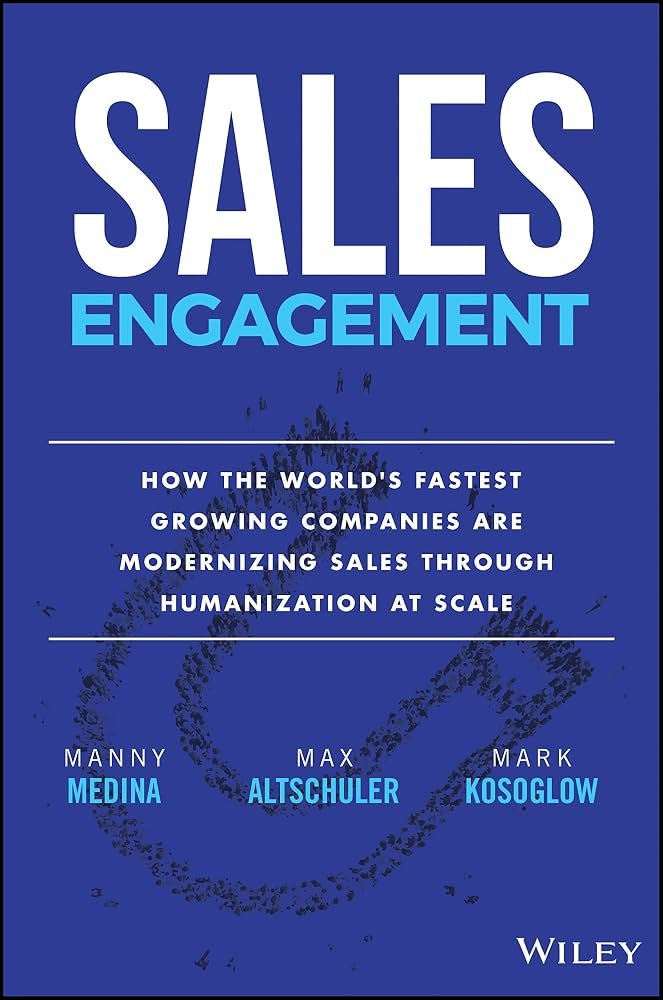
“Sales Engagement” meticulously dissects the evolution of modern sales, advocating for a holistic, technology-driven approach that transcends traditional outreach. The authors argue that in today’s saturated market, strategic, personalized, and multi-channel engagement is paramount for pipeline generation and revenue acceleration, fundamentally reshaping how organizations interact with prospects and customers.
In addition to the insightful perspectives offered in “Sales Engagement” by Manny Medina, Max Altschuler, and Mark Kosoglow, readers may find value in exploring the concepts presented in the article on “Antifragile” by Nassim Nicholas Taleb. This article delves into the idea of systems that thrive and grow stronger in response to challenges and volatility, which can be particularly relevant for sales professionals looking to adapt and excel in a dynamic market. For more information, you can read the article here: Antifragile Book Review.Key Insights
- The Paradigm Shift from Sales Activity to Sales Engagement: The book effectively differentiates mere “sales activity” (e.g., cold calling lists, mass emails) from “sales engagement,” which is a coordinated, personalized, and value-driven interaction sequence across multiple channels. For CX leaders, this translates directly to the post-sale journey. Just as sales engagement drives acquisition, customer engagement is critical for retention and expansion. Organizations must build sophisticated playbooks for onboarding, value realization, and proactive support, moving beyond reactive service to strategic, multi-touch customer success sequences that predict needs and proactively deliver value, thereby significantly reducing churn and increasing Lifetime Value (LTV).
- The Power of the Multi-Channel Cadence: The authors emphasize that relying on a single communication channel is a relic of the past. Effective sales engagement leverages a thoughtful combination of email, phone, social media, video, and even direct mail, sequenced strategically. This insight is directly transferable to customer retention and advocacy programs. A customer-centric organization needs to map out multi-channel engagement cadences for critical touchpoints: new feature announcements, renewal reminders, upsell opportunities, and even customer health check-ins. A disconnected approach leads to customer fatigue or, worse, silence. A well-orchestrated cadence ensures consistent messaging and reinforcement of value, improving customer satisfaction and identification of expansion opportunities.
- Data-Driven Optimization of Engagement Strategies: “Sales Engagement” champions a rigorous, data-centric approach to refining outreach. Every touchpoint, every channel, and every message should be tracked, analyzed, and optimized based on performance metrics like open rates, response rates, and conversion rates. From a CX and operations perspective, this translates into building a robust feedback loop for customer interactions. Beyond NPS and CSAT, companies must analyze the effectiveness of different support channels, the impact of proactive outreach campaigns on churn, and the correlation between specific customer success activities and revenue expansion. This data empowers leaders to move from anecdotal improvements to statistically significant enhancements in customer experience and operational efficiency, directly impacting the bottom line.
- Alignment of Sales, Marketing, and Customer Success: While primarily focused on sales, the book implicitly highlights the necessity of a unified front. Marketing’s role in providing content, sales’ role in engagement, and customer success’s role in retention are interconnected. Misalignment creates friction and inefficiency. For strategic leaders, this reinforces the need for revenue operations (RevOps) – a convergence of functions, processes, and data to ensure seamless prospect-to-customer journeys. By breaking down silos and establishing shared goals and metrics, organizations can ensure that the initial sales promise translates into sustained customer value, driving higher retention and organic growth.
Practical Application
- Map and Automate Customer Touchpoints: Immediately audit your existing customer communication touchpoints. Identify key lifecycle stages (onboarding, feature adoption, renewal, advocacy) and design multi-channel engagement cadences for each. Utilize automation platforms (e.g., customer success software, marketing automation) to schedule and personalize these sequences, ensuring timely and relevant communication without increasing manual workload. This will proactively address potential churn triggers and enhance customer perception of value.
- Implement A/B Testing for Customer Communications: Borrowing directly from the sales engagement playbook, begin A/B testing different subject lines, messaging styles, call-to-actions, and communication channels for critical customer outreach (e.g., onboarding emails, product update announcements, survey requests). Measure the impact on engagement rates (e.g., open rates, click-through rates, response rates, feature adoption) and continuously optimize for improved customer experience and business outcomes. This data-driven approach will lead to more effective communication and a more engaged customer base.
Final Verdict
Who must read this: Executives overseeing sales, marketing, and customer success; RevOps leaders; and anyone looking to modernize their customer acquisition and retention strategies in a competitive digital landscape. If you’re grappling with pipeline generation, sales efficiency, or the integration of your revenue-generating functions, this book is indispensable.
Who can skip it: Individuals whose roles are purely administrative, or those in highly traditional industries with long sales cycles where digital engagement is not a primary driver of success (though even they could glean valuable insights). It’s also less critical for those exclusively focused on inbound lead processing without an outbound component.
Bottom-line rating: 4.5/5 – A definitive guide for modern revenue generation.
In the insightful book review of “Sales Engagement” by Manny Medina, Max Altschuler, and Mark Kosoglow, the authors delve into the strategies that can significantly enhance sales processes. For those looking to further refine their understanding of effective practices in the SaaS industry, a related article discusses essential tips for building your SaaS product right. You can explore these best practices in detail by visiting this helpful resource. This connection between sales engagement and product development can provide a comprehensive perspective for professionals aiming to excel in the competitive market.Diving Deeper: The Evolution of Sales in the Digital Age
The core premise of “Sales Engagement” isn’t just about selling; it’s about connecting. The authors meticulously trace the shift from a transactional, product-centric sales approach to a relationship-driven, value-centric model, heavily reliant on technology and data. This evolution is not a suggestion but a mandate for survival and growth in the hyper-connected world.
The Death of the Cold Call (as we knew it)
- Irrelevance in Isolation: The book argues that a standalone cold call, without prior context or subsequent follow-up across other channels, has drastically diminished in effectiveness. Prospects are inundated, and attention spans are fleeting.
- The Cadence as the New Baseline: Instead, the cold call becomes a single, albeit important, touchpoint within a carefully constructed “cadence” or “sequence.” This sequence primes the prospect, provides value, and offers multiple avenues for interaction.
- Leveraging Data for Precision: The days of dialing down a generic list are over. Modern sales engagement demands that each call, email, or social media interaction is informed by data – understanding the prospect’s company, role, challenges, and potential needs. This moves calls from intrusive to potentially helpful.
The Rise of the Sales Engagement Platform (SEP)
- Orchestration, Not Just Automation: The book highlights SEPs as the central nervous system for modern sales teams. These platforms don’t just automate tasks; they orchestrate multi-channel outreach, ensure consistency, and provide the crucial analytics needed for optimization.
- Bridging the Gaps: SEPs integrate with CRMs, marketing automation tools, and communication platforms, creating a single source of truth for all prospect interactions. This integration is vital for avoiding redundant touches and providing a unified view of the customer journey.
- Empowering the Rep: By handling the grunt work of scheduling, tracking, and reminding, SEPs free up sales reps to focus on what they do best: building relationships and closing deals. It transforms reps from data entry clerks to strategic communicators.
CX Implications: Building Customer Engagement Platforms
The concepts put forth in “Sales Engagement” are not exclusively for pre-sale activities. They provide a powerful framework for post-sale Customer Experience (CX) and Customer Success (CS).
Proactive vs. Reactive Customer Management
- Anticipating Needs: Just as sales engagement anticipates prospect pain points, customer engagement strategies must anticipate customer challenges or opportunities. This involves monitoring usage data, support tickets, and product feedback to proactively reach out with solutions or enhancements.
- Structured Onboarding: The initial customer onboarding experience is akin to the sales discovery process. It’s not a one-off event but a structured sequence of communications, trainings, and check-ins designed to ensure the customer achieves initial value quickly. A poorly executed onboarding can lead to early churn, regardless of product quality.
- Value Reinforcement Cadences: Customers need regular reminders of the value they’re receiving. This can be through executive business reviews, product update emails, success stories from peers, or proactive suggestions for deeper utilization. These “value reinforcement cadences” are critical for long-term retention.
Personalization at Scale for Existing Customers
- Segmentation Beyond Demographics: True personalization for existing customers goes beyond basic demographic data. It involves understanding their specific use cases, their growth stage, their industry trends, and their unique challenges.
- Tailored Content and Outreach: Just as sales teams tailor their messaging, CX and CS teams must personalize their content (e.g., help articles, best practice guides, webinar invitations) and outreach (e.g., proactive calls, dedicated support channels) to align with individual customer needs and goals.
- Automated, Yet Human-Centric: Technology allows for personalization at scale. However, the human touch remains paramount. Automated emails should still feel personal, and strategic human interactions should be reserved for high-value or high-risk accounts. The goal is to augment human connection, not replace it.
Operational Excellence: Integrating Revenue Operations
The book implicitly champions the concept of Revenue Operations (RevOps), even if it doesn’t explicitly use the term extensively. The emphasis on aligning sales, marketing, and customer success processes, data, and technology points directly to this modern operational philosophy.
Breaking Down Silos for a Unified Customer Journey
- Shared Goals and Metrics: When sales, marketing, and CS operate in silos, each optimizing for their own departmental KPIs, the customer experience suffers. RevOps ensures shared goals (e.g., LTV, customer retention, net new revenue) and common metrics that span the entire customer lifecycle.
- Seamless Hand-offs: The transition from marketing-qualified lead to sales-accepted opportunity, from closed-won deal to customer onboarding, and from customer success engagement to renewal or upsell, must be seamless. Any friction points lead to lost revenue and customer frustration. RevOps designs and optimizes these hand-offs.
- Common Technology Stack: An integrated technology stack (CRM, SEP, marketing automation, customer success platform) ensures that all customer data is accessible to relevant teams, providing a 360-degree view and enabling coordinated outreach. This prevents customers from receiving conflicting messages or being asked for information they’ve already provided.
The Data Imperative: Beyond Gut Feelings
- Attribution Across the Lifecycle: Understanding what channels, messages, and interactions contributed to a sale or a successful renewal is critical. RevOps focuses on end-to-end attribution, allowing organizations to invest in what truly drives results.
- Predictive Analytics for Churn and Growth: By leveraging data from all stages, organizations can build predictive models for customer churn risk or upsell potential. This allows for proactive interventions and targeted campaigns.
- Continuous Optimization Culture: The data-driven approach advocated by the authors applies to all revenue-generating functions. RevOps fosters a culture of continuous experimentation, measurement, and optimization, ensuring that processes and strategies are always evolving for maximum effectiveness.
Conclusion: More Than Just Sales
“Sales Engagement” transcends a narrow focus on sales tactics. It’s a strategic blueprint for how modern businesses must interact with their market – prospects and customers alike. Its principles of multi-channel engagement, data-driven optimization, and functional alignment are not just best practices; they are foundational requirements for sustained growth, superior customer experiences, and operational efficiency in the 21st century. Any leader committed to staying competitive and customer-centric would do well to internalize and implement its core tenets across their entire revenue organization.