
We’ve all been there – that sinking feeling as a renewal approaches for a key SaaS tool, and the budget holder looks at us expectantly. “What value are we really getting from this?” they ask. As owners of our department’s SaaS stack, it’s our responsibility to not just use these tools, but to vigorously defend their continued investment. This isn’t just about justifying a cost; it’s about demonstrating how these tools are integral to our operational success and contribute directly to the bottom line. Building a compelling internal ROI case for your SaaS stack, especially at renewal time, is a critical skill. It transforms us from mere users into strategic partners, demonstrating measurable value and securing the resources we need to thrive.
Before we even begin to crunch numbers, we need to understand who we’re building this case for and what matters most to them. Different stakeholders have different lenses through which they view our SaaS spending. Failing to tailor our message is a surefire way to have our renewal requests met with skepticism, or worse, outright rejection.
Identifying Key Decision-Makers
Who holds the purse strings? Is it our direct manager, a head of department, or a cross-functional leadership committee? We need to map out the individuals who will ultimately approve or deny our renewal. This often involves more people than we initially think, especially for larger, more expensive tools.
- Our Direct Manager: They often care about operational efficiency, team productivity, and how the tool helps us meet our immediate departmental goals.
- Head of Department/VP: Their focus broadens to strategic impact, alignment with broader organizational objectives, and how our department’s SaaS stack contributes to the overall business strategy. They’re looking for higher-level performance indicators.
- CFO/Finance Team: These are the numbers people. ROI, cost savings, budget adherence, and direct financial impact are their primary concerns. We need hard data that speaks their language.
- Legal/Compliance (if applicable): For certain SaaS tools, especially those handling sensitive data, legal and compliance teams will be interested in data security, privacy, and regulatory adherence. While not always directly tied to ROI, a failure here can negate any perceived value.
Aligning with Organizational Objectives
Every organization has overarching goals for the quarter, year, or even longer. Our SaaS stack shouldn’t exist in a vacuum; it should actively support these objectives. When we present our case, connecting our tool’s value to these strategic priorities instantly elevates its importance.
- Examples of Organizational Objectives:
- Increasing customer acquisition by X%
- Improving customer retention by Y%
- Reducing operational costs by Z%
- Enhancing employee productivity and satisfaction
- Streamlining internal processes
- Entering new markets
If our marketing automation platform is helping us increase customer acquisition rates, we need to explicitly state that and show the correlation. If our project management software is streamlining workflows and reducing project completion times, we link it to improved operational efficiency.
In the quest to optimize your SaaS stack and ensure successful renewals, it’s essential to consider how virtual learning environments can enhance your overall strategy. For insights on this topic, you may find the article on how virtual learning can be differentiated from face-to-face learning particularly useful. It explores innovative approaches that can be integrated into your SaaS offerings to improve user engagement and retention. You can read more about it here: How Can Virtual Learning Be Made Different from Face-to-Face Learning?.
Quantifying the Value: Operational Efficiencies and Cost Savings
This is where the rubber meets the road. Abstract benefits are nice, but concrete numbers are what truly resonate with stakeholders, especially finance. We need to demonstrate how our SaaS tools aren’t just making our lives easier, but are directly saving the company time or money.
Time Savings and Productivity Gains
Time is money, and nowhere is this truer than in a modern business. Many SaaS tools are designed precisely to automate tedious tasks, streamline workflows, and enable our teams to do more with less.
- Manual Task Automation: Identify tasks that were previously done manually and are now automated by the SaaS tool.
- Example: If our email marketing platform automates the sending of personalized campaigns, we can quantify the hours a junior marketer would have spent manually segmenting lists and drafting individual emails. If we estimate this saves 10 hours a week, and a junior marketer costs $X per hour, that’s a direct cost saving.
- Reduced Rework: Tools that improve data accuracy, collaboration, or quality control can significantly reduce the need for rework.
- Example: A CRM system that ensures all sales reps have access to the latest customer information prevents conflicting communications and wasted effort.
- Faster Project Completion: Project management tools, collaboration platforms, or specialized design software can accelerate project timelines.
- Example: Using a project management tool, we might have reduced the average time to complete a client onboarding from 3 weeks to 1.5 weeks. This frees up our team to take on more clients or focus on higher-value tasks.
- Improved Decision-Making: Analytics and reporting tools provide insights that lead to better, faster decisions, preventing costly mistakes or missed opportunities.
- Example: A business intelligence tool helps us identify underperforming campaigns sooner, allowing us to reallocate budget more effectively, potentially saving thousands in wasted ad spend.
Direct Cost Reductions
Sometimes, our SaaS tools directly replace older, more expensive solutions, or enable us to avoid costs we would otherwise incur.
- Replacing Legacy Systems: Moving from an on-premise server with high maintenance costs to a cloud-based SaaS solution often involves significant savings.
- Example: If we moved from an archaic in-house analytics server requiring dedicated IT support and hardware upgrades to a cloud-based analytics platform, we can directly compare the eliminated costs.
- Reduced Need for Additional Headcount: If a tool allows our existing team to handle a larger workload without needing to hire new employees, that’s a huge cost avoidance.
- Example: A robust customer support platform with AI chatbots might defer the need to hire two additional support agents for an entire year. The saving is the sum of their salaries and benefits.
- Fewer Errors and Associated Costs: Tools that improve accuracy can prevent costly errors like mis-shipped orders, incorrect invoices, or compliance fines.
- Example: An accounting SaaS solution might have built-in validation rules that prevent common invoicing errors, saving us from having to reissue invoices or deal with delayed payments, each of which has an associated administrative cost.
- Reduced Training Costs: Some intuitive SaaS tools may require less extensive training than their complex, legacy counterparts, leading to savings in training hours and resources.
Demonstrating Strategic Impact and Risk Mitigation

Not all value can be immediately quantified in dollars and cents, but it can still be incredibly strategic. SaaS tools often play a pivotal role in positioning our organization for future growth, maintaining competitive advantage, or safeguarding against significant risks.
Supporting Business Growth and Innovation
How does our SaaS stack enable us to grow, innovate, and expand our capabilities? This is a forward-looking perspective that appeals to strategic thinkers.
- New Feature Adoption: Has the tool allowed us to offer new services, enter new markets, or implement new internal processes that weren’t possible before?
- Example: Our marketing automation platform allowed us to launch a personalized nurture campaign for a new product, which directly contributed to exceeding sales targets for that product line.
- Scalability: Many cloud-based SaaS solutions offer inherent scalability, allowing us to grow our operations without significant upfront infrastructure investments.
- Example: When we acquired a new company, our existing HR SaaS platform was able to seamlessly integrate their employee data, avoiding the need for a separate HR system or a costly custom integration.
- Competitive Advantage: Does the tool provide us with capabilities that our competitors lack, or help us stay ahead of the curve?
- Example: Our advanced AI-powered analytics platform gives us deeper insights into customer behavior than our competitors, allowing us to adapt our strategy more quickly.
- Improved User/Customer Experience: While harder to directly monetize, a better experience for our internal teams or external customers often leads to higher satisfaction, retention, and ultimately, revenue.
- Example: Our customer advocacy platform has increased positive online reviews by X%, directly improving our brand reputation and attracting new customers.
Mitigating Risks and Ensuring Compliance
Avoiding a catastrophic event or a hefty fine can be just as valuable as generating new revenue. Many SaaS tools are indispensable for managing risk.
- Data Security and Privacy: For tools handling sensitive information, robust security features and compliance certifications (GDPR, HIPAA, SOC 2, etc.) are non-negotiable. The cost of a data breach far outweighs the subscription fee.
- Example: Our secure file-sharing SaaS ensures we meet industry compliance standards, preventing potential fines and reputational damage from data leaks. We can estimate the potential cost of a breach if we didn’t have this tool.
- Business Continuity and Disaster Recovery: Cloud-based SaaS often includes built-in redundancies and disaster recovery protocols, ensuring we can continue operations even in the face of an unforeseen event.
- Example: Our cloud-based CRM ensures that even if our local servers fail, our sales team can access critical customer data from anywhere, preventing lost sales opportunities.
- Regulatory Compliance: Specific industries have strict regulatory requirements. SaaS tools built to meet these can save us from legal troubles and fines.
- Example: Our financial reporting SaaS automatically generates reports in compliance with FASB regulations, saving us significant audit preparation time and reducing the risk of non-compliance penalties.
- Vendor Lock-in Reduction: While we’re making a case for renewal, some SaaS ecosystems actually reduce vendor lock-in by offering open APIs and integrations, allowing us more flexibility long-term compared to monolithic, on-premise solutions.
Crafting a Compelling Narrative and Presenting the Case
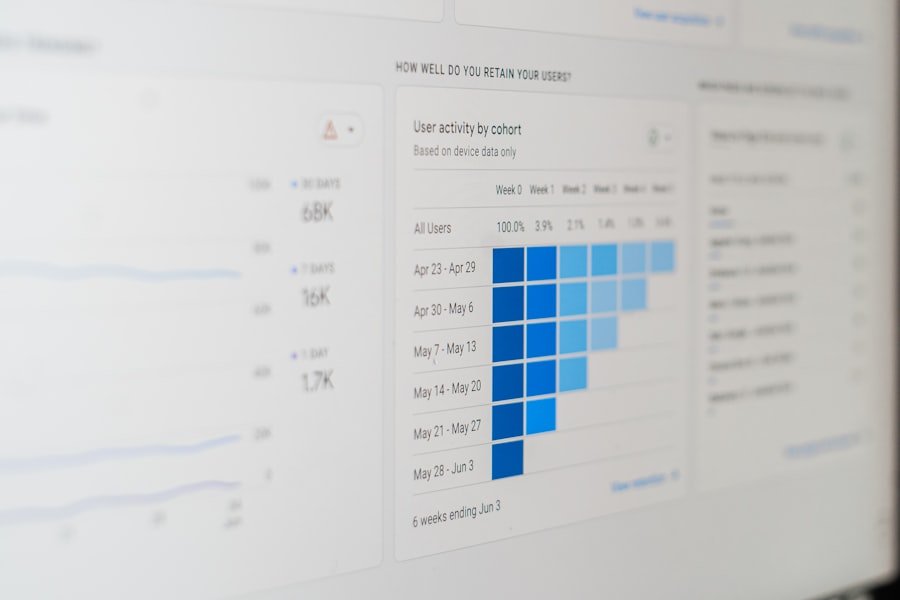
Having all the data is one thing; presenting it in a clear, concise, and persuasive manner is another. We need to tell a story that resonates with our audience.
Structuring Our Presentation
A well-structured presentation guides our stakeholders through our argument logically and effectively.
- Executive Summary: Start with the highlights. What’s the key ask, and what are the top 2-3 most compelling reasons for renewal? Make it digestible for busy executives.
- Problem/Opportunity & Solution: Briefly state the challenge or opportunity our department faces, and how the SaaS tool is the ideal solution.
- Key Performance Indicators (KPIs) & Metrics: Present the hard data. Use charts, graphs, and clear numbers to illustrate the value in terms of time savings, cost reductions, and strategic impact.
- User Testimonials/Feedback: Internal endorsements strengthen our case. Highlight positive anecdotes from team members who heavily rely on the tool.
- Risk Analysis of Non-Renewal: What happens if we don’t renew? Clearly outline the negative consequences, such as loss of efficiency, increased costs elsewhere, or inability to meet goals.
- Cost-Benefit Analysis: Directly compare the renewal cost against the quantified benefits. Clearly show the ROI.
Visualizing the Data
Numbers alone can be dry. Effective data visualization makes our case more impactful and easier to understand.
- Graphs and Charts: Use bar graphs for comparisons (e.g., “cost before vs. after”), line graphs for trends (e.g., “productivity over time”), and pie charts for proportions.
- Infographics: For complex workflows or multi-faceted benefits, a well-designed infographic can convey a lot of information quickly.
- Dashboards/Reporting: If the SaaS tool itself has robust reporting capabilities, leverage screenshots or live demonstrations of its impact.
Anticipating Objections and Preparing Responses
No pitch is complete without anticipating potential pushback. We need to be ready to address concerns head-on.
- “It’s too expensive”: Reiterate the ROI. Break down the cost by user or by feature to show the per-unit value. Compare it to the true cost of alternatives (manual processes, cheaper but less functional tools, or entirely different solutions like hiring more staff).
- “Can’t we find a cheaper alternative?”: Be ready with a competitor analysis. Highlight what our current tool does that cheaper alternatives don’t, emphasizing unique features or integrations crucial to our workflow. Calculate switching costs (time for training, data migration, potential workflow disruption).
- “Are we even using all the features?”: This is a valid question. We need to demonstrate sufficient utilization of key features. If there are underutilized features, address whether they could be better leveraged or if we can negotiate a tier closer to our actual usage. Sometimes, simply demonstrating the potential for future use can be a good defense.
- “What if we just stopped using it?”: This is where the risk analysis comes into play. Clearly articulate the negative consequences for productivity, project timelines, data integrity, or strategic goals.
Building a strong internal ROI case for your SaaS stack is essential for ensuring successful renewals and maximizing the value of your investments. To further enhance your understanding of this topic, you might find it beneficial to explore an article that discusses the importance of aligning product development with business objectives. This insightful piece can provide you with strategies to effectively communicate the value of your SaaS tools to stakeholders. For more information, check out this article on product development.
Continuous Monitoring and Optimization
| Metrics | Data |
|---|---|
| Customer Churn Rate | 10% |
| Customer Lifetime Value | 5000 |
| Renewal Rate | 90% |
| Cost of SaaS Stack | 10000 per year |
| ROI Calculation | (Renewal Rate * Customer Lifetime Value) – Cost of SaaS Stack |
Our job doesn’t end with a successful renewal. To make future renewals even easier, we need to continuously monitor our SaaS stack and ensure we’re getting the most out of each tool.
Regular Performance Reviews
Treat our SaaS tools like an employee during a performance review. How are they performing against the objectives we set out?
- Monthly/Quarterly Check-ins: Review key metrics related to cost, usage, and impact. Are we seeing the expected time savings? Are we hitting our efficiency targets?
- User Feedback Loops: Regularly solicit feedback from the team actually using the tool. What’s working well? What friction points exist? This helps us identify areas for better utilization or potential issues.
- Vendor Check-ins: Engage with our SaaS vendors. Are there new features we should be adopting? Are we using best practices? Are there opportunities for better pricing based on our usage data?
Optimizing Usage and Reducing Redundancy
A well-managed SaaS stack is clean, efficient, and free of unnecessary bloat.
- Feature Adoption Campaigns: If we identify underutilized features that could drive value, run internal campaigns or training sessions to boost adoption.
- Decommissioning Underperforming Tools: If a tool truly isn’t delivering, don’t be afraid to sunset it. This frees up budget and mental bandwidth for tools that do deliver.
- Consolidating Tools: Look for opportunities to consolidate functionalities into fewer, more robust tools, reducing complexity and often cost.
- Right-sizing Licenses: Are we paying for more seats or a higher tier than we actually need? Regularly review license allocation and usage data.
By proactively building an ROI case, not just reacting at renewal time, we empower ourselves to be strategic champions for our SaaS stack. This approach transforms the conversation from a cost-cutting exercise into a value-driven discussion, securing the resources we need and enhancing our department’s contribution to the broader organization. We move beyond simply using tools to strategically leveraging them for measurable success.
FAQs
What is an internal ROI case for SaaS stack renewals?
An internal ROI case for SaaS stack renewals is a presentation or document that outlines the return on investment (ROI) of renewing a company’s software as a service (SaaS) subscriptions. It typically includes an analysis of the costs and benefits of renewing the SaaS stack, as well as a comparison to alternative options.
What are the key components of building an internal ROI case for SaaS stack renewals?
Key components of building an internal ROI case for SaaS stack renewals include identifying the costs and benefits of renewing the SaaS subscriptions, analyzing the impact on productivity and efficiency, considering the potential for cost savings, and comparing the renewal costs to the value gained from the SaaS stack.
How can companies measure the ROI of SaaS stack renewals?
Companies can measure the ROI of SaaS stack renewals by calculating the total cost of ownership (TCO) of the SaaS subscriptions, including subscription fees, implementation costs, and ongoing support expenses, and comparing it to the value gained from the SaaS stack, such as increased productivity, improved customer satisfaction, and cost savings.
What are some strategies for presenting an internal ROI case for SaaS stack renewals to stakeholders?
Strategies for presenting an internal ROI case for SaaS stack renewals to stakeholders include using clear and concise language, providing data-driven evidence of the ROI, highlighting the impact on key business metrics, and addressing potential concerns or objections from stakeholders.
Why is it important to build an internal ROI case for SaaS stack renewals?
Building an internal ROI case for SaaS stack renewals is important because it helps companies make informed decisions about renewing their SaaS subscriptions, demonstrates the value of the SaaS stack to stakeholders, and ensures that the renewal aligns with the company’s overall business goals and objectives.