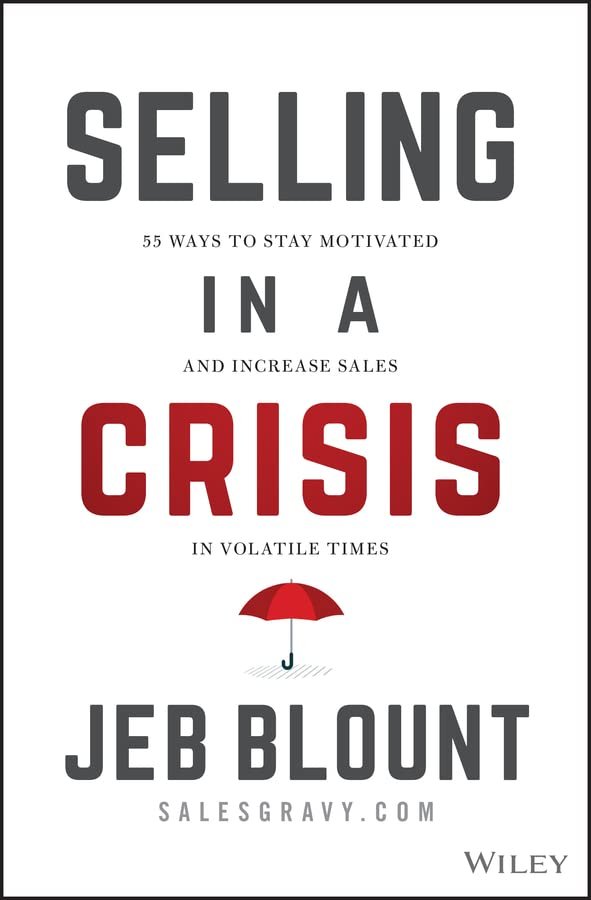
In Selling in a Crisis, Jeb Blount delivers a bracingly realistic playbook for navigating the volatile, uncertain, and often terrifying landscape of economic downturns and unexpected disruptions. His core thesis is that while crises fundamentally alter the buyer’s mindset, they also create unique opportunities for empathetic, value-driven sales professionals who can demonstrate genuine understanding and offer concrete solutions, not just products. This isn’t about hype; it’s about hard-won experience and actionable strategies to not only survive but thrive when the market trembles.
In the context of Jeb Blount’s insightful book review on “Selling in a Crisis,” it’s essential to consider how effective sales strategies can bridge the gap between uncertainty and opportunity. A related article that delves into the challenges of navigating market transitions is “Crossing the Chasm” by Geoffrey A. Moore. This work emphasizes the importance of understanding customer adoption cycles and offers valuable insights for sales professionals looking to thrive during turbulent times. For more information, you can read the article here: Crossing the Chasm.
The Imperative of Crisis Selling: A Paradigm Shift
The conventional wisdom of sales often focuses on abundance – identifying needs in a growing market, highlighting features, and closing deals based on perceived value. Selling in a Crisis forces a radical recalibration. Blount argues that during times of uncertainty, the buyer’s psychological landscape shifts dramatically. Fear, risk aversion, and a laser focus on survival and essential needs become paramount. This isn’t the time for aggressive, feature-dump sales pitches. Instead, success hinges on a deep understanding of the buyer’s heightened anxieties and a strategic pivot towards demonstrating how your offering can reduce their risk, solve their immediate pain points, and ensure their continuity.
The Crisis Buyer: Fear and Prudence Redefined
Blount meticulously dissects the crisis buyer’s motivations, painting a vivid picture of a mindset driven by a primal need for security. They are less concerned with aspirational gains and more with the immediate threats to their business. This means traditional objection handling techniques might fall flat. The buyer isn’t necessarily saying “no” to your product; they are saying “no” to perceived risk, to further expenditure when cash flow is king, and to the possibility of making a wrong decision that could exacerbate their precarious situation.
Shifting from “What If” to “What Is”:
One of the most crucial shifts Blount emphasizes is moving from speculative benefit selling to addressing tangible, immediate problems. Instead of painting a rosy future, the sales professional must articulate how their solution directly mitigates current threats. This requires a deeper dive into the customer’s operational realities, financial constraints, and strategic priorities as they exist now, not as they were a few months ago.
The Role of Trust and Empathy:
In a crisis, trust becomes the ultimate currency. Buyers are more likely to engage with, and ultimately purchase from, individuals and companies they believe truly understand their predicament and have their best interests at heart. This necessitates a significant investment in empathy, active listening, and genuine concern. It’s about building a human connection that transcends the transactional.
Beyond the Pitch: The Crisis-Proof Sales Process
Blount is not a proponent of simply “toughing it out.” His framework is built on a reconceptualized sales process, one that is inherently more resilient and adaptive. This involves scrutinizing every stage of the sales cycle, from prospecting to post-sale support, and infusing it with a crisis-conscious perspective. The emphasis shifts from volume to value, from broad strokes to precise interventions.
Reimagining Prospecting in a Downturn:
Prospecting during a crisis requires a more targeted and sensitive approach. Instead of casting a wide net, Blount advocates for identifying companies and individuals who are either less affected by the crisis, or whose specific challenges your solution is uniquely positioned to address. This might involve a deeper focus on industries deemed “recession-proof” or companies that have already signaled distress and are therefore actively seeking solutions.
The Art of Value Re-Articulation:
In a crisis, the perceived value of your offering may need to be re-articulated. What was once a “nice-to-have” feature might now be an essential component for survival. Conversely, what was a premium offering might need to be presented in a more digestible, phased approach to align with tightened budgets. This requires a deep understanding of your product’s core benefits and the ability to creatively frame them in the context of the current economic climate.
Key Insights

- Empathy as a Sales Superpower: Blount argues forcefully that genuine empathy is not a soft skill but a critical competitive advantage in a crisis. Understanding the buyer’s heightened fear and risk aversion allows you to tailor your message, build trust, and position your solution as a lifeline, not a luxury. This directly impacts customer retention by demonstrating commitment beyond the sale, fostering loyalty in turbulent times.
- Focus on Risk Mitigation and Continuity: In a crisis, buyers are primarily concerned with protecting what they have and ensuring their operations don’t falter. Your sales pitch must pivot from highlighting potential gains to demonstrating how your product or service actively reduces risk, prevents losses, and guarantees continuity. This directly translates to operational efficiency for the customer and can justify continued investment, thus safeguarding revenue growth.
- The Art of the “Right-Sized” Solution: Blount stresses the importance of being flexible and offering solutions that are tailored to the customer’s current financial realities. This might involve breaking down larger packages, offering phased implementations, or focusing on the most critical features that deliver immediate value. This pragmatic approach to pricing and packaging can be crucial for securing deals that might otherwise be lost due to budget constraints, thereby protecting revenue streams.
- Mastering the “No”: Blount dedicates significant attention to understanding and respectfully navigating the “no.” In a crisis, a “no” often stems from fear, indecision, or overwhelming pressure, not necessarily a rejection of your offering. He provides strategies for dissecting the true reasons behind the objection and for positioning yourself as a partner who can help overcome these hurdles, ultimately leading to higher conversion rates and sustained revenue.
Practical Application

- Conduct a “Crisis Readiness” Sales Audit: Immediately schedule a team meeting to review your current sales collateral, scripts, and objection handling strategies. Ask yourselves: “Does our messaging acknowledge the current economic climate? Are we explicitly addressing the buyer’s likely fears of risk, instability, and financial strain? Are we emphasizing how our offering provides security and continuity, rather than just potential growth?” Action: Update your core value propositions and sales enablement materials to reflect a crisis-aware perspective. Reframe benefits from “what you can gain” to “what you can avoid losing.”
- Implement “Empathy Mapping” for Key Accounts: For your top 5-10 most valuable accounts, create a brief “empathy map” for the primary decision-maker. Consider their likely concerns: What keeps them up at night right now? What are their immediate operational challenges? What is their perceived financial pressure? Action: Use this empathy map as a guide for your next outreach. Instead of leading with a product feature, start by acknowledging their likely challenges and asking how they are navigating the current environment.
In the insightful book review of “Selling in a Crisis” by Jeb Blount, the author emphasizes the importance of adapting sales strategies during challenging times. This theme resonates with the principles outlined in another article that discusses enhancing user experience in e-learning environments. By focusing on effective communication and engagement, both resources highlight the necessity of understanding your audience to achieve success. For more on this topic, you can explore the article on UX tips for better e-learning.
The Crisis-Proof Mindset: Beyond Tactics
| Aspect | Metrics |
|---|---|
| Book Title | Selling in a Crisis – Jeb Blount |
| Author | Jeb Blount |
| Genre | Business, Sales |
| Publication Date | April 14, 2020 |
| Pages | 240 |
| ISBN | 978-1119652591 |
Selling in a Crisis isn’t just a collection of techniques; it’s a profound reframing of the sales professional’s role. Blount champions a proactive, consultative, and deeply human approach. He emphasizes that the salesperson who can consistently demonstrate value, build unwavering trust, and offer pragmatic solutions will not only survive but will emerge stronger, having forged deeper relationships with their clients.
Cultivating Resilience: The Sales Professional’s Inner Game
The mental fortitude required to sell effectively during a crisis cannot be overstated. Blount dedicates space to the psychological toll that economic downturns can take on sales teams. He stresses the importance of maintaining a positive, yet realistic, outlook. This involves focusing on controllable factors, celebrating small wins, and continuously reinforcing the value proposition.
The Power of Self-Discipline:
In an environment of uncertainty, routine and discipline become anchors. Blount encourages sales professionals to maintain their disciplined approach to prospecting, qualification, and follow-up, even when the market appears to be contracting. This consistent effort, even in the face of headwinds, is what separates those who weather the storm from those who are swept away.
Learning from Every Interaction:
Every call, every meeting, and every objection is a learning opportunity. Blount advocates for a culture of continuous improvement, where the team actively debriefs on sales interactions, identifies what worked and what didn’t, and adjusts their strategies accordingly. This iterative process is crucial for staying agile and responsive in a rapidly changing environment.
The Future of Sales: Crisis-Informed and Customer-Centric
Blount’s work serves as a potent reminder that the principles of effective selling, while adaptable, are rooted in fundamental human needs. In a crisis, these needs are amplified – the need for security, for reliability, and for trustworthy guidance. The sales professional who can master the art of crisis selling will not only secure immediate business but will also build a foundation of enduring customer loyalty.
The Long-Term Impact of Crisis Selling:
Paradoxically, the sales professionals who are most adept at navigating crises are often those who build the strongest, most resilient customer relationships. By demonstrating unwavering support and delivering tangible value during difficult times, they foster a level of trust and loyalty that transcends economic cycles. This translates into higher lifetime customer value and a more predictable revenue stream.
Continuous Adaptation as a Core Competency:
The lessons learned from selling in a crisis are not temporary. They are fundamental to building a truly modern, customer-centric sales organization. The ability to adapt, to empathize, and to deliver value in the face of adversity is no longer a niche skill but a core competency that will define success in the years to come.
Final Verdict
Who Must Read This:
- Sales Leaders: This is your playbook for guiding your team through economic headwinds. It provides the strategic framework and tactical tools to ensure your team remains effective and motivated.
- Account Executives and Sales Professionals: If you’re on the front lines, this book offers actionable advice and a much-needed psychological boost. It will equip you to reframe your approach and speak directly to the anxieties of your prospects.
- Customer Success Leaders: Understanding the crisis buyer’s mindset is crucial for proactive customer retention. This book will help you anticipate and address potential churn drivers.
- CEOs and Senior Executives: Gain a clear understanding of how sales must adapt during downturns to protect and grow revenue.
Who Can Skip It:
- Sales professionals operating in consistently booming, recession-proof industries (though even they might glean valuable insights on enhancing empathy and objection handling).
- Individuals looking for “easy” sales hacks or quick wins. This book requires commitment and a willingness to adapt.
Bottom-Line Rating: ★★★★★ (A must-read, essential for any sales leader or professional operating in today’s volatile market.)
FAQs
What is the book “Selling in a Crisis” about?
The book “Selling in a Crisis” by Jeb Blount provides strategies and techniques for sales professionals to navigate and succeed in challenging economic and market conditions.
Who is the author of “Selling in a Crisis”?
The author of “Selling in a Crisis” is Jeb Blount, a sales acceleration specialist, speaker, and author who has written several bestselling books on sales and business.
What are some key takeaways from “Selling in a Crisis”?
Some key takeaways from “Selling in a Crisis” include the importance of adapting to changing market conditions, building resilience, and maintaining a customer-centric approach in sales.
Who is the target audience for “Selling in a Crisis”?
The book “Selling in a Crisis” is targeted towards sales professionals, business leaders, and anyone looking to improve their sales performance in challenging economic environments.
Where can I purchase “Selling in a Crisis”?
“Selling in a Crisis” is available for purchase online through various retailers such as Amazon, Barnes & Noble, and other bookstores. It is also available in e-book and audiobook formats.