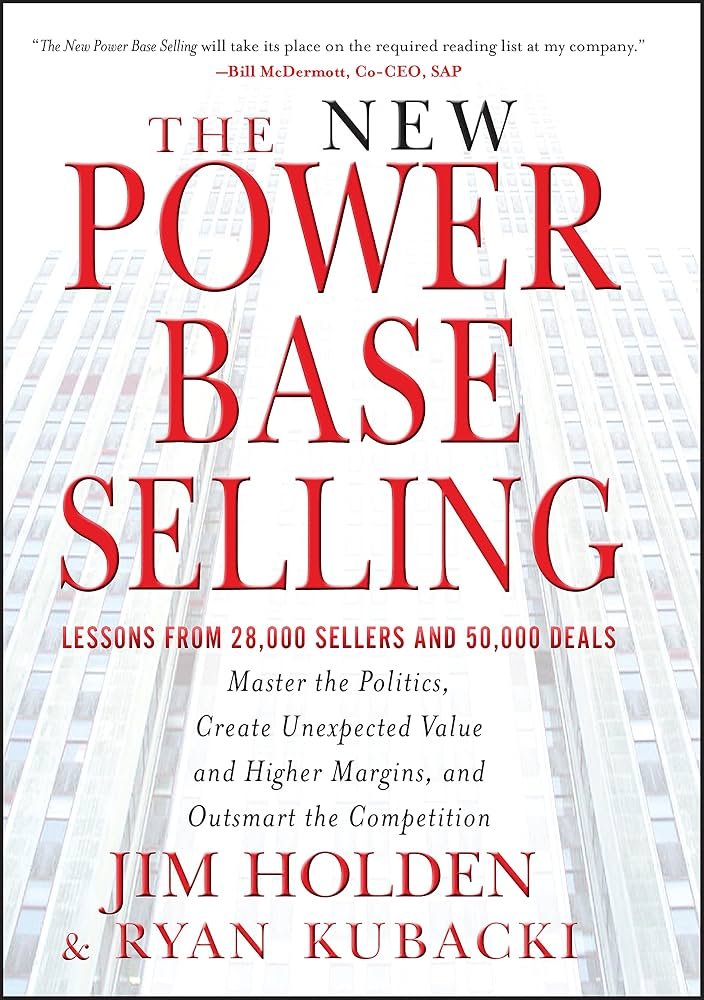
“The New Power Base Selling” demolishes the myth of selling solely on product features and price. Instead, Holden and Kubacki reveal how to master the intricate political landscape within customer organizations to uncover hidden needs, build deep relationships with key decision-makers, and create undeniable value that commands premium pricing and secures long-term loyalty. This isn’t about manipulation; it’s about strategic intelligence and delivering superior outcomes for both your client and your own business.
In the realm of sales strategies, the insights provided in “The New Power Base Selling: Master The Politics, Create Unexpected Value and Higher Margins, and Outsmart the Competition” by Jim Holden and Ryan Kubacki are invaluable. For those looking to further enhance their understanding of effective selling techniques and market dynamics, a related article can be found at this link. This article delves into innovative approaches that complement the principles outlined in Holden and Kubacki’s work, offering readers additional tools to navigate the complexities of modern sales environments.
Key Insights
- Deconstructing the Power Matrix: Moving Beyond the Obvious Stakeholders. Traditional sales approaches often focus on the presumed buyer or budget holder. This book forces a critical re-evaluation, pushing for the identification and engagement of the actual power base. This includes influencers, saboteurs, champions, and gatekeepers – individuals who, irrespective of their title, wield significant influence over the purchasing decision. For CX leaders, understanding this matrix is paramount for embedding customer-centricity at all organizational levels within client accounts. It allows for proactive identification of potential roadblocks and proactive cultivation of internal advocates who can champion your solutions and the value proposition you deliver, thereby enhancing customer retention by minimizing friction.
- The Art of “Unexpected Value” Creation: Elevating Beyond Transactional Exchange. The authors argue that true competitive advantage lies in consistently delivering value that exceeds initial expectations. This isn’t about throwing in extra services for free; it’s about understanding the broader strategic objectives of the client and identifying opportunities to contribute to their success in ways they may not have explicitly articulated. For operators, this translates to optimizing internal processes to deliver more than just the core product or service. For strategists, it means designing offerings and engagement models that inherently build in these value-adding elements. This focus on unexpected value is a direct driver of customer loyalty and reduces churn by making your offering indispensable, moving the relationship from a vendor-client dynamic to a strategic partnership. This, in turn, directly impacts revenue growth through increased lifetime customer value and reduced acquisition costs.
- Navigating Political Currents: Building Bridges, Not Just Relationships. Selling to complex organizations is inherently a political act. Holden and Kubacki provide a framework for understanding and navigating these political dynamics, emphasizing the importance of empathy, intelligence gathering, and strategic communication. This involves mapping internal rivalries, understanding departmental objectives, and identifying the “unseen” decision criteria. For sales leaders, this offers a roadmap to move beyond transactional selling and into strategic account management. For CX leaders, it highlights the importance of understanding the internal client landscape to better tailor service delivery and communication, ensuring that the customer experience is not just positive from an end-user perspective but also aligns with the internal political realities of the client organization. This understanding is critical for both customer retention and for identifying opportunities for upselling and cross-selling, thereby driving revenue growth.
- The “Higher Margins” Imperative: Justifying Premium Pricing Through Superior Engagement. The book directly tackles the perennial challenge of price competition. By mastering the “new power base selling” methodology, sales professionals can effectively demonstrate a level of value and strategic partnership that justifies premium pricing. This is achieved by moving the conversation away from cost and towards ROI, risk mitigation, and strategic advantage. For senior leaders, this provides a powerful argument for investing in advanced sales training and customer success initiatives. It underscores that superior customer experience and deep account penetration are not merely costs but strategic investments that directly contribute to higher profit margins and sustainable revenue growth. This insight is critical for any executive focused on improving operational efficiency and maximizing profitability.
Practical Application

- Immediate Action 1: Conduct a “Power Mapping” Exercise. For your next significant sales opportunity or existing key account, dedicate 30 minutes with your sales or account management team to map the political landscape. Beyond the known stakeholders, identify:
- The Champions: Who internally advocates for solutions like yours, even unofficially?
- The Influencers: Who does the decision-maker listen to and rely on for advice, even if they don’t have formal authority?
- The Gatekeepers: Who controls access to key individuals or information?
- The Potential Saboteurs: Who might actively or passively resist your involvement, and why?
For each identified individual, briefly note their perceived interests, potential motivations, and how they might influence the decision. This exercise, directly drawn from the book’s emphasis on understanding the power base, will immediately shift your team’s focus from a linear sales process to a more nuanced, strategic engagement. This is a direct application for improving customer retention by understanding the internal dynamics that can foster or hinder a strong client relationship.
- Immediate Action 2: Identify and Document “Unexpected Value” Opportunities. Review your current service delivery or product offering. For a specific client or segment, brainstorm two ways you could demonstrably add value beyond the agreed-upon scope. This could involve:
- Proactively sharing relevant industry insights that could impact their business.
- Identifying an inefficiency in their internal process that your expertise could address, even if it’s not directly related to your product.
- Providing a training session or resource that upskills their team in a tangential area.
The key is to identify an opportunity that is genuinely beneficial to the client and that you can deliver without significant strain on your resources. This aligns with the book’s core tenet of creating unexpected value, which is a powerful driver of customer loyalty, reduces churn, and creates a compelling reason for clients to remain engaged, ultimately impacting revenue growth through increased lifetime value.
Final Verdict

“The New Power Base Selling” is not a light read, nor is it for the uninitiated. It demands intellectual rigor and a commitment to fundamentally rethinking how sales and customer engagement operate in today’s complex business environment. This book is an absolute must-read for senior sales leaders, VPs of Sales, account management executives, and anyone responsible for driving significant revenue growth through strategic client relationships. CX leaders who are tasked with not just delivering satisfaction but driving deeper client partnerships will also find immense value in its insights. Business strategists seeking to understand how to build and sustain competitive advantage through superior customer engagement should also prioritize this read.
Those whose roles are highly transactional, focused on high-volume, low-complexity sales, or who are comfortable with existing, less sophisticated sales methodologies, can likely skip this book. Its depth and strategic focus might be overkill for their immediate needs.
Bottom-Line Rating: 5/5 Stars. This is a definitive guide for anyone serious about winning in complex B2B sales environments and building truly sticky customer relationships. It’s a game-changer.
In their insightful book, “The New Power Base Selling,” Jim Holden and Ryan Kubacki delve into the intricate dynamics of modern sales strategies, emphasizing the importance of understanding political landscapes within organizations. For those interested in exploring how consumer behavior influences decision-making in various sectors, a related article on short programs and consumer behavior can provide valuable context. You can read more about this fascinating topic here. The intersection of these ideas highlights the necessity for sales professionals to adapt and thrive in an ever-evolving marketplace.
The Strategic Imperative of Political Acumen in Modern Sales
| Aspect | Details |
|---|---|
| Title | The New Power Base Selling: Master The Politics, Create Unexpected Value and Higher Margins, and Outsmart the Competition |
| Authors | Jim Holden and Ryan Kubacki |
| Genre | Business, Sales |
| Key Topics | Power base selling, Politics in sales, Creating value, Outsmarting the competition |
| Main Focus | Empowering sales professionals with strategies to navigate the political landscape within organizations, create unexpected value, and achieve higher margins |
In the relentless pursuit of revenue growth and market dominance, businesses often fall prey to simplistic sales paradigms. They focus on product features, price wars, and transactional efficiency, overlooking the intricate web of human dynamics and organizational politics that truly dictate success. “The New Power Base Selling: Master The Politics, Create Unexpected Value and Higher Margins, and Outsmart the Competition” by Jim Holden and Ryan Kubacki is a powerful antidote to this pervasive myopia. It’s a book that challenges conventional wisdom and offers a robust, actionable framework for navigating the complex landscape of modern B2B sales. This isn’t just about selling; it’s about understanding organizations, influencing stakeholders, and creating indelible value that transcends the transactional.
Deconstructing the Sales Landscape: Beyond the Org Chart
Holden and Kubacki’s central thesis is deceptively simple yet profoundly impactful: selling effectively requires understanding and mastering the political landscape within a customer organization. This goes far beyond identifying the primary point of contact or the signatory on the contract. The authors advocate for a deep dive into the power structures, unwritten rules, and hidden agendas that shape every purchasing decision.
The Myth of the Sole Decision-Maker
One of the most significant revelations in the book is the debunking of the myth of the sole decision-maker. In reality, complex sales are rarely decided by a single individual. Instead, they are influenced by a constellation of stakeholders, each with their own motivations, priorities, and levels of influence. Holden and Kubacki introduce the concept of the “power base,” a multidimensional network encompassing individuals who can either champion or derail a deal.
Identifying the Unseen Architects of Decision-Making
This involves meticulous identification and analysis. It’s not enough to know the job titles; one must understand the informal hierarchies, the relationships between individuals, and the unvoiced concerns that can sway opinions. This includes:
- The Champion: The internal advocate who sees the value and actively promotes your solution.
- The Influencer: The individual whose opinion carries weight with the ultimate decision-maker, even if they lack formal authority.
- The Gatekeeper: The person who controls access to key individuals or critical information, acting as a crucial node in the network.
- The Saboteur: The individual who, for whatever reason, may actively or passively resist the proposed solution, posing a significant threat to the deal’s progress.
For customer experience (CX) leaders, this insight is invaluable. Understanding the internal political dynamics of a client organization allows for a more nuanced and effective approach to service delivery and relationship management. By recognizing who holds sway internally, CX professionals can proactively address potential concerns, cultivate internal advocates for customer success, and ensure that the customer experience aligns with the broader organizational objectives, thereby enhancing customer retention and reducing the risk of churn.
The Strategic Advantage of Political Intelligence
Mastering this political intelligence provides a distinct competitive advantage. It allows sales teams to tailor their communication, anticipate objections, and build consensus more effectively. This proactive approach minimizes surprises and allows for the development of more robust account strategies, leading to more predictable revenue streams and a stronger, more resilient customer base. For operators, this translates to smoother implementation and fewer post-sale surprises, while strategists can leverage this intelligence to inform product development and market entry strategies.
Creating Unexpected Value: The Differentiator in a Crowded Market
In today’s hyper-competitive landscape, simply meeting customer expectations is no longer sufficient. Holden and Kubacki champion the concept of “unexpected value” – the deliberate creation of benefits that go above and beyond the agreed-upon terms of a transaction. This is not about giving things away for free; it’s about demonstrating a deeper understanding of the client’s business and contributing to their success in ways they may not have initially considered.
Elevating Beyond the Transactional
The authors argue that the most successful sales engagements are those that transcend a simple vendor-client relationship and evolve into strategic partnerships. This shift occurs when the seller consistently demonstrates an ability to solve broader business problems, not just specific product needs.
Identifying Opportunities for Value Augmentation
This requires a proactive and investigative mindset. Sales professionals and CX teams must constantly ask:
- What are the client’s overarching strategic goals?
- What are the hidden challenges or inefficiencies they face?
- How can our expertise, even outside the immediate scope of our offering, contribute to their success?
For instance, a software vendor might identify an operational bottleneck in a client’s manufacturing process that, while not directly related to their software, could be mitigated through their team’s industry expertise. Providing guidance in such an area, even informally, creates significant goodwill and solidifies the partnership. This focus on unexpected value is a direct driver of customer loyalty and significantly reduces churn. When clients perceive that their vendor is a strategic partner invested in their overall success, they are far less likely to explore alternative solutions, thus directly impacting revenue growth through increased lifetime customer value.
Embedding Value Creation into the Sales Process
This philosophy needs to be woven into the fabric of the sales process. It means shifting the conversation from features and benefits to outcomes and strategic impact. It requires sales teams to be trained not just on product knowledge but also on business acumen, industry trends, and problem-solving methodologies. For operators, this means optimizing internal processes to ensure that the “extra” value can be delivered efficiently and consistently without compromising core service delivery. This focus on delivering more than expected is a powerful tool for justifying premium pricing and securing higher margins.
Navigating the Political Currents: Diplomacy, Data, and Dexterity
The book delves deeply into the practicalities of navigating organizational politics. It emphasizes that this is not about manipulation or deception, but about intelligent engagement, strategic communication, and building genuine trust within a complex stakeholder network.
The Art of Empathetic Influence
Holden and Kubacki advocate for an empathetic approach, urging sales professionals to understand the perspectives, pressures, and motivations of every individual within the power base. This involves active listening, thorough research, and a willingness to see the situation from multiple angles.
The Role of Data in Political Strategy
Data plays a critical role in this political navigation. It’s not just about gathering facts; it’s about using those facts to build a compelling narrative, identify leverage points, and demonstrate the tangible impact of your proposed solution. This includes:
- Quantifying Value: Translating qualitative benefits into concrete, measurable outcomes such as cost savings, revenue increases, or efficiency gains.
- Risk Mitigation: Clearly outlining how your solution can reduce or eliminate existing risks within the client’s organization.
- Competitive Benchmarking: Providing data that demonstrates how your offering compares favorably to alternatives, not just in price but in overall value proposition.
For sales leaders, this provides a framework for coaching their teams to move beyond feature-dumping and towards value-driven conversations. For CX leaders, it means understanding that a positive customer experience is often influenced by how well the organization’s internal stakeholders perceive the value and impact of the vendor’s services. This deep understanding of internal client politics is crucial for both customer retention and for identifying opportunities for upselling and cross-selling, thereby driving revenue growth.
Building Bridges and Neutralizing Opposition
The book provides strategies for building bridges with potential champions and influencers, and for neutralizing or managing the impact of saboteurs. This involves tailored communication, understanding individual communication preferences, and strategically addressing concerns before they escalate. It’s about demonstrating a commitment to understanding and resolving issues, even those that are not directly within your purview. This strategic approach to relationship building and political navigation is a cornerstone of achieving higher margins and outsmarting the competition.
The “Higher Margins” Imperative: Justifying Premium Pricing Through Superior Engagement
A significant outcome of mastering “The New Power Base Selling” is the ability to command higher margins. The authors contend that price competition is often a symptom of a poorly articulated value proposition and a lack of deep customer engagement. By focusing on political mastery and unexpected value creation, sales professionals can shift the conversation away from cost and towards strategic advantage.
Moving Beyond Price Sensitivity
When customers perceive true, differentiated value, they are less susceptible to price-based objections. This perceived value is built through a deep understanding of their business, a demonstrable ability to solve their most pressing problems, and a consistent track record of exceeding expectations.
The ROI of Strategic Partnerships
Holden and Kubacki empower sales teams to articulate the return on investment (ROI) of their solutions, not just in terms of direct cost savings but also in terms of enhanced competitive positioning, reduced risk, and accelerated growth. This is where the political intelligence becomes critical; by understanding the strategic priorities of key stakeholders, sales professionals can frame their offerings in a way that directly aligns with those priorities, making the price point a secondary consideration to the strategic benefit.
For senior executives, this provides a powerful argument for investing in advanced sales training and customer success initiatives. It underscores that deep customer engagement and the ability to navigate complex organizational dynamics are not merely operational expenses but strategic investments that directly contribute to higher profit margins and sustainable revenue growth. This insight is critical for any executive focused on improving operational efficiency and maximizing profitability.
The Operational and Strategic Payoff
The principles outlined in “The New Power Base Selling” have far-reaching implications beyond the sales floor. For operational leaders, understanding the political landscape within client organizations can lead to smoother project implementations, reduced friction during change management, and a more predictable delivery cycle. This alignment of sales strategy with operational realities ensures that the customer experience is not only positive but also seamlessly integrated into the client’s business.
Strategic Foresight and Competitive Agility
For strategists, the book offers a lens through which to view market dynamics. By understanding how power and influence operate within customer organizations, businesses can better anticipate market shifts, identify emerging trends, and develop more agile strategies for market entry and expansion. The ability to consistently create unexpected value and build strong, politically astute relationships makes a company a more formidable competitor, less susceptible to disruption and better positioned for long-term success.
Driving Customer Retention and Revenue Growth
Ultimately, the book provides a holistic approach to customer engagement that drives both customer retention and revenue growth. By focusing on building deep, value-driven relationships that are insulated from superficial price competition, businesses can secure long-term loyalty, reduce churn, and create opportunities for expansion within existing accounts. The “New Power Base Selling” is not a tactical manual for quick wins; it’s a strategic blueprint for building a more resilient, profitable, and customer-centric business for the future. It’s a must-read for any leader who is serious about winning in today’s complex business world.
FAQs
What is the book “The New Power Base Selling” about?
The book “The New Power Base Selling” by Jim Holden and Ryan Kubacki is a guide to mastering the politics of selling, creating unexpected value, and outsmarting the competition in the sales industry. It provides strategies for building strong relationships with customers and increasing sales margins.
Who are the authors of “The New Power Base Selling”?
The authors of “The New Power Base Selling” are Jim Holden and Ryan Kubacki. Jim Holden is the founder of Holden Advisors, a global sales consultancy, and Ryan Kubacki is the President of Holden Advisors. They have extensive experience in sales and have worked with numerous companies to improve their sales strategies.
What are some key topics covered in “The New Power Base Selling”?
Some key topics covered in “The New Power Base Selling” include understanding the power base within customer organizations, creating and delivering unexpected value to customers, and outsmarting the competition through strategic selling techniques. The book also provides insights into building strong customer relationships and increasing sales margins.
Who is the target audience for “The New Power Base Selling”?
The target audience for “The New Power Base Selling” includes sales professionals, sales managers, and anyone involved in the sales process within an organization. The book provides valuable insights and strategies for improving sales performance and building strong customer relationships.
What are some of the benefits of reading “The New Power Base Selling”?
Some of the benefits of reading “The New Power Base Selling” include gaining a deeper understanding of the politics of selling, learning how to create unexpected value for customers, and gaining strategies for outsmarting the competition. The book also provides practical advice for increasing sales margins and building long-term customer relationships.