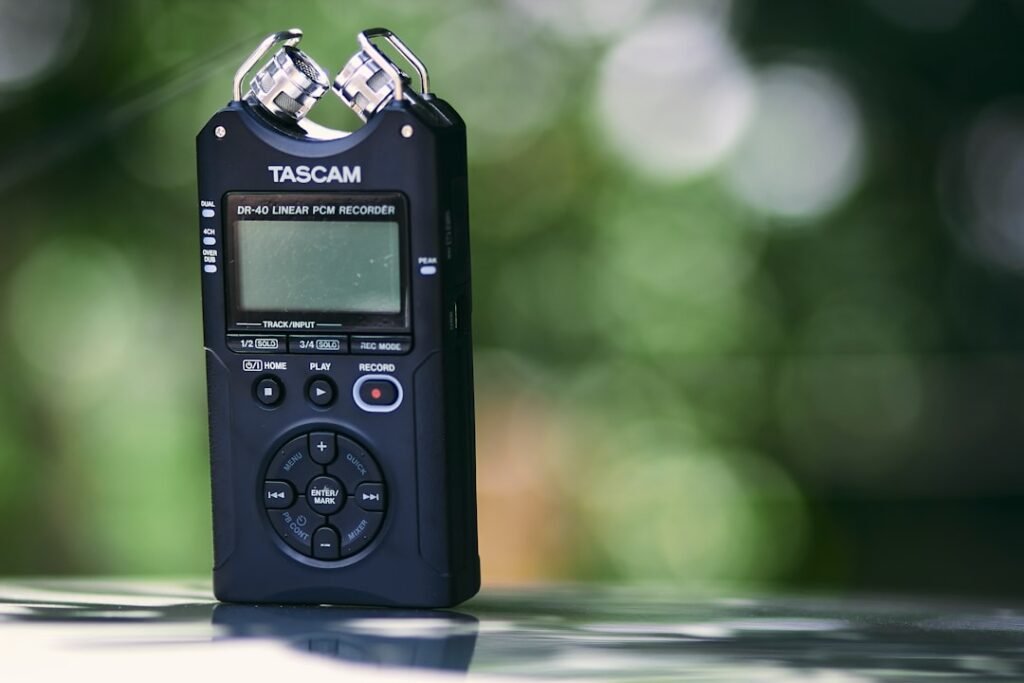
We, as sales engineers, sit at a crucial intersection. We are the bridge between cutting-edge technology and customer needs, the interpreters of complex features into tangible benefits. Our role is inherently dynamic, requiring an intricate understanding of both the product and the pain points of our prospective clients. For years, we’ve gathered invaluable feedback during our demonstrations – the subtle nods, the pointed questions, the expressions of genuine excitement, and the equally important criticisms. This feedback, however, has often been a goldmine we’ve struggled to fully exploit. It’s often been fragmented, anecdotal, and difficult to funnel directly and efficiently to our product engineering teams. But now, we’re on the cusp of a significant shift, one that promises to revolutionize how we contribute to product development: the Smart Demo Recorder, powered by advancements in Artificial Intelligence.
This isn’t merely about recording calls; it’s about intelligent extraction, analysis, and direct routing of critical technical feature feedback. We’re moving beyond manual note-taking and subjective interpretations to a system that objectively identifies, categorizes, and prioritizes product insights, making us more effective and our product engineering teams more responsive.
The Unleveraged Goldmine: Bridging the Feedback Gap
For too long, the wealth of technical feedback generated during our demo calls has remained largely untapped, or at best, partially utilized. We spend hours, sometimes days, crafting and delivering compelling demonstrations of our products. In these interactions, customers don’t just express interest; they articulate desires, highlight shortcomings, and often, without realizing it, provide invaluable input on how our product could be better, faster, or more aligned with their real-world challenges.
The Traditional Bottlenecks We Faced
Historically, transmitting this nuanced feedback has been a laborious and often incomplete process. We’ve relied on several methods, each with its own inherent limitations:
- Manual Note-Taking: While diligent, our notes are inherently subjective and often miss the finer details or the emotional tone behind a customer’s comment. During a live demo, our primary focus is on the customer and the flow of the presentation, not on meticulously transcribing every technical query.
- Post-Call Summaries: After the call, we’d try to recall key points, but memory fades, and the urgency to move to the next task often meant these summaries were brief and focused more on deal progression than granular technical feedback.
- CRM Entries: We’d often log general feedback in our CRM, but these were typically high-level and rarely captured the specific technical nuances required by engineering. “Customer wants X” is helpful, but “Customer noticed the latency when X loads, and suggested alternative rendering approach Y” is far more valuable.
- Ad-Hoc Conversations: Direct chats with product managers or engineering leads were effective for urgent issues but lacked a systematic approach for comprehensive feedback collection. It was often reactive, not proactive.
The Cost of Delayed or Lost Feedback
The consequence of these traditional methods was significant. We saw:
- Slower Product Iteration: Engineering teams lacked real-time, comprehensive user insights, leading to longer development cycles for features that truly addressed market needs.
- Misaligned Development Priorities: Without clear, data-driven feedback, product roadmaps could sometimes veer in directions that didn’t fully resonate with customer demands.
- Increased Customer Churn: Features customers explicitly requested might be delayed or overlooked, leading to frustration and potential loss of business.
- Underestimation of Sales Engineers’ Value: Our strategic insights, though vital, weren’t systematically integrated into the product lifecycle, diminishing our perceived contribution beyond closing deals.
We understood that there was a critical gap, and we sought a solution to bridge it, not just for efficiency, but for true product excellence.
In the realm of enhancing sales engineering processes, The Smart Demo Recorder: Extracting Technical Feature Feedback from Calls Directly to Product Engineering offers valuable insights into how AI can streamline communication between sales teams and product development. For those interested in further exploring the intersection of technology and resilience, a related article is available that reviews the concepts presented in Nassim Nicholas Taleb’s book, “Antifragile.” This article delves into how systems can benefit from volatility and uncertainty, paralleling the adaptive strategies discussed in the Smart Demo Recorder. You can read more about it here: Antifragile Book Review.
Introducing the Smart Demo Recorder: Our AI-Powered Assistant
Enter the Smart Demo Recorder, our groundbreaking answer to the feedback dilemma. This isn’t just a transcription tool; it’s an intelligent system designed to act as an extension of our sales engineering team, meticulously capturing, analyzing, and synthesizing technical feedback from every customer interaction.
How It Works: Beyond Basic Transcription
At its core, the Smart Demo Recorder leverages advanced AI capabilities to transform raw audio and video from our demo calls into actionable insights for product engineering. Here’s a breakdown of how we envision and utilize its impressive functionalities:
- High-Fidelity Recording and Transcription: Of course, it records and transcribes with remarkable accuracy, capturing every word spoken by both us and the customer. This serves as the foundational data layer.
- Natural Language Processing (NLP) for Intent Recognition: This is where the “smart” truly comes in. NLP models are trained to identify specific types of language patterns that indicate technical feedback. This includes:
- Feature Requests: “Could it do X?” “It would be great if it also had Y.”
- Bugs/Defects: “I noticed Z wasn’t working as expected.” “There was a glitch when I tried to A.”
- Usability Issues: “It was a bit confusing to find B.” “I struggled with the workflow for C.”
- Performance Concerns: “Is there a delay when D loads?” “How does it handle E at scale?”
- Comparative Feedback: “Our current system handles F better.” “Competitor G has feature H.”
- Sentiment Analysis within Technical Context: Understanding the emotion behind a technical comment is crucial. Was the customer merely curious, or genuinely frustrated? Our AI can gauge sentiment around specific features, helping us prioritize urgent issues from mere suggestions. A negative sentiment associated with a core feature highlights a critical pain point.
- Automated Tagging and Categorization: Once identified, the AI automatically tags and categorizes these feedback points based on predefined product modules, feature sets, or technical domains (e.g., “Performance – Database Query,” “UI/UX – Navigation,” “Integration – API Endpoint”). This structured data is invaluable for engineers.
- Speaker Diarization for Context: The system can differentiate between speakers, allowing us to attribute feedback directly to the customer, adding vital context and credibility to the insights. Knowing it was the Head of Engineering, not just a junior user, who expressed a performance concern, changes its weight.
Data Security and Privacy Considerations
We understand the paramount importance of data security and privacy. Our Smart Demo Recorder adheres to the strictest industry standards for data encryption, access control, and compliance regulations (e.g., GDPR, CCPA). Customer consent for recording is, of course, always obtained prior to any call, and anonymization options can be applied where necessary. We believe responsible AI implementation is non-negotiable.
Streamlined Workflow: From Customer Insight to Engineering Action
The true power of the Smart Demo Recorder lies in its ability to transform raw data into a seamless workflow that directly informs and accelerates product engineering. We’re moving from scattered observations to a cohesive, quantifiable feedback loop.
Automated Feedback Routing and Prioritization
No more sifting through emails or forgotten notes. Once technical feedback is identified, categorized, and analyzed for sentiment and urgency, the Smart Demo Recorder automatically:
- Routes to Relevant Teams: Specific feedback points are sent directly to the responsible product managers, engineering leads, or even specific development teams via integrated platforms (e.g., Jira, Asana, Slack). A UI/UX concern goes to the design team, a backend performance issue to the core engineering team.
- Assigns Priority Scores: Based on factors like sentiment, frequency of similar feedback, and the seniority of the customer providing it, the AI can assign a preliminary priority score. This helps engineering teams quickly identify critical issues versus nice-to-have suggestions.
- Aggregates Trends: The system doesn’t just send individual snippets. It identifies recurring themes and trends across multiple demo calls. If five different customers mention a desire for a particular integration, that signal becomes much stronger and more difficult for product management to ignore.
Enriching the Product Backlog
Our input, traditionally anecdotal, now becomes data-rich. We’re contributing directly to the product backlog in a meaningful way:
- Detailed User Stories: The extracted feedback, complete with customer quotes and context, provides a solid foundation for crafting comprehensive user stories within engineering. Instead of “As a user, I want X,” we get “As [Customer Persona] from [Company A], I specifically struggled with [Problem Y] when using [Feature Z], and they suggested [Solution A] with [Implicit Benefit B].”
- Quantifiable Impact: By tracking the frequency and sentiment of specific feedback, we can demonstrate the potential impact of addressing certain features or bugs. This data-driven approach strengthens the business case for particular engineering efforts.
- Reduced Discovery Time: Engineering teams no longer need to conduct extensive internal research to understand the “why” behind a feature request. The customer’s voice, direct and unadulterated, is delivered straight to them.
The Sales Engineer’s Enhanced Role
This system doesn’t diminish our role; it elevates it. We remain the crucial human element, building relationships and understanding complex business needs. The Smart Demo Recorder simply augments our ability to channel those insights:
- Focus on Strategic Engagement: Freed from meticulous note-taking, we can dedicate more attention to understanding deeper customer challenges and strategic implications during calls.
- Data-Backed Advocacy: When we advocate for a feature or a bug fix, we do so with concrete evidence gathered systematically, not just personal observations. “We’ve heard this from 15 high-value prospects in the last month” is far more impactful than “I think customers want this.”
- Closer Collaboration with Engineering: This direct feedback loop fosters a more collaborative environment between sales engineering and product engineering, breaking down traditional silos. We become genuine extensions of the product team.
Tangible Benefits: What We’re Already Seeing
The implementation of the Smart Demo Recorder is already yielding significant advantages for us, our customers, and our product engineering teams. We’re not just hoping for better outcomes; we’re actively realizing them.
Accelerated Product Development Cycles
One of the most immediate and impactful benefits we’ve observed is the dramatic shortening of the feedback loop.
- Faster Bug Fixes: When customers flag a specific technical issue, the AI identifies it, categorizes it as a potential bug, notes the negative sentiment, and routes it to the relevant engineering team almost instantaneously. This means critical bugs are identified and addressed weeks, if not months, faster than before.
- Rapid Feature Prioritization: By aggregating recurring feature requests and assessing their collective impact and urgency across multiple demos, product managers can more quickly decide which features to prioritize in upcoming sprints, ensuring that our roadmap aligns directly with market demand.
- Reduced Design Rework: By capturing nuanced usability feedback early in the sales cycle, the design and UI/UX teams receive actionable insights before significant development effort is invested, reducing costly rework down the line.
Enhanced Product-Market Fit
Ultimately, our goal is to build products that customers not only want but desperately need. The Smart Demo Recorder is proving to be a powerful tool in achieving this.
- Data-Driven Roadmap Decisions: Product roadmaps are no longer based solely on internal assumptions or a few key accounts. They are now informed by a broad, continually updated stream of direct customer feedback from hundreds of demo calls. This ensures every new feature or improvement directly addresses a real pain point or provides a valuable enhancement.
- Improved User Experience: By systematically capturing and addressing every comment related to usability, performance, and functionality, we are continuously refining the product to provide a more intuitive, efficient, and satisfying user experience.
- Competitive Edge: By rapidly iterating and enhancing our product based on real-time market feedback, we stay ahead of competitors who might still be relying on slower, less efficient feedback mechanisms. We are more responsive to market shifts and emerging customer needs.
Empowered Sales Engineering Team
This technology is not about replacing us; it’s about amplifying our impact and making our jobs more fulfilling.
- Stronger Voice in Product Strategy: With quantifiable data at our fingertips, we, as sales engineers, have a more powerful and credible voice in product strategy meetings. Our insights are no longer anecdotal but data-backed and impactful.
- Increased Efficiency and Focus: By automating the mundane tasks of feedback capture and initial analysis, we are freed up to focus on the higher-value aspects of our role: building rapport, understanding complex business challenges, and crafting tailored solutions.
- Enhanced Job Satisfaction: Knowing that our daily interactions are directly shaping the future of our product, and that our insights are actively being used to improve it, provides a significant boost to job satisfaction and a sense of purpose. We are no longer just selling a product; we are actively co-creating its evolution.
In the realm of enhancing product development through customer insights, an intriguing article discusses strategies for managing digital distractions in educational settings. This piece highlights how maintaining focus can significantly improve learning outcomes, paralleling the importance of capturing technical feedback during sales calls. By effectively addressing distractions, educators can create an environment conducive to learning, much like how The Smart Demo Recorder aims to streamline feedback collection for product engineering. For more insights on this topic, you can read the article on dealing with digital distractions in the physical classroom.
The Future of AI in Sales Engineering: Beyond Feedback
The Smart Demo Recorder is just the beginning. We envision a future where AI continues to profoundly augment the role of sales engineering, transforming us into even more strategic partners in the product lifecycle.
Predictive Analytics for Feature Requests
Imagine a system that not only extracts current feedback but can also predict nascent feature requests or potential areas of friction based on patterns across thousands of demos.
- Proactive Product Development: AI could analyze trends, even subtle ones, in customer inquiries or expressed desires to proactively suggest new features or improvements before they become widespread demands. This would allow product engineering to get ahead of the curve.
- Market Trend Identification: By cross-referencing demo feedback with broader market data and industry news, AI could help identify emerging market trends and suggest how our product could adapt or expand to meet those new opportunities.
- Personalized Demo Content: Over time, the AI could even recommend specific demo flows or feature highlights based on the identified needs and pain points of a particular prospect, further tailoring our presentations for maximum impact.
Automated Demo Feedback Summaries for Sales
The benefits extend beyond product engineering. Sales teams also stand to gain immensely.
- Quick Deal Insights: AI could generate concise, actionable summaries of customer pain points, key interests, and noted objections directly from the demo, providing sales representatives with crucial information for follow-up and objection handling.
- Tailored Follow-Up Materials: Based on the AI’s analysis, the system could automatically suggest or even draft personalized follow-up emails, highlighting the features that resonated most with the customer or directly addressing their specific concerns.
- Improved Sales Forecasting Accuracy: By understanding the depth of customer engagement and the alignment of our product with their critical needs, AI could provide more accurate predictions of deal closure probabilities.
Continuous Learning and Iteration
The beauty of AI is its ability to learn and improve over time. Our Smart Demo Recorder will only get smarter.
- Refined AI Models: As more data is fed into the system and human product managers or engineers validate (or correct) its classifications and sentiment analysis, the AI models will continuously refine their accuracy and effectiveness.
- Adaptive Feature Identification: The system will learn to recognize new ways in which customers articulate feedback, adapting to evolving language and product terminology.
- Integration with Broader Product Data: Ultimately, we envision integrating this demo feedback with other product usage analytics, customer support tickets, and direct user research to create a truly holistic understanding of our product’s performance and areas for improvement.
We, as sales engineers, are tremendously excited about this future. The Smart Demo Recorder isn’t just a tool; it’s a strategic partner that empowers us to be more effective communicators of customer value, more informed advocates for product improvement, and ultimately, more integral to our company’s success. It brings us closer to our engineering colleagues, ensures our customers’ voices are heard, and drives the continuous evolution of products that truly solve real-world problems. The era of intelligent feedback loops has arrived, and we are leading the charge.
FAQs
What is the Smart Demo Recorder?
The Smart Demo Recorder is a tool that allows sales engineers to extract technical feature feedback from calls directly to product engineering using AI technology.
How does the Smart Demo Recorder work?
The Smart Demo Recorder uses AI to automatically transcribe and analyze sales calls, extracting technical feature feedback and sending it directly to product engineering for further review and action.
What are the benefits of using the Smart Demo Recorder?
Using the Smart Demo Recorder can help sales engineers capture valuable technical feedback from customer calls, enabling product engineering teams to make informed decisions and improvements based on real customer interactions.
Is the Smart Demo Recorder user-friendly?
Yes, the Smart Demo Recorder is designed to be user-friendly, allowing sales engineers to seamlessly integrate it into their sales calls and workflows without requiring extensive technical knowledge.
How can sales engineers access the feedback extracted by the Smart Demo Recorder?
Sales engineers can access the feedback extracted by the Smart Demo Recorder through a user-friendly interface or platform, where they can review and share the insights with product engineering teams for further action.