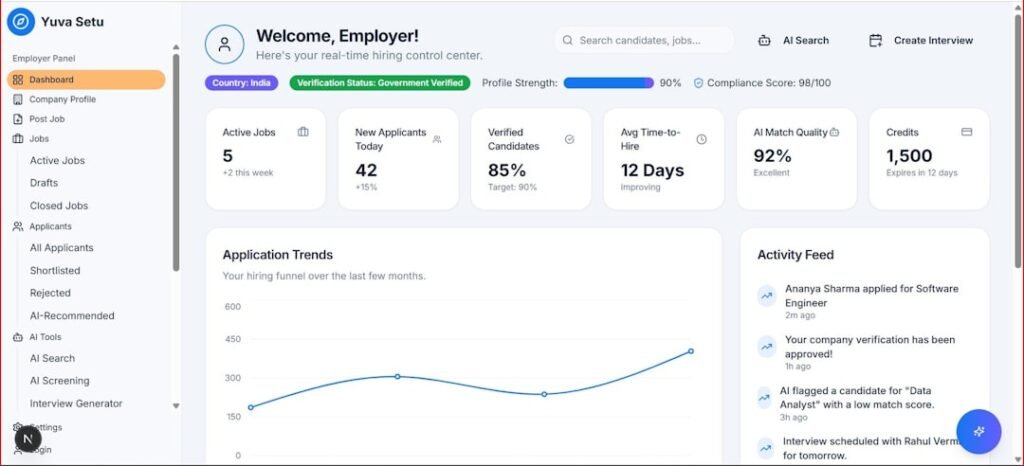
We, as financial leaders, are constantly seeking innovative ways to optimize cash flow, enhance operational efficiency, and make data-driven decisions that propel our organizations forward. In today’s dynamic economic landscape, where every dollar counts, the ability to predict and proactively manage our accounts receivable (AR) has become paramount. This is precisely where the AR Operations Dashboard, powered by artificial intelligence (AI), emerges as a game-changer, offering our CFOs a level of prescriptive analytics previously unimaginable for accelerating cash flow.
We’ve all experienced the frustration of reactive financial management. By the time we identify a problem in our AR, it’s often too late to take ideal corrective action. Prescriptive analytics, however, moves us beyond merely understanding what happened (descriptive analytics) or predicting what might happen (predictive analytics) to actively recommending the best course of action to achieve a desired outcome. For us, the CFOs, this means the AR Operations Dashboard doesn’t just show us overdue invoices; it tells us how to collect them most effectively, when to intervene, and which customers pose the highest risk or opportunity.
Beyond Traditional AR Reporting: A New Paradigm
Historically, our AR reporting capabilities have been limited to static spreadsheets and basic aging reports. While these provide a snapshot of our current AR health, they lack the actionable insights needed to genuinely accelerate cash flow. We found ourselves sifting through mountains of data, trying to connect dots that should have been self-evident. Prescriptive analytics, embedded within the AR Operations Dashboard, liberates us from this manual drudgery, presenting us with direct, optimized strategies.
Data-Driven Decisions for Optimal Outcomes
The core of prescriptive analytics lies in its ability to analyze vast quantities of historical and real-time data. For us, this includes customer payment history, communication logs, industry benchmarks, economic indicators, and even behavioral patterns. By leveraging AI algorithms, the dashboard can identify subtle trends and correlations that human analysis would inevitably miss. This allows us to make decisions not based on gut feelings, but on statistically sound recommendations designed to yield the best possible financial outcomes. We no longer have to guess; we can act with confidence.
In addition to exploring the insights provided by The AR Operations Dashboard: Providing CFOs with Prescriptive Analytics on Cash Flow Acceleration – AI in Accounts Receivable, readers may find value in a related article that delves deeper into the implications of AI in financial management. This article discusses how advanced analytics can transform accounts receivable processes, enhancing decision-making and operational efficiency. For further reading, you can check out the article here: AI in Financial Management.
AI at the Heart: Transforming Accounts Receivable Management
The integration of AI into our accounts receivable processes is not merely an improvement; it’s a fundamental transformation. We’re moving from a labor-intensive, often reactive process to a highly automated, proactive, and intelligent system. AI empowers the AR Operations Dashboard to perform tasks that would otherwise require significant human effort and expertise, and to do so with greater accuracy and speed.
Predictive Modeling for Risk and Opportunity
One of the most immediate benefits we see from AI in AR is its ability to build sophisticated predictive models. These models can forecast which customers are most likely to pay late, which invoices are at risk of becoming bad debt, and conversely, which customers represent an opportunity for early payment discounts or improved payment terms. We use this foresight to strategically allocate our collection resources, focusing our efforts where they will have the greatest impact. No longer are we blindly chasing every overdue invoice; we’re intelligently prioritizing.
Automated Segmentation and Prioritization
Manual customer segmentation, while valuable, is often time-consuming and prone to human bias. AI-driven segmentation in the AR dashboard allows us to automatically categorize customers based on a multitude of factors, such as payment history, invoice value, industry, communication preferences, and even their overall financial health. This granular understanding enables us to prioritize our collection efforts, tailoring our strategies to each unique segment. We can identify high-value, low-risk customers who might respond well to automated reminders, freeing up our collection specialists to focus on more complex or high-risk accounts.
Machine Learning for Continuous Improvement
The beauty of machine learning, a subset of AI, is its ability to learn and adapt over time. As our AR team interacts with the dashboard and implements its recommendations, the underlying AI models continually refine themselves. They learn which communication strategies are most effective for certain customer types, which intervention points yield the best results, and how external factors influence payment behavior. This continuous feedback loop means that the AR Operations Dashboard becomes progressively smarter and more accurate in its prescriptive advice, providing us with an evolving competitive advantage. We literally see it getting better day by day.
Key Features of the AR Operations Dashboard for CFOs
For us, the CFOs, the AR Operations Dashboard is more than just a fancy reporting tool; it’s a strategic weapon. We rely on its comprehensive suite of features to gain a holistic view of our AR health and to drive actionable insights that directly impact our bottom line.
Real-time Cash Flow Forecasting and Variance Analysis
Gone are the days of relying on static spreadsheets for cash flow forecasts. The AR Operations Dashboard provides us with dynamic, real-time cash flow projections, leveraging AI to account for various factors like historical payment patterns, current economic conditions, and predicted collection rates. Crucially, it also performs variance analysis, flagging discrepancies between projected and actual cash inflows and helping us understand the underlying reasons. This allows us to make proactive adjustments to our spending forecasts and investment activities. We can see potential shortfalls developing before they become actual crises, giving us the time to course correct.
Customer Scoring and Risk Assessment
A cornerstone of prescriptive analytics in AR is the ability to accurately score and assess the risk associated with each customer and indeed, each outstanding invoice. The dashboard employs sophisticated algorithms to assign a risk score, considering factors like days past due, historical payment consistency, credit ratings, and even news sentiment analysis about the customer’s business. This empowers our AR teams to prioritize their efforts effectively. We can quickly identify accounts that require immediate attention versus those that can be handled with less intensive intervention. Furthermore, this also aids us in setting appropriate credit limits and payment terms for new and existing customers, mitigating future risks.
Optimal Collection Strategy Recommendations
This is where the “prescriptive” aspect truly shines. Instead of simply showing us overdue invoices, the dashboard proactively recommends the most effective collection strategy for each account. Should we send an automated email reminder? Is a phone call warranted? Is it time for a more assertive communication or even legal action? The AI considers customer history, invoice amount, risk score, and even the likely response to different communication channels to suggest the optimal approach. This allows our collection specialists to work smarter, not just harder, leading to higher collection rates and lower operational costs. We’re deploying resources with precision, not guesswork.
Workflow Automation and Escalation Paths
The AR Operations Dashboard significantly enhances workflow efficiency through intelligent automation. It can automatically trigger reminders, send follow-up communications, and even escalate overdue accounts to specific team members based on pre-defined rules and risk thresholds. This reduces manual tasks, minimizes human error, and ensures that no overdue invoice falls through the cracks. For us, this means a more streamlined process, freeing up our team to focus on higher-value activities and fostering a culture of proactive problem-solving. It builds a disciplined approach into our AR process that was previously difficult to maintain.
Impact on Working Capital and DSO
Ultimately, our primary goal as CFOs is to optimize working capital and reduce Days Sales Outstanding (DSO). The AR Operations Dashboard provides us with clear metrics and actionable insights that directly contribute to these objectives. By accelerating cash collections and reducing bad debt, we improve our cash conversion cycle and enhance our liquidity. The dashboard tracks historical DSO trends, projects future DSO, and highlights the specific levers we can pull to achieve our target DSO. We can quantify the impact of each strategic intervention, allowing us to demonstrate concrete improvements to the board and stakeholders. It’s a direct line from insights to improved financial health.
Strategic Benefits for CFOs: Beyond Cash Flow
While cash flow acceleration is a primary driver for adopting the AR Operations Dashboard, we recognize that its benefits extend far beyond a cleaner balance sheet. It provides us with a strategic edge, impacting various facets of our financial operations and overall business intelligence.
Enhanced Financial Visibility and Control
As CFOs, we crave complete financial visibility. The AR Operations Dashboard grants us unparalleled insight into our accounts receivable, allowing us to monitor performance against KPIs in real-time. We can drill down into specific customer segments, invoice categories, or even individual invoices to understand the nuances of our AR portfolio. This level of granular control enables us to identify bottlenecks, optimize processes, and make informed strategic decisions that support our organization’s long-term growth. We no longer operate with blind spots; we have a clear, panoramic view.
Improved Customer Relationships
Counterintuitively, a more proactive and intelligent AR process can actually strengthen customer relationships. By understanding customer payment patterns and preferences, we can tailor our communication strategies to be more empathetic and effective. Automated reminders can prevent invoices from becoming significantly overdue, avoiding stressful collection calls. For high-value customers, we can offer flexible payment options when appropriate, fostering goodwill. The dashboard helps us balance the need for timely collections with the imperative of maintaining positive customer relationships, realizing that our customers are our lifeblood. We’re moving from adversarial interactions to more collaborative solutions.
Reduced Operational Costs and Increased Efficiency
The automation and prescriptive guidance offered by the AR Operations Dashboard lead to significant operational efficiencies. Our AR teams spend less time on manual data entry, chasing generic overdue notices, and more time on high-impact collection activities. The optimized collection strategies reduce the need for external collection agencies and minimize legal fees. This translates directly into reduced operational costs for our finance department, allowing us to reallocate resources to more strategic initiatives. We’re doing more with less, but more importantly, we’re doing it smarter.
Better Cash Management and Investment Opportunities
With more accurate and timely cash flow forecasts, we can make better-informed decisions about cash management. We can optimize our short-term investments, minimize borrowing costs, and seize strategic growth opportunities without liquidity constraints. The ability to predict cash inflows with greater certainty empowers us to be more agile in our financial planning and execution. We can move from a reactive cash management approach to a truly proactive and strategic one, maximizing the return on our available capital. This is not just about avoiding problems; it’s about seizing opportunities.
In exploring the advancements in financial technology, one can find valuable insights in the article on the impact of cognitivism on educational technology, which discusses how cognitive theories can enhance learning experiences. This is particularly relevant for CFOs looking to leverage prescriptive analytics for cash flow acceleration, as highlighted in The AR Operations Dashboard. By understanding the principles of cognitive engagement, finance professionals can better interpret data and make informed decisions that drive efficiency in accounts receivable processes. For more information, you can read the article here.
Implementing the AR Operations Dashboard: Our Path Forward
| Metrics | Value |
|---|---|
| Days Sales Outstanding (DSO) | 15 days |
| Percentage of Overdue Invoices | 5% |
| Customer Payment Predictability | 90% |
| Invoice Dispute Resolution Time | 2 days |
We recognize that the implementation of any new technology requires careful planning and execution. For the AR Operations Dashboard, our approach is focused on demonstrable value and seamless integration, ensuring that our teams embrace the new capabilities without disruption.
Integration with Existing Systems
A critical aspect of successful implementation is seamless integration with our existing Enterprise Resource Planning (ERP) systems, CRM, and other financial platforms. The AR Operations Dashboard is designed to pull data from these sources and push relevant information back, creating a unified and coherent financial ecosystem. This eliminates data silos and ensures that all stakeholders are working with the most up-to-date information. We demand that it plays well with our existing technology stack, enhancing rather than complicating our operations.
Training and Adoption for Our Teams
While the dashboard is intuitively designed, effective adoption requires comprehensive training for our AR and finance teams. We invest in workshops and continuous support to ensure that our personnel are proficient in utilizing all the features, understanding the AI-driven insights, and acting on the prescriptive recommendations. We emphasize the empowering nature of the tool, explaining how it simplifies their work and allows them to focus on higher-value tasks, rather than seeing it as a threat. Our success hinges on their ability to leverage this powerful tool.
Continuous Monitoring and Refinement
The journey with AI is one of continuous improvement. After implementation, we closely monitor the performance of the AR Operations Dashboard, regularly reviewing key metrics such as DSO, collection rates, and reduction in bad debt. We provide feedback to the solution providers, further refining the AI models and ensuring that the dashboard continues to meet our evolving needs. This iterative process guarantees that our investment in this technology consistently delivers maximum value and keeps us at the forefront of financial innovation. We believe in building on success and constantly seeking even greater efficiencies.
In conclusion, for us, the CFOs, the AR Operations Dashboard with its powerful AI and prescriptive analytics capabilities represents a significant leap forward in financial management. It’s not just about collecting money faster; it’s about gaining unparalleled insights, making data-driven decisions, optimizing resources, and ultimately, driving greater profitability and sustainable growth for our organizations. We are embracing this technology as a cornerstone of our strategic financial planning, securing our cash flow, and positioning our businesses for future success in an increasingly competitive world.
FAQs
What is the AR Operations Dashboard?
The AR Operations Dashboard is a tool that provides CFOs with prescriptive analytics on cash flow acceleration by using AI in accounts receivable. It helps in optimizing cash flow and improving working capital management.
How does the AR Operations Dashboard work?
The AR Operations Dashboard uses AI and machine learning algorithms to analyze accounts receivable data and provide insights into cash flow acceleration. It identifies patterns, trends, and potential areas for improvement, allowing CFOs to make data-driven decisions.
What are the benefits of using the AR Operations Dashboard?
Some of the benefits of using the AR Operations Dashboard include improved cash flow management, optimized working capital, reduced DSO (Days Sales Outstanding), and enhanced visibility into receivables performance. It also helps in identifying and addressing potential bottlenecks in the AR process.
How does the AR Operations Dashboard help CFOs?
The AR Operations Dashboard provides CFOs with actionable insights and recommendations for accelerating cash flow. It helps in identifying opportunities for process improvement, optimizing credit and collections strategies, and ultimately driving better financial performance.
Is the AR Operations Dashboard customizable for different businesses?
Yes, the AR Operations Dashboard can be customized to suit the specific needs and requirements of different businesses. It can be tailored to analyze and address the unique challenges and opportunities within each organization’s accounts receivable processes.