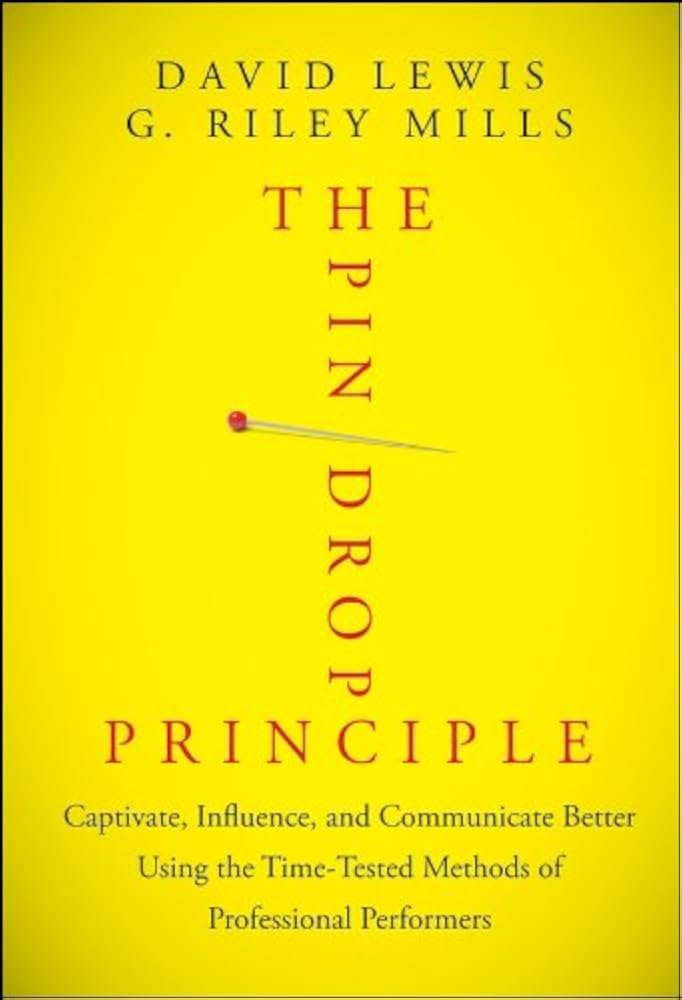
“The Pin Drop Principle” argues that the most impactful communication, whether in a boardroom presentation or a customer service interaction, relies on mastering the subtle art of performance. Lewis and Mills distill decades of professional performer experience into actionable strategies that enhance audience engagement, drive persuasion, and solidify customer loyalty by focusing on deliberate, impactful delivery rather than mere content. This book offers a powerful framework for any leader seeking to elevate their influence and ensure their message resonates profoundly.
In addition to the insights offered in “The Pin Drop Principle: Captivate, Influence, and Communicate Better Using the Time-Tested Methods of Professional Performers” by David Lewis and G. Riley Mills, readers may find value in exploring the article on “Savarkar: Echoes from a Forgotten Past.” This piece delves into the historical significance of Vinayak Damodar Savarkar, shedding light on his contributions and the impact of his ideologies in contemporary discussions. For those interested in understanding the nuances of communication and influence in a broader context, this article serves as a compelling complement. You can read it here: Savarkar: Echoes from a Forgotten Past.
The Essence of the Pin Drop Principle: More Than Just Words
Unveiling the Core Tenet: The Power of Presence
David Lewis and G. Riley Mills, through “The Pin Drop Principle,” don’t just present a book on communication; they offer a manifesto for impactful leadership. Their central thesis is deceptively simple yet profoundly powerful: true influence isn’t solely about what you say, but how you say it, and crucially, when you allow the silence to speak. They draw a direct parallel between the captivating performances of seasoned actors, musicians, and speakers and the critical interactions that define business success. The “pin drop” moment isn’t an accident; it’s the deliberate cultivation of attention, anticipation, and resonance.
Beyond Content: The Art of Delivery in Business
The authors contend that in today’s hyper-connected, attention-deficit world, simply possessing robust data or a well-reasoned argument is insufficient. The difference between a presentation that fades into the background and one that ignites action, between a customer service call that resolves an issue and one that builds a lifelong advocate, lies in the mastery of delivery. This mastery, they argue, is not an innate talent but a honed skill, accessible through understanding and applying principles that have long underpinned successful performance across various disciplines.
The CX Connection: From Transaction to Transformation
For Customer Experience (CX) leaders, “The Pin Drop Principle” offers a vital perspective shift. It moves beyond transactional efficiency and towards the creation of memorable, emotionally resonant customer journeys. Every touchpoint, from a marketing campaign to a support ticket resolution, can be transformed from a mere exchange of information into an opportunity to captivate, influence, and foster genuine connection. By applying performance principles, businesses can elevate their customer interactions, leading to increased satisfaction, stronger brand loyalty, and ultimately, sustainable revenue growth.
Key Insights for the Modern Leader

1. The Calculated Pause: Harnessing the Power of Silence
Relevance to CX and Retention: Silence, often perceived as awkward or empty, is a potent tool in performance and, by extension, in customer interactions. Lewis and Mills emphasize that strategic pauses are not about filler but about emphasis, anticipation, and allowing information to sink in. In a customer service context, a well-timed pause after a customer expresses frustration can convey empathy and active listening more effectively than a rapid-fire response. It allows the customer to feel heard and understood, de-escalating tension and creating space for a more constructive resolution. In sales, a pause before revealing a key benefit or a competitive advantage can significantly amplify its impact.
2. Vocal Dynamics: The Orchestra of Influence
Relevance to Revenue Growth and Operational Efficiency: The authors delve into the nuanced use of vocal modulation – pitch, pace, tone, and volume – as instruments of persuasion. This isn’t about theatricality for its own sake, but about strategically employing vocal cues to convey authority, build rapport, or signal importance. For example, a slightly slower, deeper tone can convey gravitas and trustworthiness when discussing crucial financial projections. Conversely, a more animated pace and higher pitch can inject energy and enthusiasm into a product demonstration. Leaders who master vocal dynamics can more effectively guide customer understanding, inspire their teams, and ultimately, drive better business outcomes, whether in closing a deal or ensuring clarity during critical operational updates.
3. Body Language as a Subtextual Narrative
Relevance to Customer Retention and Brand Perception: The unspoken language of the body communicates volumes. Lewis and Mills highlight how posture, gestures, and eye contact create a compelling subtext that either supports or undermines verbal messages. For a leader on a video call with a client, a confident, open posture and direct eye contact can build trust and signal competence. In a customer-facing retail environment, a friendly, approachable demeanor can significantly enhance the customer’s overall experience and likelihood of return. Understanding and intentionally shaping body language allows for the creation of a consistent, positive brand narrative, fostering deeper customer connections and reducing churn.
4. Storytelling as the Ultimate Engagement Engine
Relevance to Sales and Brand Loyalty: The book champions storytelling not as an add-on, but as the very fabric of memorable communication. Humans are hardwired for narratives, and leaders who can weave compelling stories – whether about their company’s origins, a customer success, or a vision for the future – create emotional connections that data alone cannot replicate. In sales, a story about how a product solved a similar client’s problem can be far more persuasive than a list of features. For CX, customer testimonials framed as stories of transformation are invaluable for building trust and social proof. This mastery of narrative drives deeper engagement, strengthens brand loyalty, and makes your message far more likely to be remembered and acted upon.
Practical Application: Immediately Impacting Your Leadership

1. Conduct a “Delivery Audit” of Your Next Key Interaction
Before your next significant presentation, client meeting, or team huddle, dedicate 15 minutes to consciously analyze your intended delivery. This isn’t about scripting every word, but about identifying specific moments where you can:
- Insert strategic pauses: Where can a brief silence amplify a key point or allow for processing?
- Vary your vocal tone: Are there opportunities to inject more energy, authority, or empathy through subtle changes in pitch and pace?
- Refine your body language: How can your posture and gestures reinforce your message and convey confidence and openness?
Example: If you’re presenting Q3 sales figures, identify the critical takeaway metrics. Plan to pause before and after announcing these numbers, and consider a slight shift in vocal tone to underscore their significance. For a customer service call, practice a brief, empathetic pause after a customer shares a pain point before offering a solution. This deliberate preparation, rooted in the principles of performance, will transform a routine interaction into a more impactful one, directly influencing how your message is received and retained.
2. Integrate “Performance Micro-Moments” into Customer Touchpoints
Beyond high-stakes presentations, think about how the “Pin Drop Principle” can elevate everyday customer interactions. This involves consciously incorporating elements of performance into brief, yet critical, customer touchpoints.
- Empathetic Listening Pauses: Train your front-line teams to consciously pause for 1-2 seconds after a customer finishes speaking, especially during complaint or query handling. This non-verbal cue signals undivided attention and empathy, a powerful retention driver.
- Enthusiastic Verbal Sign-offs: For customer service representatives, encourage them to end calls not with a perfunctory “Is there anything else?” but with a slightly more energized and personalized verbal sign-off, perhaps reiterating a key benefit or expressing genuine appreciation for their business. This small shift in vocal delivery can leave a lasting positive impression.
Example: In a retail setting, a cashier could be coached to make deliberate eye contact and offer a warm, slightly more modulated “Thank you for shopping with us today!” instead of a rushed, monotone dismissal. This minor performance enhancement can elevate the transactional experience into something more memorable and brand-reinforcing, directly impacting repeat business and customer advocacy.
In their insightful book review of “The Pin Drop Principle,” David Lewis and G. Riley Mills explore how the techniques used by professional performers can enhance our communication skills and influence. For those interested in the broader implications of effective communication, a related article on discipline in educational settings can provide valuable perspectives on how these principles apply to various aspects of life. You can read more about this topic in the article on discipline in school, which highlights the importance of clear communication in fostering a productive learning environment.
Final Verdict: Essential Reading for Leaders Focused on Impact
| Aspect | Details |
|---|---|
| Title | The Pin Drop Principle: Captivate, Influence, and Communicate Better Using the Time-Tested Methods of Professional Performers |
| Authors | David Lewis and G. Riley Mills |
| Genre | Self-help, Communication, Performance |
| Publisher | Wiley |
| Publication Date | April 7, 2015 |
| Pages | 240 |
| ISBN-10 | 1119050966 |
| ISBN-13 | 978-1119050969 |
Who Must Read This: Any executive, manager, or team member whose success hinges on their ability to influence, persuade, or connect with others. This includes sales professionals, marketing leaders, customer success managers, HR professionals, and anyone in a leadership role who needs to communicate effectively. If you believe your message is good but isn’t landing with the desired impact, this book is a game-changer. It is particularly vital for CX leaders seeking to move beyond operational metrics and cultivate truly memorable customer experiences.
Who Can Skip It: Individuals whose roles are purely transactional and require minimal interpersonal communication or persuasion. This book is unlikely to offer significant new insights for those whose work is heavily data-driven and operates entirely behind the scenes with no external stakeholder engagement.
Bottom-Line Rating: ⭐⭐⭐⭐✰ (4.5 out of 5 stars)
“The Pin Drop Principle” is a masterclass in actionable communication. Lewis and Mills provide a compelling, evidence-backed argument for elevating everyday business interactions into performances that captivate and convert. While some may find the performance analogy a bit theatrical, the underlying principles are profoundly pragmatic and directly applicable to driving business results, fostering stronger customer relationships, and enhancing overall leadership effectiveness. It’s a book that demands to be not just read, but practiced.
FAQs
What is The Pin Drop Principle about?
The Pin Drop Principle is a book that explores the techniques and methods used by professional performers to captivate, influence, and communicate effectively. It provides insights into how these methods can be applied in various aspects of life and business.
Who are the authors of The Pin Drop Principle?
The Pin Drop Principle is written by David Lewis and G. Riley Mills. David Lewis is an actor, director, and communication coach, while G. Riley Mills is an actor, director, and the co-founder of Pinnacle Performance Company.
What are some key concepts discussed in The Pin Drop Principle?
The book discusses the importance of presence, connection, and storytelling in effective communication. It also delves into the use of body language, voice modulation, and emotional intelligence to engage and influence an audience.
How can the principles in the book be applied in real life?
The Pin Drop Principle provides practical tips and exercises for applying the principles of professional performers in everyday communication, public speaking, and leadership. It offers actionable strategies for improving one’s ability to engage and influence others.
Who is the target audience for The Pin Drop Principle?
The book is aimed at anyone looking to enhance their communication skills, whether in a professional or personal context. It is particularly relevant for business professionals, public speakers, educators, and leaders seeking to improve their ability to captivate and influence others.