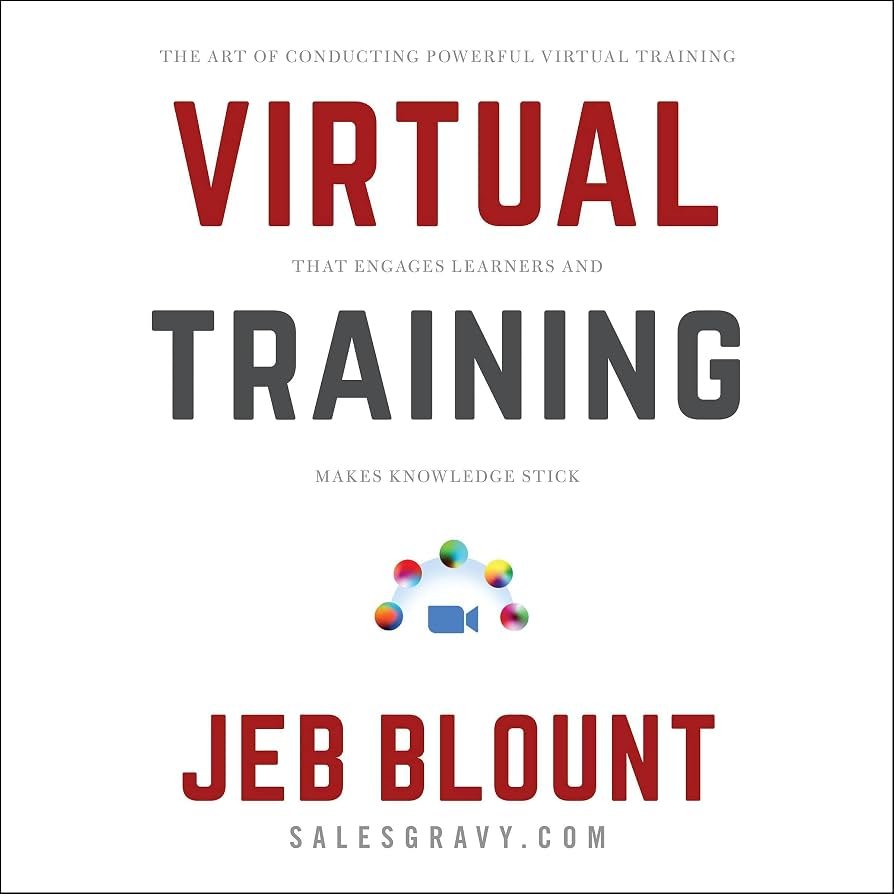
This review dissects Jeb Blount and Jamie Renell’s timely and essential guide, “Virtual Training: Mastering the Remote Sales Arena.” In an era defined by distributed teams and digital interactions, this book isn’t just a manual; it’s a strategic imperative for any organization relying on sales, customer engagement, or remote collaboration. Blount and Renell deliver a no-nonsense blueprint for transforming virtual training from a perceived necessity into a powerful competitive advantage, driving both immediate engagement and long-term revenue growth.
Executive Summary
In today’s ubiquitous remote and hybrid work environment, effective virtual training is no longer a soft skill but a hard requirement for sales success. “Virtual Training” provides a comprehensive, actionable framework for designing, delivering, and optimizing remote training programs that demonstrably boost sales performance and foster deep customer relationships, even at a distance. This book equips leaders with the tactical knowledge to overcome the inherent challenges of virtual engagement and unlock the full potential of their distributed teams.
In addition to the insightful book review of “Virtual Training” by Jeb Blount and Jamie Renell, readers may find it beneficial to explore the article on the importance of a cohesive app strategy in today’s digital landscape. This article discusses whether businesses should adopt a single app or multiple apps to enhance user experience and engagement. For more information, you can read the full article here: One App or Multiple App Strategy.
The Unfolding Landscape of Remote Work and Training
The seismic shift towards remote and hybrid work models has irrevocably altered the business landscape. What was once a fringe benefit or a temporary measure has become a fundamental operational reality for a vast majority of organizations. This transformation has placed immense pressure on traditional training methodologies, particularly those reliant on in-person interaction and passive information consumption. Sales teams, customer success representatives, and support staff, all critical touchpoints for customer experience and revenue generation, are now navigating an increasingly digital-first client interaction space. The efficacy of their performance hinges directly on their ability to adapt and excel in this new paradigm.
The Imperative for Adaptable Skill Development
As customer expectations evolve and the digital sales funnel becomes more complex, the need for continuous, relevant, and impactful skill development has never been greater. Organizations that fail to adequately equip their teams with the competencies required to thrive in a virtual environment risk falling behind their more agile competitors. This isn’t merely about technical proficiency in using virtual collaboration tools; it’s about mastering the nuances of virtual communication, building rapport remotely, and effectively demonstrating value in a non-physical context. The traditional lecture-style training, often ineffective even in person, becomes exponentially less impactful when delivered virtually without careful consideration and strategic design.
The CX Ripple Effect of Ineffective Remote Training
The implications of poor virtual training extend far beyond the individual salesperson or support agent. When teams are not adequately trained to engage customers effectively in a virtual setting, the customer experience suffers. This can manifest in several ways:
- Diminished Rapport and Trust: A lack of training in virtual empathy and connection-building can lead to customer interactions that feel transactional rather than relational, hindering the development of long-term trust and loyalty.
- Inconsistent Messaging and Value Proposition: Without standardized virtual training on product knowledge, sales methodologies, and objection handling, customer-facing teams may deliver inconsistent or incomplete information, confusing prospects and eroding confidence.
- Missed Opportunities: Ineffective virtual discovery and qualification can lead to teams pursuing the wrong leads or failing to uncover critical customer needs, resulting in wasted effort and lost revenue.
- Increased Customer Churn: A consistently poor virtual customer experience is a direct driver of churn. Customers will seek out competitors who can provide a more seamless, engaging, and value-driven interaction, regardless of the channel.
The Strategic Advantage of Mastering Virtual Training
Conversely, organizations that invest in and master virtual training gain a significant strategic advantage. This advantage translates into tangible business outcomes:
- Enhanced Sales Performance: Teams trained in virtual selling techniques are better equipped to close deals, increase deal size, and shorten sales cycles, directly impacting revenue growth.
- Improved Customer Retention: When customer-facing teams can build strong virtual relationships and deliver consistent, high-value experiences, customer loyalty strengthens, leading to higher retention rates and increased lifetime customer value.
- Greater Operational Efficiency: Well-designed virtual training programs can be more scalable and cost-effective than traditional in-person training, reducing travel expenses and enabling more frequent skill reinforcement.
- Accelerated Onboarding: New hires can be onboarded more rapidly and effectively through structured virtual training, bringing them up to speed and contributing to revenue generation sooner.
- Increased Employee Engagement and Retention: Investing in professional development, even virtually, demonstrates a commitment to employee growth, boosting morale and reducing turnover.
Key Insights for a CX-Centric Approach
Blount and Renell’s “Virtual Training” is a treasure trove of practical wisdom, but several insights stand out for their direct applicability to CX, retention, and revenue.
1. The “Engagement First” Design Principle
Core Concept: The book vehemently argues against the “broadcast model” of virtual training, where information is simply pushed to participants. Instead, it champions an “engagement first” approach, prioritizing active participation, interaction, and experiential learning. This means designing sessions with built-in Q&A, breakout rooms, collaborative exercises, and immediate application opportunities.
- CX Connection: Engaged employees are more likely to be customer-centric employees. When sales and support teams are actively involved and learning by doing in their training, they internalize the importance of customer engagement and develop the skills to foster it themselves. This translates directly into more proactive, responsive, and value-driven customer interactions.
- Customer Retention: Training that fosters a deep understanding of customer needs and empathy through interactive scenarios will equip teams to build stronger, more resilient customer relationships. When customers feel understood and valued, they are less likely to churn.
- Revenue Growth: Actively engaged trainees retain information better and are more likely to implement new techniques, leading to improved sales performance and thus, revenue growth.
2. The Power of the “Virtual Stage” and Presence
Core Concept: The authors emphasize that mastering the “virtual stage” is paramount. This involves understanding how to command attention, leverage visual cues (lighting, background, eye contact), and project confidence and authenticity through a screen. It’s about more than just being on camera; it’s about delivering a compelling performance.
- CX Connection: A confident and engaging presenter, whether in a sales pitch or a customer support session, builds immediate trust and credibility. A strong virtual presence conveys professionalism and competence, assuring customers they are dealing with a capable and reliable partner.
- Customer Retention: When sales representatives can build rapport and convey genuine enthusiasm and expertise virtually, they strengthen the customer’s emotional connection to the brand, making them more resistant to competitor overtures.
- Revenue Growth: A commanding virtual presence can significantly impact closing rates. Prospects are more likely to be persuaded by someone who projects authority and sincerity, leading to more closed deals and increased revenue.
3. Structured Practice and Feedback Loops
Core Concept: Blount and Renell advocate for highly structured practice sessions within the training itself, moving beyond theoretical discussions to simulated real-world scenarios. This includes role-playing, call analysis, and structured feedback mechanisms that are immediate and actionable.
- CX Connection: By practicing difficult customer conversations and objection handling in a safe virtual environment, representatives develop the confidence and skills to navigate real-time customer challenges effectively. This leads to more positive customer outcomes and fewer escalations.
- Customer Retention: Teams that are adept at handling customer objections and resolving issues efficiently during virtual interactions are more likely to satisfy customers, thus reducing the likelihood of churn.
- Revenue Growth: Real-world simulation and targeted feedback accelerate skill development, enabling sales teams to improve their performance more rapidly and contribute to revenue goals faster. This iterative process is crucial for continuous improvement.
4. The “Why” Behind the “What”: Anchoring to Business Objectives
Core Concept: Effective virtual training must be explicitly linked to overarching business objectives. Participants need to understand why they are learning a particular skill or adopting a new process and how it directly contributes to company goals, whether that’s increasing market share, improving customer satisfaction scores, or reducing operational costs.
- CX Connection: When employees understand how their role and skills contribute to customer satisfaction and loyalty, they are more motivated to prioritize CX in their daily interactions. This creates a culture of customer-centricity from the ground up.
- Customer Retention: Linking training to retention goals reinforces the importance of customer relationships and encourages proactive efforts to maintain them. Employees understand that their actions directly impact the company’s ability to retain customers.
- Revenue Growth: Clearly demonstrating how specific training outcomes drive revenue – such as improved conversion rates or increased average deal size – provides a powerful motivator for participants and justifies the investment in training, ensuring a direct impact on the bottom line.
Practical Application for Leaders
The insights from “Virtual Training” are not abstract theories; they are actionable strategies that can be implemented immediately.
1. Conduct a “Virtual Training Audit” and Redesign One Key Program
Action: Dedicate a leadership team meeting to a critical review of an existing virtual training program, perhaps one for new sales hires or customer support onboarding. Apply the “engagement first” principle.
- Implementation Steps:
- Identify the Goal: What is the primary objective of this training? (e.g., improve closing rates, reduce average handle time, increase customer satisfaction scores).
- Analyze Current Content: Is it lecture-heavy? Is there sufficient opportunity for active participation?
- Inject Engagement: For the next iteration, plan to incorporate at least two interactive elements:
- Breakout Rooms: For small group problem-solving or role-playing specific customer scenarios.
- Live Polling/Quizzes: To gauge understanding and reinforce key concepts in real-time.
- Collaborative Whiteboarding: For brainstorming solutions or mapping out customer journeys.
- Define “Virtual Stage” Expectations: Develop a brief guideline document for trainers and participants on camera presence, audio quality, and effective virtual communication.
- Schedule Practice Sessions: Build in specific time for participants to practice new skills in simulated virtual scenarios and receive immediate, constructive feedback.
2. Implement a “Virtual Role-Play Blitz” with Targeted Feedback
Action: Identify a critical sales or customer service skill that needs immediate reinforcement (e.g., virtual objection handling, new product feature explanation). Organize short, focused virtual role-playing sessions with a structured feedback framework.
- Implementation Steps:
- Define the Scenario: Create a realistic virtual interaction scenario based on common customer challenges.
- Assign Roles: Pair participants (or have trainers play the customer role) and clearly define their objectives.
- Establish Feedback Criteria: Develop a simple rubric or checklist focusing on key behaviors and outcomes (e.g., active listening, clear articulation of value, effective objection resolution, confident virtual presence).
- Conduct Short Sessions: Run these role-plays in 15-20 minute blocks, allowing ample time for practice and feedback.
- Facilitate Structured Feedback: The observer or trainer provides immediate, specific, and actionable feedback using the defined criteria. Encourage peer feedback as well, fostering a learning culture.
- Debrief and Reinforce: Conclude each session with a brief group debrief to share learnings and reinforce best practices.
In the realm of virtual training, the insights shared by Jeb Blount and Jamie Renell in their recent book review are invaluable for anyone looking to enhance their skills in this area. For those interested in further exploring the intersection of technology and training methodologies, a related article provides a comprehensive step-by-step guide to building AI-first product features, which can significantly complement the strategies discussed in the book. This resource is essential for understanding how to effectively integrate innovative technologies into training programs.
Final Verdict
Who Must Read This: Any sales leader, customer experience manager, or operations executive who oversees a remote or hybrid team and is serious about driving performance, customer loyalty, and revenue growth. This book is essential reading for anyone responsible for training and developing their workforce in the current business climate. If your team interacts with customers virtually, this book provides the roadmap to do it effectively.
Who Can Skip It: Organizations that are entirely in-person, have no plans for remote or hybrid work, and are not reliant on virtual customer interactions might find less immediate value. However, given the trajectory of the modern business world, even these organizations would be wise to proactively understand the principles outlined herein.
Bottom-Line Rating: 5 out of 5 Stars. “Virtual Training” is a masterclass in adapting to the new reality of business. Jeb Blount and Jamie Renell have delivered a practical, insightful, and highly actionable guide that will undoubtedly become a go-to resource for leaders striving for excellence in the remote sales arena and beyond. It’s not just a book; it’s a competitive necessity.
FAQs
What is the book “Virtual Training” about?
The book “Virtual Training” by Jeb Blount and Jamie Renell is a guide for sales professionals and leaders on how to effectively train and develop their teams in a virtual environment.
Who are the authors of “Virtual Training”?
The authors of “Virtual Training” are Jeb Blount, a sales acceleration specialist, and Jamie Renell, a sales leader and trainer with over 20 years of experience in the industry.
What are some key topics covered in “Virtual Training”?
The book covers topics such as virtual training best practices, leveraging technology for effective training, creating engaging virtual learning experiences, and adapting traditional training methods for a virtual setting.
What makes “Virtual Training” relevant in today’s business environment?
With the increasing shift towards remote work and virtual interactions, “Virtual Training” provides valuable insights and strategies for sales professionals and leaders to adapt their training and development efforts to the virtual environment.
Where can I purchase “Virtual Training”?
“Virtual Training” is available for purchase through major book retailers, both online and in physical stores. It is also available in e-book and audiobook formats for digital download.