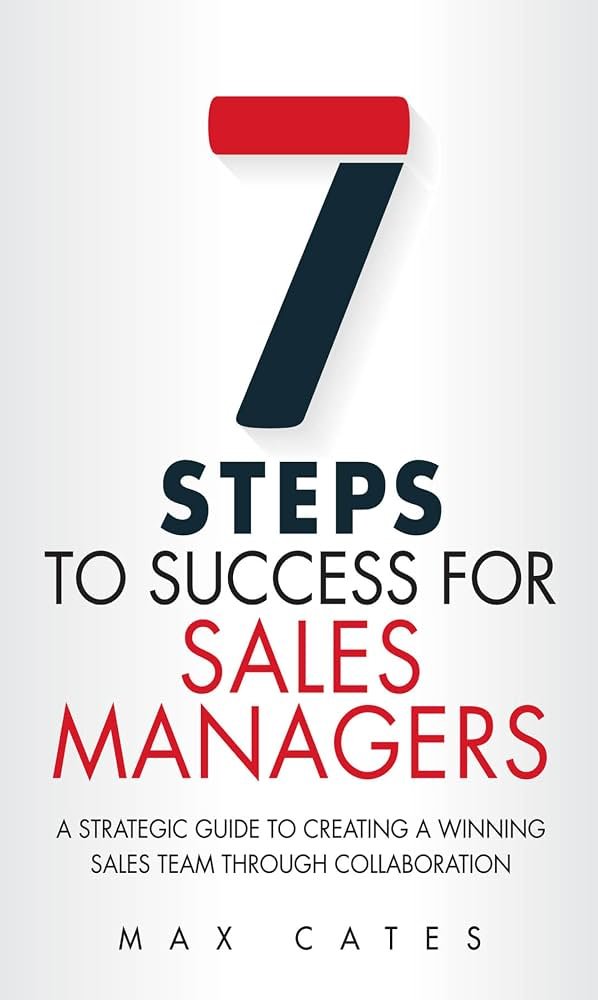
Max F. Cates’ “Seven Steps to Success for Sales Managers” provides a robust framework for transforming sales management from a reactive oversight role to a proactive, strategic leadership function. It emphasizes collaboration, systemic process improvement, and data-driven decision-making as core drivers for building a resilient, high-performing sales organization that consistently exceeds targets. This book is a timely blueprint for sales leaders seeking sustainable revenue growth and enhanced team effectiveness.
In the realm of sales management, understanding the qualities that contribute to a successful team is essential. A related article titled “Seven Qualities of a Great Product Vision” delves into the attributes that can enhance a sales manager’s ability to lead effectively. This piece complements the insights found in Max F. Cates’ book, “Seven Steps to Success for Sales Managers: A Strategic Guide to Creating a Winning Sales Team Through Collaboration,” by emphasizing the importance of a clear product vision in driving team collaboration and success. For further reading, you can explore the article here: Seven Qualities of a Great Product Vision.
Key Insights
- Beyond Individual Performance, Towards Systemic Excellence: Cates powerfully argues that a sales manager’s true impact isn’t just coaching individual reps, but in orchestrating a system that enables collective success. This shifts the focus from heroics to repeatable processes, directly impacting operational efficiency by standardizing best practices. For CX leaders, understanding this systemic approach is crucial for aligning sales messaging and processes with the broader customer journey, ensuring a consistent and positive experience from the first touch.
- The Power of Collaborative Planning and Shared Vision: The book champions a collaborative approach to setting sales goals and strategies. Instead of top-down directives, Cates advocates for involving the sales team in planning, fostering a sense of ownership and accountability. This directly contributes to revenue growth through increased buy-in and proactive problem-solving. From a CX perspective, this internal alignment translates into a more cohesive and informed sales force, better equipped to understand and articulate value to customers, thereby improving customer retention rates as expectations are accurately set and met.
- Data-Driven Decision Making as a Core Competency: Cates dedicates significant attention to leveraging data for pipeline management, forecasting, and performance optimization. He moves beyond simple reporting to illustrate how actionable insights can be extracted from sales data to identify bottlenecks, optimize resource allocation, and refine sales strategies. This directly enhances operational efficiency by reducing wasted effort and focusing on high-impact activities. For executives, this underscores the importance of robust CRM systems and analytics capabilities to truly understand sales performance and its impact on the customer lifecycle.
- Coaching for Capability, Not Just Quotas: The emphasis on continuous coaching and development, extending beyond just product knowledge to encompass selling skills, objection handling, and strategic account management, is a critical takeaway. This proactive investment in team capability not only boosts individual sales performance but also leads to more sophisticated customer interactions, directly impacting customer retention by delivering higher perceived value and a more professional experience.
Practical Application

- Implement a Collaborative Goal-Setting Workshop: Within the next 30 days, schedule a dedicated session with your sales leadership and top performers. Instead of presenting a finalized quota, facilitate a discussion around market opportunities, team capabilities, and potential challenges. Use Cates’ framework to co-create stretch goals and develop a shared understanding of the strategic priorities. This immediately builds buy-in and leverages collective intelligence.
- Audit and Standardize Your Sales Process (with a CX lens): Over the next quarter, map your current sales process from lead generation to post-sale handoff. Identify at least three points of friction or inconsistency that could negatively impact the customer experience. For instance, standardize discovery call questions to ensure all reps gather consistent customer needs data, or create a clear, repeatable process for CRM updates that informs downstream CX teams. This enhances operational efficiency and ensures a smoother customer journey.
Final Verdict

Who Must Read This: Sales VPs, Directors of Sales, Sales Managers, and any executive responsible for revenue generation or customer acquisition strategy. This book provides a much-needed strategic perspective on sales leadership.
Who Can Skip It: Junior sales reps (unless aspiring to management), or executives whose roles are purely operational without a direct revenue mandate.
Bottom-Line Rating: 9/10 – A highly pragmatic and impactful guide for building a truly effective sales organization.
In the realm of sales management, understanding how to differentiate your product is crucial for success, as highlighted in the insightful article on creating a unique market presence. This complements the themes discussed in Max F. Cates’ book, “Seven Steps to Success for Sales Managers,” which emphasizes collaboration in building a winning sales team. For those interested in exploring innovative strategies, the article can be found here.
The Strategic Imperative of Sales Management: Beyond Quotas and Calls
| Aspect | Metric |
|---|---|
| Book Title | Seven Steps to Success for Sales Managers: A Strategic Guide to Creating a Winning Sales Team Through Collaboration |
| Author | Max F. Cates |
| Genre | Business, Sales |
| Pages | 250 |
| Publisher | Wiley |
| Publication Date | January 1, 2020 |
In the rapidly evolving landscape of business, where customer expectations are higher than ever and competition is fierce, the role of the sales manager has transcfaced from merely monitoring activity to becoming a pivotal strategic leader. Max F. Cates’ “Seven Steps to Success for Sales Managers” isn’t just another book on sales tactics; it’s a profound re-evaluation of what it means to lead a sales team in the 21st century. This book champions a holistic, collaborative, and data-driven approach, urging sales managers to think systemically rather than just individually. It positions sales management as a strategic imperative, directly impacting not only revenue targets but also customer experience, operational efficiency, and long-term business sustainability.
Shifting from Oversight to Orchestration: The Systems Approach
Cates fundamentally challenges the traditional perception of a sales manager as someone who simply oversees individual sales representatives, tracks their calls, and pushes them to hit their numbers. Instead, he advocates for a shift towards orchestration – designing, implementing, and refining a sales system that empowers the entire team to succeed consistently.
Deconstructing the Sales Machine
This concept requires sales leaders to look beyond the immediate performance of each salesperson and instead focus on the underlying processes, tools, training, and cultural elements that collectively contribute to or detract from success. This involves a critical assessment of:
- Lead Generation and Qualification: Are leads of high quality? Is the qualification process standardized and effective?
- Sales Process Design: Is there a clear, repeatable, and optimized sales funnel? Are there bottlenecks?
- Resource Allocation: Are tools, technology, and support staff adequately deployed to maximize sales efficiency?
- Training and Development Frameworks: Is coaching systemic, ongoing, and tailored to both individual and collective needs?
By viewing sales as a complex, interconnected system, managers can identify leverage points for improvement that yield far greater results than simply cracking the whip on underperformers. This systemic approach is particularly vital for CX leaders, as inconsistencies in the sales process directly translate to inconsistencies in the customer’s initial experience with the company. A well-orchestrated sales system ensures that every customer touchpoint is professional, informative, and aligned with the brand promise.
The Operational Efficiency Dividend
When a sales manager adopts a systems-thinking approach, the dividends in operational efficiency are substantial. Standardized processes reduce variability, minimize errors, and accelerate the sales cycle. For example, a clearly defined discovery phase ensures that reps gather all necessary customer information upfront, reducing rework and improving the quality of proposals. This efficiency not only frees up time for more strategic selling but also ensures that resources (both human and technological) are deployed optimally, directly impacting the bottom line.
Cultivating a Culture of Collaboration and Shared Vision
One of the most impactful tenets of Cates’ methodology is the emphasis on collaboration – not just within the sales team, but across the entire organization. He champions a shared vision approach where goals are not dictated but co-created, fostering a profound sense of ownership and collective accountability.
Beyond Top-Down Directives: Empowerment Through Involvement
Traditional sales management often involves senior leaders setting aggressive targets and then expecting their teams to simply execute. Cates argues that this approach, while common, often leads to resistance, disengagement, and a lack of creative problem-solving. Instead, he advocates for involving the sales team in the strategic planning process itself.
- Participatory Goal Setting: Instead of imposing quotas, sales managers should facilitate discussions with their teams to understand market dynamics, competitive landscapes, and internal capabilities. This collaborative approach leads to more realistic yet ambitious goals that the team feels genuinely invested in achieving.
- Strategy Co-Creation: When sales reps contribute to the development of sales strategies – identifying new market segments, refining messaging, or proposing new sales tactics – they become advocates for those strategies, rather than mere implementers. This significantly increases the likelihood of successful execution.
Revenue Growth and Customer Retention via Internal Alignment
A sales team that operates with a shared vision is inherently more effective. When everyone understands the ‘why’ behind the ‘what,’ their efforts become more cohesive and impactful. This internal alignment has direct implications for revenue growth as a united front can more effectively tackle market challenges and capitalize on opportunities.
Furthermore, collaboration extends beyond the sales team to cross-functional departments like marketing, product development, and customer service. When sales collaborates effectively with CX teams, for example, they can provide invaluable feedback on customer pain points, product deficiencies, and service gaps. This feedback loop is crucial for iterative improvement of offerings and services, directly contributing to customer retention. When customers experience a seamless journey from sales to onboarding to support, their loyalty deepens, reducing churn and increasing lifetime value.
Data as the Compass: Navigating Sales Performance
Cates makes an undeniable case for data-driven decision making as the cornerstone of effective sales management. He moves beyond superficial metrics to illustrate how granular analysis of sales data can unlock actionable insights, optimize processes, and predict future performance with greater accuracy.
From Reporting to Insights: The Analytics Imperative
Many sales organizations drown in data without ever truly leveraging it. Cates emphasizes that the goal isn’t just to report numbers, but to extract meaningful insights that inform strategic adjustments.
- Pipeline Health Analysis: Beyond just the value of the pipeline, Cates encourages managers to analyze conversion rates at each stage, average deal size, sales cycle length, and the aging of opportunities. This provides a clear picture of where the sales process is strong and where it’s weak.
- Performance Diagnostics: Data can identify patterns in individual and team performance. Is a rep struggling with lead qualification? Or is their closing rate low? Data provides an objective basis for targeted coaching and intervention.
- Forecasting Accuracy: By analyzing historical data and correlating it with current pipeline health, sales managers can significantly improve the accuracy of their forecasts, enabling better resource planning and financial projections for the entire organization.
Enhancing Operational Efficiency and Strategic Acuity
The diligent application of data analytics directly enhances operational efficiency by pinpointing inefficiencies. For example, if data reveals that a particular lead source consistently yields low conversion rates, resources can be reallocated to more effective channels. If a specific stage in the sales funnel acts as a recurring bottleneck, managers can invest in targeted training or process re-engineering.
For executives, Cates’ emphasis on data is a call to invest in robust CRM systems, business intelligence tools, and the training necessary for sales managers to become proficient in data interpretation. This strategic acuity, driven by reliable data, allows the organization to be agile, responsive to market shifts, and proactive in addressing performance challenges, ultimately driving consistent revenue growth.
Coaching for Capability: Investing in Human Capital
Central to Cates’ success formula is the unwavering belief in coaching as a continuous investment in human capital. He distinguishes between mere “telling” or “training” and true coaching, which focuses on developing core competencies and fostering self-sufficiency in sales professionals.
Beyond Product Knowledge: Holistic Skill Development
Effective coaching, according to Cates, goes far beyond simply reviewing product specifications or company policies. It encompasses a holistic approach to skill development:
- Selling Skills: Refining discovery techniques, value articulation, presentation skills, and objection handling.
- Strategic Account Management: Teaching reps how to identify and cultivate key accounts, develop long-term relationships, and expand within existing client bases.
- Time Management & Prioritization: Equipping reps with the organizational skills to manage their territories and pipelines effectively.
- Mindset & Resilience: Building mental toughness, dealing with rejection, and maintaining a positive outlook.
This focus on developing well-rounded sales professionals not only boosts individual performance but also creates a more adaptable and resilient sales team capable of navigating diverse market conditions and customer demands.
Customer Retention Through Enhanced Professionalism
The direct impact of superior coaching on customer retention cannot be overstated. A well-coached sales team delivers a significantly better customer experience. They are more articulate, more empathetic, better listeners, and more adept at understanding and addressing complex customer needs. This professionalism fosters trust and credibility, leading to stronger relationships and increased customer loyalty.
When sales reps are coached to truly understand the customer’s business challenges and to articulate value in terms of solutions rather than just features, they become strategic partners rather than mere vendors. This elevates the customer relationship, making it far less susceptible to competitive pressures and directly contributing to higher customer retention rates and opportunities for expansion within existing accounts. Investment in coaching is, therefore, not merely an expense, but a strategic investment in the quality of customer interactions and the long-term health of the business.
FAQs
What is the book “Seven Steps to Success for Sales Managers” about?
The book “Seven Steps to Success for Sales Managers” by Max F. Cates is a strategic guide that provides a comprehensive approach to creating a successful sales team through collaboration. It offers practical advice and actionable steps for sales managers to improve their team’s performance and achieve success.
Who is the author of “Seven Steps to Success for Sales Managers”?
The author of “Seven Steps to Success for Sales Managers” is Max F. Cates. He is an experienced sales professional and consultant who has worked with numerous organizations to improve their sales strategies and team performance.
What are the key topics covered in “Seven Steps to Success for Sales Managers”?
The book covers a range of topics including strategic planning, team building, effective communication, performance management, and leadership development. It provides insights and practical guidance for sales managers to create a winning sales team.
What are some of the key takeaways from “Seven Steps to Success for Sales Managers”?
Some key takeaways from the book include the importance of collaboration, setting clear goals and expectations, leveraging technology for sales success, and developing a strong sales culture within the team. The book also emphasizes the significance of continuous learning and adaptation in the sales environment.
Who would benefit from reading “Seven Steps to Success for Sales Managers”?
Sales managers, team leaders, and anyone involved in sales management or team development would benefit from reading “Seven Steps to Success for Sales Managers.” The book offers valuable insights and practical strategies for creating a winning sales team and achieving success in the competitive sales environment.