Executive Summary
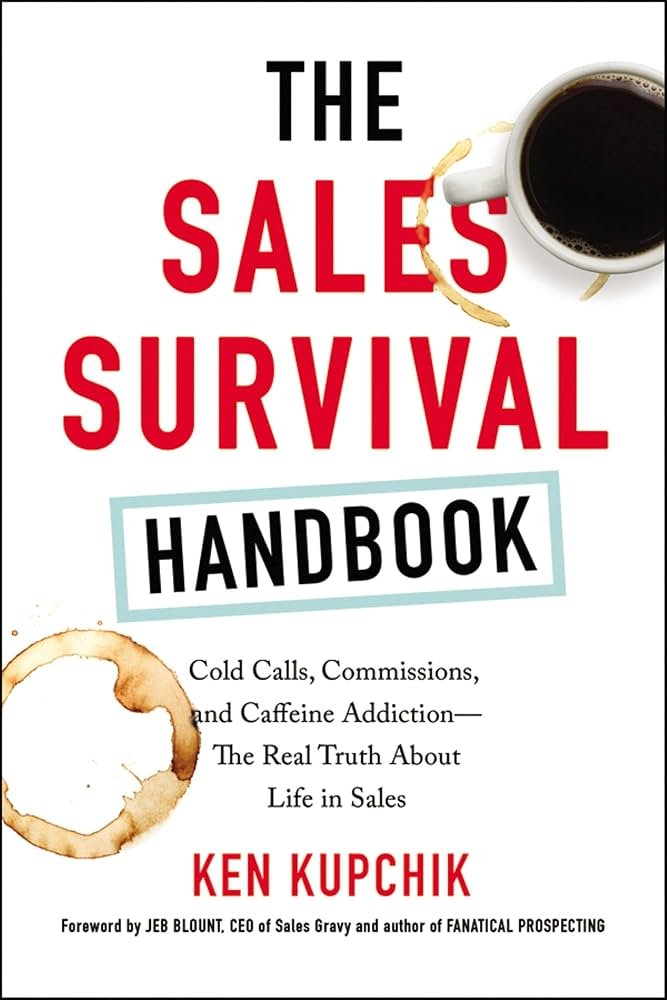
The Sales Survival Handbook provides a blunt, unvarnished guide for sales professionals navigating the inherent challenges of the role, from rejection to pipeline management. It’s less about revolutionary tactics and more about developing an ironclad mindset and disciplined approach to ensure sustained performance and career longevity. This book serves as a vital survival guide, equipping salespeople with the mental fortitude and practical habits to thrive amidst constant pressure and change.
In addition to the insights provided in “The Sales Survival Handbook” by Ken Kupchik and Jeb Blount, readers may find it beneficial to explore the article on cognitive load theory, which discusses how mental effort impacts learning and performance. This concept can be particularly relevant for sales professionals looking to enhance their skills and effectiveness in high-pressure situations. For more information on this topic, you can read the article here: 10 Effects of Cognitive Load Theory.
Key Insights
1. The Primacy of Mindset in Sales Resilience:
Kupchik and Blount unequivocally assert that a robust mindset is the most critical asset for any salesperson. They dissect the psychological toll of rejection, missed targets, and internal politics, offering strategies to compartmentalize failure and maintain a positive, proactive outlook. This isn’t touchy-feely motivation; it’s about building mental calluses.
- CX Connection: A resilient sales force directly impacts CX. Salespeople with strong mindsets are less likely to project frustration onto prospects or customers, leading to more positive initial interactions and setting the stage for better long-term relationships. This resilience also translates to a better ability to handle complex customer challenges without succumbing to burnout, ensuring consistent service quality.
- Revenue Growth: By minimizing the time spent dwelling on losses and maximizing focus on future opportunities, a resilient sales team maintains higher activity levels and closes more deals. This directly translates to more consistent and higher revenue generation, as emotional setbacks are less likely to derail an entire week or month’s performance.
2. Disciplined Pipeline Management as a Non-Negotiable Survival Tool:
The authors hammer home the necessity of rigorous, almost obsessive, pipeline management. They emphasize that a healthy pipeline is not just a collection of opportunities but a direct reflection of a salesperson’s activity, foresight, and ability to control their destiny. This means consistent prospecting, qualification, and meticulous follow-up, regardless of current results.
- Operational Efficiency: A well-managed pipeline reduces wasted effort on unqualified leads, improves forecasting accuracy, and streamlines the sales process. This efficiency extends beyond the sales team, providing clearer signals to marketing and product development about customer needs and sales trends. For CX, it means sales is bringing in customers who are a good fit for the product/service, reducing churn risk.
- Customer Retention: When sales teams effectively qualify and manage their pipeline, they bring in customers who are genuinely aligned with the product’s value proposition. This proactive alignment drastically reduces post-sale dissatisfaction and churn. A sales process built on qualification, rather than just closing, means less pressure on CX teams to “fix” misaligned customer expectations.
3. The Unromantic Reality of Consistent Activity:
The Sales Survival Handbook strips away the glamour often associated with sales, revealing it as a grind of consistent, often repetitive, activity. Success isn’t about one-off heroic closes but about showing up daily, making the calls, sending the emails, and consistently engaging. They stress that activity metrics, not just outcome metrics, are the true indicators of a salesperson’s control and potential.
- Revenue Growth: Consistent, high-quality sales activity is the engine of revenue growth. By maintaining a disciplined approach to outreach and engagement, salespeople ensure a steady stream of opportunities, mitigating the boom-bust cycles that plague less disciplined teams. This predictable activity builds a more robust and predictable revenue stream.
- CX Perspective: From a CX standpoint, consistent activity translates to a more predictable customer acquisition process. This allows CX teams to better anticipate onboarding needs, allocate resources, and prepare for new customer influxes, leading to a smoother transition from prospect to satisfied customer. Inconsistent sales activity creates unpredictable surges and droughts, stressing CX resources.
4. Mastering Emotional Control and Leveraging Discomfort:
The book dedicates significant attention to the emotional rollercoaster of sales. It advises against letting highs become complacency or lows become debilitating. Instead, it advocates for a detached, analytical approach to both success and failure, using discomfort as a catalyst for growth rather than an excuse for inaction. This involves developing strategies for self-talk and perspective.
- Operational Efficiency: Salespeople who can manage their emotions are more efficient. They spend less time in unproductive rumination and more time executing. This emotional discipline reduces the “soft costs” of sales, such as management time spent on morale-boosting or performance interventions due to emotional dips.
- Customer Experience: Emotional control in sales is critical for CX. A salesperson who can remain calm and objective under pressure – whether from a demanding prospect or a difficult rejection – projects professionalism and confidence. This positively influences the customer’s perception of the company, setting a high standard for subsequent interactions with the CX team. An emotionally volatile salesperson can create negative first impressions that are difficult for CX to overcome.
Practical Application
- Implement a “Rejection Ritual” and Daily Activity Audit:
- Action: For sales leaders, mandate a brief, structured “rejection ritual” for your team. After a “no,” require reps to immediately document one learning point, acknowledge the emotion for 60 seconds, then move to their next high-priority task. Concurrently, implement a mandatory end-of-day activity audit where each rep logs their proactive outreach (calls, emails, meetings booked) against a target, separate from outcome metrics.
- CX Impact: This builds emotional resilience, ensuring that individual sales setbacks don’t translate into a negative attitude during subsequent customer interactions. The activity audit reinforces consistent prospecting, leading to a more predictable stream of qualified leads for CX to onboard, reducing the burden of managing misaligned expectations from poorly qualified customers.
- Standardize a “Pipeline Health Check” and Prospecting Block:
- Action: Establish a weekly “Pipeline Health Check” where each salesperson must present the next steps and potential risks for their top 5-10 opportunities. Crucially, block out a dedicated 2-hour “Prospecting Power Hour” for the entire sales team, 2-3 times a week, where only new lead generation activities are permitted.
- CX Impact: A rigorous pipeline review ensures that opportunities are genuinely progressing and qualified, reducing the likelihood of “stalled deals” or prospects who weren’t a good fit to begin with. This allows CX to prepare for quality customer acquisitions. The dedicated prospecting block ensures a consistent flow of new business, preventing pipeline droughts that stress the entire organization and ensure a steady state of new customer acquisition, which CX teams can then predictably resource.
Final Verdict
Who must read this: This book is an absolute must-read for every individual contributor in sales, regardless of tenure. It’s also highly valuable for Sales Managers and Directors who need to cultivate a resilient, disciplined, and high-performing team. Finally, executives and strategists who rely on sales performance for revenue targets should read it to understand the psychological and practical demands of the front lines, allowing for more empathetic and effective strategic support.
Who can skip it: If you’re looking for groundbreaking new sales methodologies, advanced AI-driven sales tech, or highly theoretical strategic insights, this isn’t it. This book is about the fundamentals, the grind, and the mindset. Those purely in marketing or product roles with no direct sales team interaction might find it less relevant, though understanding the sales mindset is always beneficial for broader business acumen.
Bottom-line Rating: 9/10 – Essential for Sales Survival. It delivers on its promise with unflinching honesty and practical wisdom. While not revolutionary in terms of “new” tactics, its emphasis on fundamental discipline and mental fortitude makes it an invaluable resource for navigating the brutal realities of sales.
FAQs
What is The Sales Survival Handbook about?
The Sales Survival Handbook is a book written by Ken Kupchik and Jeb Blount, aimed at providing practical advice and strategies for sales professionals to thrive in the competitive sales industry.
Who are the authors of The Sales Survival Handbook?
The Sales Survival Handbook is co-authored by Ken Kupchik, a sales professional and author, and Jeb Blount, a renowned sales acceleration specialist and author of several bestselling books on sales and business.
What are some key topics covered in The Sales Survival Handbook?
The book covers a range of topics including prospecting, building rapport, handling objections, closing deals, and maintaining a positive mindset in the face of rejection and challenges.
What makes The Sales Survival Handbook unique?
The Sales Survival Handbook stands out for its practical and actionable advice, real-life examples, and insights from experienced sales professionals, making it a valuable resource for both new and seasoned sales professionals.
Where can I purchase The Sales Survival Handbook?
The Sales Survival Handbook is available for purchase at major book retailers, online platforms, and in e-book format.