Executive Summary
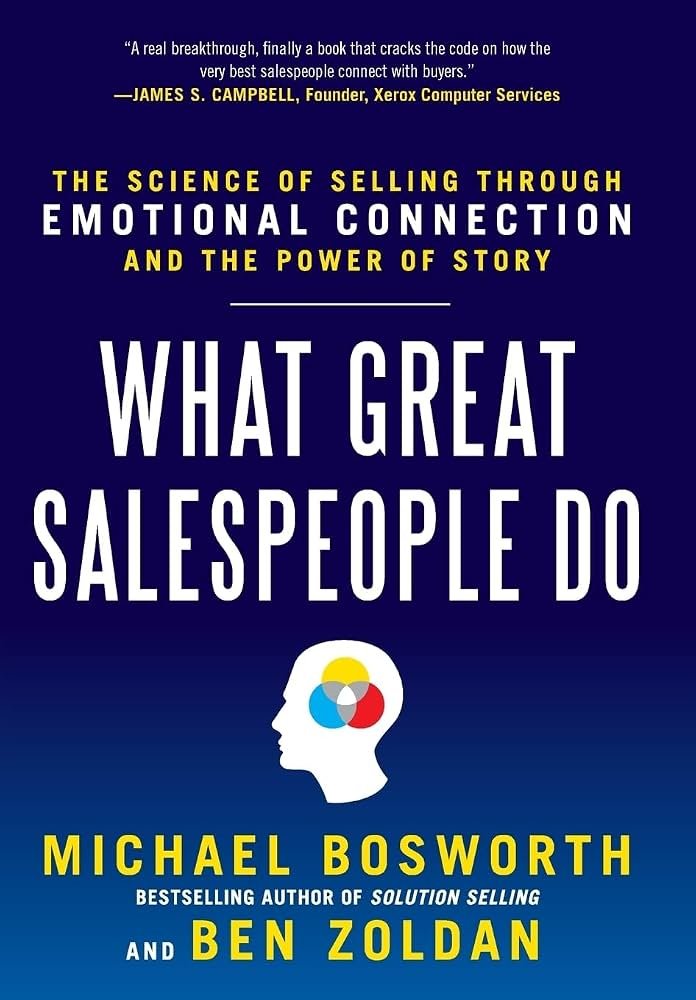
What Great Salespeople Do fundamentally reframes sales from a transaction to a transformative journey, emphasizing the profound impact of emotional connection and narrative. This book champions a human-centric approach, arguing that true selling success hinges on understanding and addressing a customer’s deepest needs and aspirations, not just their stated problems. It provides a robust framework for leveraging storytelling to build trust, differentiate value, and ultimately drive superior business outcomes.
In addition to the insightful perspectives offered in “What Great Salespeople Do: The Science of Selling Through Emotional Connection and the Power of Story” by Michael T. Bosworth and Ben Zoldan, readers may find a related article on the importance of storytelling in sales to be particularly enlightening. This article delves into how narratives can enhance customer engagement and drive sales success, complementing the themes discussed in Bosworth and Zoldan’s work. For more information, you can read the article here: The Art of Storytelling in Sales.
Key Insights
1. The Primacy of Emotional Connection in CX and Sales
Bosworth and Zoldan compellingly argue that how a customer feels about a solution, and the salesperson presenting it, is often more critical than the technical specifications. This insight is directly applicable to CX, where emotional resonance drives loyalty and advocacy. Great salespeople don’t just sell products; they sell belief, confidence, and a vision of a better future. For CX leaders, this translates to designing customer journeys that prioritize emotional uplift, proactive problem-solving, and personalized interactions. When customers feel understood and valued, their lifetime value increases exponentially. This isn’t about manipulation; it’s about authentic empathy and aligning solutions with genuine human desires. Focusing on the emotional journey allows organizations to move beyond mere satisfaction to genuine delight, which is a key driver of retention and positive word-of-mouth.
2. Storytelling as a Strategic Differentiator
The book masterfully dissects the power of narrative to convey complex ideas and build rapport. In an increasingly commoditized market, features and benefits alone are insufficient. Instead, the authors advocate for “story-based selling,” where salespeople craft compelling narratives that resonate with a customer’s specific challenges and aspirations. This goes beyond simple case studies; it involves weaving a personal, relatable story that illustrates how the solution transforms a customer’s situation. For operational leaders, this means equipping sales teams with the skills to identify relevant customer pain points and then construct impactful stories that not only highlight the product’s capabilities but also its transformative impact. This approach can significantly reduce sales cycles by creating a sense of urgency and connection, thereby directly impacting revenue growth. Furthermore, storytelling isn’t just for sales; it’s a critical tool for internal communication, change management, and building a strong company culture, all of which indirectly influence CX.
3. The Power of “Discovery” Over “Qualification”
A core tenet of the book is the shift from traditional “qualification” – where a salesperson checks off a list of criteria – to deep “discovery.” Discovery, in Bosworth and Zoldan’s framework, is an empathetic exploration of the customer’s world, their underlying problems, their motivations, and their desired outcomes. It’s about asking insightful questions that uncover unspoken needs and emotional drivers. For CX and revenue leaders, this emphasizes the need for training sales and support teams to become expert diagnosticians, not just product pushers. This approach fosters genuine trust and allows for truly tailored solutions, dramatically improving the likelihood of a successful sale and long-term customer satisfaction. When sales teams truly understand the customer’s why, they can articulate value in a way that resonates profoundly, leading to higher win rates and reduced churn. This deeper understanding also feeds valuable insights back into product development and marketing, creating a virtuous cycle for continuous improvement across the organization.
4. Operationalizing Empathy for Enhanced Customer Retention
The book implicitly champions operationalizing empathy. By focusing on understanding the customer’s world and their emotional landscape, sales professionals can forge stronger bonds. This isn’t just about closing a deal; it’s about laying the groundwork for a lasting relationship. From a customer retention standpoint, this approach is invaluable. When customers feel genuinely understood and that their needs were met with thoughtful consideration, they are far more likely to remain loyal. This translates into lower churn rates and increased customer lifetime value. CX leaders can leverage these principles by embedding empathetic listening and personalized communication training throughout their customer-facing teams, from sales to support. Creating feedback loops that capture these emotional insights can also inform product improvements and service enhancements, further solidifying customer loyalty. The book’s emphasis on deep listening and understanding the customer’s journey from their perspective directly contributes to a proactive and personalized customer experience, which is a cornerstone of effective retention strategies.
Practical Application
- Immediate Sales Playbook Overhaul: Mandate a shift from product-centric pitch decks to customer-centric narrative frameworks. Train your sales team to move beyond feature-benefit lists and instead develop compelling stories that illustrate how your solution solves specific customer pain points and helps them achieve their aspirations. Provide templates and coaching for crafting “before and after” customer stories, emphasizing emotional transformation rather than just functional improvements.
- CX Discovery Training for All Frontline Teams: Implement a “deep discovery” training program, adapted from the book’s principles, for not just sales, but also customer support, onboarding, and success teams. Focus on teaching active listening, empathetic questioning techniques, and how to uncover unspoken needs and emotional drivers. Integrate these skills into performance reviews and reward structures to reinforce their importance in building long-term customer relationships and identifying upsell/cross-sell opportunities.
Final Verdict
What Great Salespeople Do is an essential read for executives, operators, and strategists grappling with commoditization, long sales cycles, or stagnant customer retention. Its principles transcend traditional sales, offering a blueprint for building genuine customer relationships rooted in empathy and understanding. Anyone looking to elevate their customer experience, drive sustainable revenue growth, and foster a more human-centric business approach will find immense value.
Those who can skip it might be individuals solely focused on highly transactional, low-value, or purely B2C volume sales where emotional connection plays a less significant role. However, even in such contexts, understanding customer psychology remains beneficial.
Bottom-Line Rating: 9.5/10 – A masterclass in modern, human-centric selling and CX.
FAQs
What is the book “What Great Salespeople Do” about?
The book “What Great Salespeople Do” by Michael T. Bosworth and Ben Zoldan explores the science of selling through emotional connection and the power of storytelling. It provides insights and strategies for sales professionals to build strong emotional connections with their customers and effectively use storytelling to drive sales.
Who are the authors of “What Great Salespeople Do”?
The authors of “What Great Salespeople Do” are Michael T. Bosworth and Ben Zoldan. Bosworth is a sales guru and the founder of Solution Selling, while Zoldan is a sales and marketing expert with a background in storytelling and communication.
What are some key concepts discussed in “What Great Salespeople Do”?
Some key concepts discussed in “What Great Salespeople Do” include the importance of emotional connection in sales, the power of storytelling to engage customers, and the science behind effective selling techniques. The book also delves into the psychology of buying and provides practical strategies for sales professionals to apply in their work.
Who is the target audience for “What Great Salespeople Do”?
The book “What Great Salespeople Do” is primarily targeted at sales professionals, including salespeople, sales managers, and anyone involved in the sales process. It is also relevant for marketing professionals, business leaders, and entrepreneurs who are looking to improve their sales strategies and techniques.
What are some of the key takeaways from “What Great Salespeople Do”?
Some key takeaways from “What Great Salespeople Do” include the importance of building emotional connections with customers, the impact of storytelling on sales success, and the practical application of sales techniques based on scientific principles. The book also emphasizes the value of understanding the customer’s perspective and tailoring sales approaches accordingly.