Executive Summary
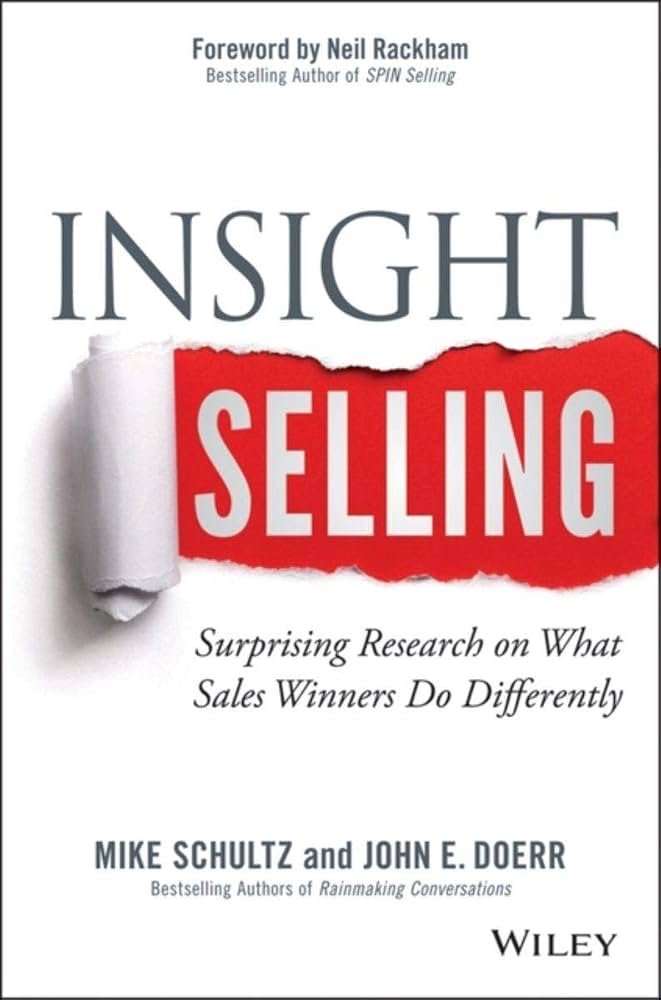
Insight Selling dismantles the myth of the “likable” or “helpful” salesperson, revealing that true sales winners don’t just solve problems; they provoke new thinking and challenge existing assumptions to deliver unique insights that reshape a buyer’s understanding of their business. This research-backed approach elevates sales from a transactional exchange to a strategic partnership, driving significant revenue growth and fostering deeper customer loyalty.
In the realm of sales strategies, the insights presented in “Insight Selling: Surprising Research on What Sales Winners Do Differently” by Mike Schultz, John E. Doerr, and Neil Rackham offer a compelling perspective on how top performers distinguish themselves in the competitive landscape. For those interested in exploring further, a related article that delves into the nuances of effective sales techniques can be found at this link. This resource provides additional context and practical applications that complement the findings discussed in the book, making it a valuable read for sales professionals aiming to enhance their skills.The Core Premise: Beyond Problem Solving to Insight Generation
The central argument of Insight Selling is that while traditional sales methodologies focusing on needs discovery and problem-solving have a place, they are insufficient to win in today’s complex and competitive B2B landscape. The authors, drawing on extensive research, including the original Challenger Sale data and their own proprietary studies, posit that the most successful salespeople are those who can teach their customers something new and valuable about their own business. This isn’t about presenting generic industry trends; it’s about delivering personalized, data-driven insights that highlight hidden opportunities or undiscovered risks, compelling the buyer to act.
The book meticulously debunks the notion that rapport and relationship-building are the primary drivers of sales success. Instead, it emphasizes that genuine insight, delivered with confidence and backed by credible research, is the ultimate differentiator. This perspective is crucial for executives and strategists who often engage with sales teams expecting them to be knowledgeable partners, not just order-takers. Insight Selling provides a clear framework for how to achieve this elevated level of engagement, moving beyond mere product knowledge to a deeper understanding of the customer’s strategic landscape.
Key Insights: Elevating Sales to Strategic Value Creation

1. The “Teach” Pillar of Insight Selling: Uncovering Blind Spots and Opportunities
The book’s most profound insight is the identification of the “Teach” pillar as the cornerstone of breakthrough sales performance. This isn’t about lecturing or dominating the conversation. It’s about diagnosing what the customer doesn’t know they don’t know. Sales winners, according to the research, are adept at identifying the customer’s “blind spots”—areas where their current strategies, processes, or assumptions are inadvertently hindering growth or creating vulnerabilities.
- CX Connection: This directly impacts Customer Experience by shifting the focus from reactive problem-solving to proactive value creation. By teaching customers how to improve their own operations or customer journeys, sales professionals become invaluable partners, fostering long-term loyalty and reducing churn. A customer who feels their vendor consistently provides them with actionable intelligence is less likely to seek alternatives.
- Revenue Growth: By revealing previously unrecognized opportunities or risks, insight selling creates a sense of urgency and a compelling reason to change. This often leads to larger deal sizes and accelerated sales cycles, as the buyer perceives a significant upside in adopting the proposed solution based on the newfound knowledge.
2. The “Tailor” Pillar: Personalization is Paramount, Not a Buzzword
Insight Selling strongly emphasizes that insights must be highly personalized. Generic industry trends or boilerplate solutions are ineffective. The research shows that top performers excel at tailoring their insights to the specific context, challenges, and objectives of each individual customer. This requires deep research into the customer’s business, industry, and competitive landscape.
- Operational Efficiency: By tailoring insights, sales teams can become more efficient. Instead of casting a wide net, they can focus their efforts on the most relevant value propositions for each prospect, reducing wasted time and resources on ineffective pitches. This also drives efficiency within the customer’s organization as the insights provided are directly applicable to their unique situation.
- Customer Retention: When customers feel understood and that their specific needs and challenges are being addressed with customized solutions, their perception of value increases significantly. This fosters a stronger partnership, making them more resistant to competitive offers and more likely to renew contracts or expand their business with the vendor.
3. The “Take Control” Pillar: Guiding the Buyer’s Journey with Confidence
The research indicates that successful insight sellers don’t passively wait for buyers to signal readiness. They take control of the sales process by confidently guiding the buyer through the discovery of new possibilities. This involves challenging the status quo, pushing back respectfully on misguided assumptions, and steering the conversation towards strategic outcomes.
- Revenue Growth: By taking control, insight sellers can proactively shape the buyer’s perception of their needs and the potential solutions. This prevents the sales cycle from stalling due to buyer indecision or a lack of strategic clarity, ultimately leading to more closed deals and higher revenue. It also helps to qualify opportunities more effectively, ensuring resources are directed towards deals with a higher probability of success.
- CX Connection: For the customer, this can translate into a more structured and productive buying experience. Instead of feeling lost or overwhelmed, they are guided by an expert who helps them navigate complexity and make informed decisions. This builds trust and reinforces the vendor’s position as a strategic advisor.
4. The “Mobilize” Pillar: Building Internal Consensus and Driving Action
A critical, often overlooked, aspect of insight selling is the ability to mobilize the customer’s internal stakeholders and drive consensus for action. Insights are only valuable if they lead to a decision. Top performers understand that multiple individuals within a buying organization influence decisions, and they are skilled at identifying and engaging these key players, aligning them around the newly discovered insights.
- Operational Efficiency: By helping customers build internal alignment, insight sellers indirectly contribute to their customers’ operational efficiency. A unified internal front means faster decision-making and smoother implementation of new solutions, reducing the friction that can often derail projects and lead to costly delays.
- Customer Retention: When sales professionals actively help their clients navigate internal politics and build consensus, they become an integral part of the client’s success. This strengthens the relationship beyond a transactional one, making the vendor a trusted partner in achieving organizational goals, thereby boosting long-term retention.
Practical Application: Implementing Insight Selling Immediately

1. Develop “Insight Playbooks” for Key Buyer Personas and Industries
Leaders can immediately begin fostering an insight-driven sales culture by initiating the creation of “Insight Playbooks.” These aren’t product catalogs or generic scripts. They are living documents that outline:
- Common Blind Spots: Based on market research and your own customer data, identify 3-5 recurring blind spots or underappreciated opportunities relevant to specific buyer personas or industries you target. For example, for SaaS companies targeting SMBs, a blind spot might be their failure to adequately leverage AI for customer support efficiency.
- Provocative Questions: For each blind spot, craft 2-3 open-ended, thought-provoking questions designed to make the buyer question their current assumptions. These questions should be grounded in observable trends or potential risks, not accusatory.
- Data-Driven Evidence: Compile concise, compelling data points, case studies, or research findings that support the existence of these blind spots and illustrate the potential consequences of ignoring them. This evidence should be easily digestible and credibly sourced.
Immediate Action: Assign a cross-functional team (sales enablement, product marketing, and experienced sales reps) to develop the first playbook for your most critical target segment within the next quarter. This creates a tangible output that shifts the focus from product features to customer-centric insight generation.
2. Implement a “Challenging Conversation” Coaching Program
Traditional sales coaching often focuses on closing techniques or overcoming objections. Insight Selling necessitates a shift towards coaching salespeople on how to deliver challenging insights respectfully and effectively. This involves:
- Role-Playing Scenarios: Conduct regular role-playing sessions focused on delivering challenging insights. These sessions should simulate scenarios where a salesperson needs to gently push back on a buyer’s assumptions or highlight a potential risk they haven’t considered. The emphasis should be on the delivery of the insight, not just the content.
- Feedback Framework: Develop a structured feedback framework that assesses the salesperson’s ability to articulate the insight, provide credible evidence, and elicit a thoughtful response from the “buyer” (played by a coach or peer). Criteria should include clarity, confidence, empathy, and the ability to prompt reflection.
- Learning from Wins and Losses: Encourage sales reps to share instances where they successfully delivered a challenging insight, as well as instances where they struggled. This creates a shared learning environment and normalizes the practice of engaging in these crucial conversations.
Immediate Action: Schedule weekly 30-minute coaching slots for sales managers to conduct “Challenging Conversation” role-plays with their teams, focusing on one specific insight playbook per session. This builds muscle memory and confidence in handling these pivotal interactions.
In the realm of sales strategies, the insights presented in “Insight Selling: Surprising Research on What Sales Winners Do Differently” by Mike Schultz, John E. Doerr, and Neil Rackham offer a compelling look at the behaviors that distinguish top performers from their peers. For those interested in enhancing their professional skills, a related article on effective job preparation can be found in “Cracking the PM Interview: How to Land a PM Job,” which provides valuable guidance for aspiring product managers. You can explore this resource further by following this link.Final Verdict: A Mandatory Read for Strategic Sales Leaders
| Aspect | Insight Selling |
|---|---|
| Authors | Mike Schultz, John E. Doerr, Neil Rackham |
| Book Title | Insight Selling: Surprising Research on What Sales Winners Do Differently |
| Genre | Sales, Business |
| Published Year | 2014 |
| Pages | 256 |
| Key Topics | Sales strategies, Winning sales, Research insights |
Who Must Read This:
- Sales Leaders & VPs: Anyone responsible for driving revenue growth and shaping their sales team’s strategy.
- Sales Enablement Professionals: Those tasked with equipping sales teams with the skills and knowledge to perform at a higher level.
- Account Managers & Senior Sales Representatives: Individuals who engage directly with customers and need to move beyond transactional selling.
- CX Leaders: To understand how sales can become a more powerful engine for customer loyalty and value co-creation.
- Business Strategists: To grasp how a sophisticated sales approach can be a competitive differentiator and a source of market intelligence.
Who Can Skip It:
- Entry-Level Sales Roles (primarily focused on lead generation): While the principles are valuable, the immediate application might be less direct.
- Purely Transactional Sales Environments: Businesses operating in highly commoditized markets with minimal room for strategic differentiation might find less direct applicability.
- Those Unwilling to Evolve Their Sales Approach: The book demands a shift in mindset and practice, so individuals resistant to change may not benefit.
Bottom-Line Rating: 5/5 Stars
Insight Selling is not just another business book; it’s a manifesto for the modern B2B sales professional. It’s grounded in rigorous research and offers a practical, actionable framework for achieving outlier sales performance. For any executive or operator seeking to elevate their sales function from a cost center to a strategic growth driver, this book is an indispensable read. It provides the ‘why’ and the ‘how’ to transition from simply solving customer problems to becoming indispensable strategic partners who unlock new value for clients and, in turn, for your own organization. The insights within these pages are precisely what separate top-performing sales teams from the rest, making it a crucial investment for any forward-thinking business.