Executive Summary
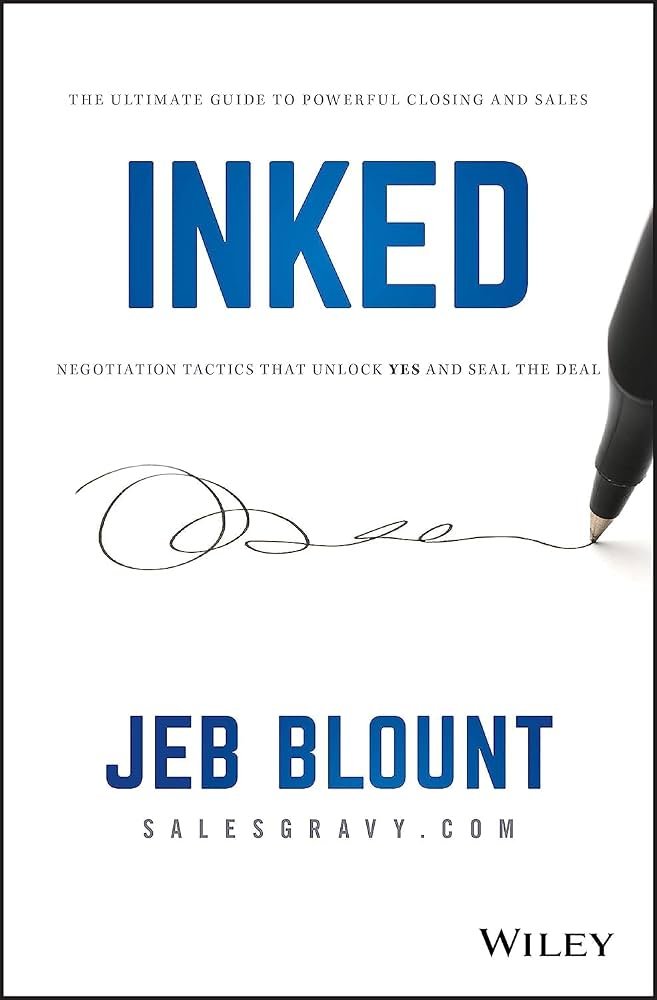
Jeb Blount’s “INKED” shatters the myth of the “natural-born closer,” meticulously dissecting the art and science of sales negotiation. This book is a tactical masterclass, equipping sales professionals with the frameworks and mindsets required to secure more wins, maximize value, and defend against discounting, ultimately driving superior revenue performance. It’s a pragmatic guide for anyone who needs to close deals and protect margin.
In addition to the insightful book review of “INKED” by Jeb Blount, readers may find it interesting to explore the article on the necessity of “Uberization” in tutoring. This article delves into how the gig economy is reshaping educational services, offering a fresh perspective on the evolving landscape of tutoring. For more information, you can read the article here: What’s the Need for Uberization in Tutoring?.Key Insights
- The Closing Cadence is a Designed Process, Not a Moment: Blount rigorously outlines that closing isn’t a single, magical utterance but a strategic sequence of conversations, value propositions, and commitment steps. From a CX perspective, this translates into understanding the entire customer journey, not just the point of purchase. By mapping out the “closing cadences” of customer commitment, businesses can proactively address potential friction points and reinforce value, leading to smoother onboarding and higher retention rates. This proactive approach minimizes customer churn by ensuring expectations are set and consistently met throughout the sales and post-sales continuum.
- Leveraging Micro-Commitments for Macro-Wins: A core tenet of “INKED” is the power of incrementally securing small agreements that build momentum towards the final close. This insight is directly applicable to operational efficiency and revenue growth. In CX, imagine the “micro-commitments” a customer makes: signing up for a trial, attending a demo, engaging with a support article, or providing feedback. Each micro-commitment is an opportunity to reinforce value and deepen engagement. Sales and CX teams can collaborate to design these micro-commitment pathways, using them to nurture leads, improve product adoption, and identify upsell opportunities more effectively, ultimately accelerating revenue cycles and increasing customer lifetime value.
- Mastering Objection Handling as a Value Reinforcement Strategy: Blount reframes objections not as roadblocks but as opportunities to further clarify value and align solutions with customer needs. He provides a robust framework for diagnosing, isolating, and resolving objections. For operators, this means training customer-facing teams (sales, support, success) to view customer complaints or hesitations as a chance to reiterate the product’s benefits and strengthen the customer relationship. By empowering these teams with effective objection-handling techniques, businesses can reduce churn, improve customer satisfaction scores (CSAT), and identify areas for product or service improvement, directly impacting customer retention and brand loyalty.
- The Psychological Edge in Negotiation: Leverage & Empathy: The book emphasizes understanding and utilizing psychological principles, including emotional intelligence and leverage, to drive favorable outcomes. Blount meticulously dissects various types of leverage and how to identify or create them. For strategists, this highlights the importance of deep customer understanding beyond surface-level needs. By truly empathizing with customer challenges and understanding their underlying motivations (their “why”), companies can frame their offerings in a way that creates undeniable value and reduces price sensitivity. This psychological acumen extends to internal negotiations, fostering better cross-functional collaboration and alignment on customer-centric initiatives, ultimately bolstering CX and revenue growth.
Practical Application
- Develop a “Closing Cadence” Playbook for Your Sales & Onboarding Teams: Immediately convene your sales and customer success leadership to map out the critical commitment points from lead qualification to contract signing and through the first 90 days of customer engagement. Identify the specific “closes” (e.g., agreeing to a demo, committing to a pilot, signing a contract, completing onboarding milestones) and the exact language, value propositions, and objection-handling scripts for each. Train teams on this codified process to ensure consistency, reduce variability, and accelerate time-to-value for new customers. This will directly improve close rates and reduce early-stage churn.
- Implement a “Value Reinforcement” Framework for Customer Complaints: Empower your customer support and success teams with a structured approach to addressing customer issues that goes beyond just resolving the problem. Train them to actively diagnose the root cause of the complaint, isolate the specific issue, and then pivot to reinforcing the core value proposition of your product or service that the customer is still receiving or will receive upon resolution. Provide them with specific phrases and techniques to reframe challenges as opportunities to demonstrate commitment and build trust, thereby transforming potential churn signals into loyalty-building interactions. This strengthens customer relationships and significantly impacts retention.
Final Verdict
Who must read this: Every sales leader, account executive, business development manager, and anyone involved in significant B2B or high-value B2C negotiations. CX leaders looking to understand the sales-CX continuum and improve customer acquisition and early retention will find immense value. Operations leaders keen on optimizing processes that impact revenue generation should also consider it.
Who can skip it: Individuals in purely back-office, non-customer-facing roles without direct influence on revenue or customer acquisition. Those looking for high-level strategic fluff rather than tactical, actionable advice.
Bottom-line rating: 9.5/10 – A masterclass in sales negotiation that’s dense with actionable strategies and frameworks.
In the engaging book review of INKED by Jeb Blount, readers can explore the intricate connections between personal branding and effective communication. For those interested in enhancing their own communication skills, a related article offers valuable insights on user experience in e-learning. This resource provides essential tips that can significantly improve online learning environments, making them more effective and engaging. To delve deeper into these strategies, you can read the article on top UX tips for better e-learning.Decoding the Psychology of the Close: Beyond Surface-Level Sales
Jeb Blount’s “INKED” isn’t just another sales book; it’s a deep dive into the psychological underpinnings of successful negotiation. Blount argues convincingly that while product knowledge and enthusiasm are crucial, true closing power stems from a mastery of human behavior and a strategic approach to commitment. He meticulously breaks down the emotional and rational drivers that compel buyers to say “yes,” and, more importantly, how sellers can ethically and effectively guide them to that point.
The Intricacies of Buyer Hesitation
One of the book’s most compelling sections explores the multifaceted reasons buyers hesitate. Blount doesn’t just list common objections; he dissects their psychological roots. Is it fear of commitment? A genuine lack of understanding of value? A power play? Or a desire to simply delay? Understanding these underlying drivers allows sales professionals to tailor their approach, rather than resorting to generic rebuttals. This is critical for CX leaders, as these same hesitations often manifest as post-purchase friction or churn indicators. By understanding the “why” behind buyer hesitation at the sales stage, CX teams can proactively design better onboarding, support, and communication strategies to prevent similar issues downstream.
Building Unstoppable Confidence
Confidence, Blount argues, is not innate but built through preparation and repeated success. He outlines specific exercises and mindsets to cultivate unwavering confidence in sales professionals, which directly translates to authority and trustworthiness in the eyes of the buyer. From a leadership perspective, fostering this level of confidence across sales and customer-facing teams creates a more impactful and persuasive front line. Empowered and confident employees are better equipped to handle difficult conversations, advocate for customer needs, and ultimately drive better business outcomes.
The Art of the Micro-Commitment: Fueling the Sales Momentum
Blount’s emphasis on micro-commitments is a cornerstone of “INKED.” He posits that the grand “close” is rarely a single, definitive moment but rather the culmination of numerous small agreements. Each micro-commitment – agreeing to a follow-up, providing a specific piece of information, accepting a trial, or committing to internal discussion – builds momentum and reduces friction towards the ultimate decision.
Crafting the Commitment Path
The book provides practical frameworks for designing a “commitment path” for every sales interaction. This involves identifying natural points where a small “yes” can be secured, reinforcing the value proposition with each step. For CX leaders, this concept is revolutionary. Imagine applying the “commitment path” to the customer onboarding journey. Each successful step a new customer takes – setting up their profile, integrating a tool, completing a training module – can be treated as a micro-commitment that increases product stickiness and reduces early churn. By strategically designing these pathways and celebrating these small wins, businesses can proactively guide customers to full product adoption and long-term loyalty.
The Power of Assumptive Language
Blount champions the use of assumptive language as a subtle yet powerful tool for securing micro-commitments. Rather than asking “Would you like to proceed?”, an assumptive close might be “When would you like to schedule the implementation?” This subtle shift in phrasing gently guides the conversation forward, signaling confidence and an expectation of agreement. This technique, when used ethically and with genuine value, can significantly accelerate sales cycles and reduce decision fatigue for buyers. For CX, it can be applied in encouraging feature adoption or upgrades: “Which of these advanced features would you like to explore first?” rather than “Are you interested in anything else?”
Objection Handling as a Strategic Opportunity: Turning No into Know
“INKED” dedicates substantial chapters to demystifying objection handling. Blount reframes objections not as rejections, but as indicators of underlying concerns, misunderstandings, or unspoken needs. He provides a systematic approach to dissecting, isolating, and ultimately resolving objections, turning them into opportunities to deepen the relationship and reinforce value.
Diagnosing the Real Objection
One of the most valuable lessons is the importance of diagnosing the real objection. Blount teaches readers how to ask probing questions to peel back layers of superficial resistance (“It’s too expensive”) to uncover the true concern (“I don’t see how this will save us enough to justify the cost”). This deep diagnostic approach is invaluable for CX teams, as customer complaints often mask deeper frustrations with the product, service, or company. By applying Blount’s diagnostic techniques, support and success teams can move beyond symptomatic solutions to address root causes, leading to more profound customer satisfaction and problem resolution.
The Feel, Felt, Found Framework
Blount elaborates on classic objection-handling frameworks like “Feel, Felt, Found,” demonstrating its power in building empathy and credibility. “I understand how you feel about the price. Many of our clients have felt that way initially. However, what they found is that the long-term ROI far outweighs the upfront investment because…” This structured approach allows sales professionals to validate the customer’s emotions while strategically re-educating them on the value. This framework is a powerful tool for customer support teams when addressing difficult customer feedback or complaints, enabling them to acknowledge distress while guiding customers towards a positive resolution and reinforcing the company’s commitment.
Mastering Leverage & Control: The Unspoken Elements of Negotiation
Blount delves into the often-overlooked aspects of leverage and control in sales negotiations. He clarifies that leverage isn’t about manipulation, but about understanding the power dynamics in a deal and ethically positioning oneself to achieve favorable outcomes.
Identifying and Creating Leverage
The book meticulously outlines various types of leverage – positional, time-based, competitive, relational, and emotional. More importantly, Blount teaches how to identify existing leverage points and, crucially, how to create new ones. This strategic insight is gold for strategists. By understanding your company’s leverage points (unique product features, market dominance, exceptional CX, proprietary data), you can better position your offerings and command premium pricing. For operators, it means recognizing where your operational strengths (e.g., speed of delivery, quality of support) create leverage in customer retention or expansion discussions.
The Control Game
Blount emphasizes taking control of the sales process, not the customer. This involves setting clear agendas, managing expectations, and guiding the conversation rather than being dictated by the buyer. This proactive approach ensures that sales cycles remain efficient and focused. In CX, this translates to taking control of the customer journey, from proactive communications to structured feedback loops. By guiding the customer experience, companies can reduce ambiguity, minimize frustration, and build a more predictable and positive relationship, which significantly impacts customer retention and advocacy.
The Bottom Line: More Than Just Closing
“INKED” transcends the traditional definition of a sales book. It’s a comprehensive masterclass in persuasion, psychological insight, and strategic execution that extends far beyond the sales department. For executives, operators, and strategists, the principles outlined by Blount offer a blueprint for enhancing customer interactions across the entire lifecycle, driving both revenue growth and unparalleled customer experience. By adopting the “INKED” mindset, organizations can move from merely selling to consistently securing mutually beneficial commitments, forging stronger customer relationships that endure.