Executive Summary
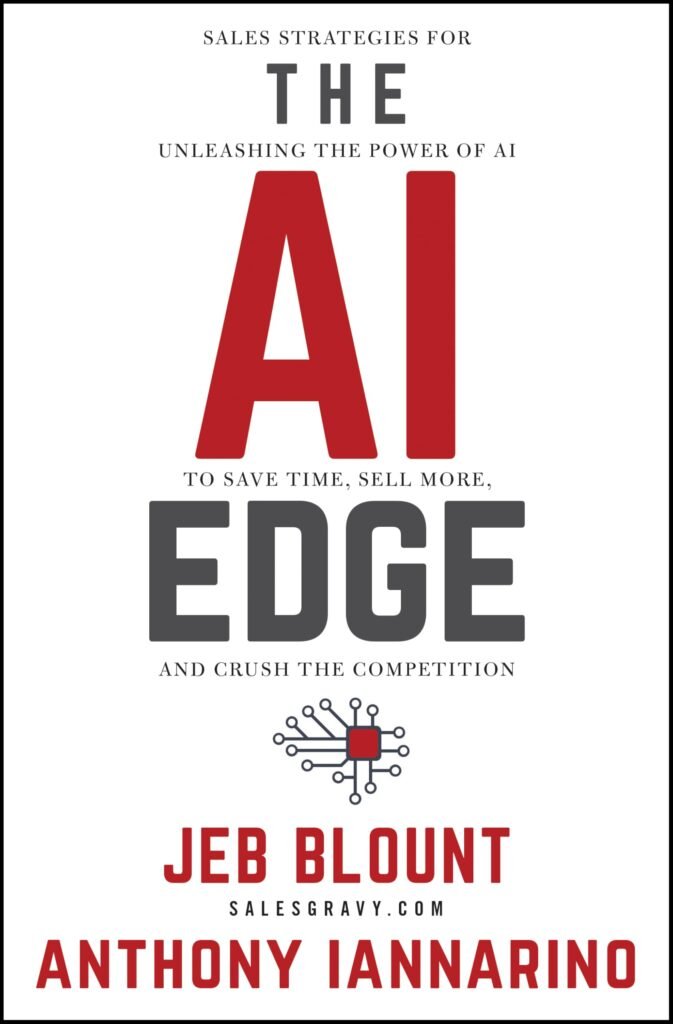
The AI Edge offers a pragmatic and timely guide for sales professionals and leaders navigating the burgeoning landscape of Artificial Intelligence. Blount and Iannarino cut through the hype, providing a clear roadmap for integrating AI tools into existing sales processes to enhance efficiency, elevate customer experience, and ultimately drive revenue. This book asserts that embracing AI is not optional, but essential for competitive advantage and sustained growth in modern sales organizations.
In addition to the insightful perspectives offered in the book review of “The AI Edge” by Jeb Blount and Anthony Iannarino, readers may find it beneficial to explore related themes in other literature. For instance, the article on reversing heart disease provides a compelling examination of how innovative approaches can transform health outcomes, paralleling the transformative potential of AI in business. To read more about this intriguing topic, visit the article at Reversing Heart Disease Book Review.
Key Insights
1. AI as an Augmentation, Not a Replacement for Human Sales:
- CX Connection: The authors powerfully argue that AI’s greatest strength in sales lies in its ability to augment human capabilities, not replace them. For CX, this translates to using AI for personalized outreach, predictive analytics to anticipate customer needs, and automating tedious tasks to free up sales reps for more high-value, empathetic interactions. Imagine an AI-powered CRM suggesting the next best conversation based on customer sentiment analysis – that’s a direct uplift to the customer journey.
- Operational Efficiency: AI excels at data analysis, lead scoring, and content generation. By offloading these tasks, sales teams can operate with significantly greater efficiency. This means less time spent on administrative burdens and more time focused on strategic customer engagement and closing deals.
- Revenue Growth: By enabling reps to focus on relationship building and problem-solving, AI indirectly but powerfully contributes to revenue growth. Better-qualified leads, more personalized pitches, and faster response times all accelerate the sales cycle and improve win rates.
2. The 5-Step Framework for AI Integration:
- CX Connection: The book’s practical framework (Discover, Evaluate, Test, Implement, Optimize) provides a clear path for organizations to responsibly adopt AI. For CX, this systematic approach ensures that AI tools are evaluated not just for sales efficiency, but also for their impact on customer interactions and data privacy. A well-implemented AI strategy prioritizes a seamless and positive customer experience.
- Operational Efficiency: This structured approach minimizes disruption and maximizes ROI. By testing AI tools on a small scale before full implementation, organizations can identify pain points and optimize workflows, preventing costly large-scale failures. This disciplined adoption prevents “AI sprawl” and ensures resources are allocated effectively.
- Revenue Growth: By consistently iterating and optimizing AI usage, sales teams can continuously refine their approach, leading to improved lead conversion, higher average deal sizes, and stronger customer relationships – all direct drivers of revenue.
3. The Critical Role of AI in Personalization at Scale:
- CX Connection: One of AI’s most transformative capabilities highlighted is its ability to deliver hyper-personalization at scale. From crafting bespoke email sequences based on prospect behavior to dynamically adjusting website content, AI allows sales professionals to make each customer feel individually understood and valued. This directly elevates the customer experience beyond what manual efforts could achieve.
- Operational Efficiency: Manually personalizing outreach for hundreds or thousands of prospects is simply not feasible. AI automates this, enabling sales teams to maintain a high level of personal touch without sacrificing efficiency. This frees up sales development representatives (SDRs) to engage in more meaningful conversations rather than repetitive manual customization.
- Revenue Growth: Highly personalized communications resonate more deeply, leading to higher engagement rates, improved meeting bookings, and ultimately, a stronger pipeline. When customers feel truly understood, their propensity to purchase increases significantly.
4. Data Governance and Ethical Considerations are Paramount:
- CX Connection: Blount and Iannarino emphasize the non-negotiable importance of data privacy, security, and ethical AI usage. For CX, this means ensuring that AI systems are used transparently, respectfully, and in compliance with all relevant regulations. A breach of trust due to unethical AI practices can decimate customer loyalty and reputation.
- Operational Efficiency: Robust data governance practices prevent costly data breaches and regulatory fines. By establishing clear guidelines for AI usage, organizations can streamline compliance efforts and avoid operational setbacks.
- Revenue Growth: Maintaining customer trust through ethical data practices is foundational for long-term customer relationships and sustained revenue. Customers are increasingly conscious of how their data is used, and a perceived breach of ethics can quickly lead to churn.
Practical Application
- AI Audit and Prioritization: Immediately conduct an audit of your current sales tech stack and identify 2-3 repetitive, high-volume tasks that could be automated or significantly enhanced by AI (e.g., lead qualification, initial outreach draft generation, meeting scheduling). Prioritize these based on potential efficiency gains and CX impact. Then, research and pilot one AI tool specifically designed for one of these prioritized areas with a small, eager team to gather immediate feedback and iterate.
- Upskill Your Sales Leadership: Implement a mandatory training program for all sales managers and team leads on the foundational concepts of AI in sales. This isn’t about making them data scientists, but empowering them to identify AI opportunities, understand AI tool capabilities, and lead their teams in adopting these new technologies responsibly. Encourage them to actively solicit feedback from their reps on how AI tools are impacting their workflow and customer interactions.
The AI Imperative for Modern Sales
Blount and Iannarino do an exceptional job of demystifying AI for the sales professional. They don’t dwell on the esoteric technical details, but rather focus on the practical applications and the strategic advantage that AI offers. This book isn’t about selling AI tools; it’s about selling better with AI tools.
Moving Beyond the Hype Cycle
One of the most refreshing aspects of The AI Edge is its grounded approach. The authors acknowledge the hype surrounding AI but quickly pivot to tangible, actionable insights. They stress that AI is not a magic bullet, but a powerful lever when applied judiciously. This perspective is critical for executives who need to differentiate between genuine innovation and fleeting trends.
The Human-AI Partnership
A recurring theme, and perhaps the most important, is the symbiotic relationship between human sales talent and artificial intelligence. The book eloquently argues that the future of sales lies not in replacing humans with machines, but in empowering humans with superior tools. This perspective alleviates common fears within sales teams and encourages a mindset of adoption rather than resistance. For CX leaders, this translates into ensuring that AI enhances the human touchpoints, making them more informed and effective, rather than isolating customers.
In the insightful book review of “The AI Edge” by Jeb Blount and Anthony Iannarino, the authors delve into the transformative impact of artificial intelligence on sales strategies. For those interested in enhancing their content creation processes, a related article on effective content strategy can provide valuable insights. You can explore this further in the article available here, which discusses how a well-crafted content strategy can significantly improve engagement and conversion rates.
Building an AI-Ready Sales Culture
Successfully integrating AI goes beyond just purchasing software; it requires a cultural shift. The authors indirectly emphasize this by providing a roadmap for adoption that includes testing, feedback loops, and continuous optimization.
Leadership’s Role in AI Adoption
The AI Edge subtly underscores that top-down leadership is crucial. Executives must champion AI initiatives, allocate resources, and communicate the strategic “why” behind these changes. Without strong leadership, AI adoption can flounder, becoming another expensive, underutilized tech stack addition. This means CX leaders must also be at the table, ensuring that the customer voice is heard throughout the AI strategy and implementation phases.
Training and Skill Development
The book implies the need for continuous learning. Sales professionals must evolve their skills to effectively leverage AI. This isn’t just about learning how to use a new piece of software; it’s about understanding how to interpret AI-generated insights, how to refine AI prompts, and how to combine AI output with human empathy and judgment. Organizations that invest in upskilling their teams will reap the greatest rewards.
Navigating the Ethical Minefield
The explicit focus on data governance and ethical AI is a testament to the authors’ foresight. As AI becomes more sophisticated, the potential for misuse or unintended consequences grows.
Transparency and Trust
The book champions transparency in AI usage. For customer-facing roles, this is paramount. Customers need to understand when they are interacting with AI and how their data is being used. This builds trust, which is the bedrock of any successful customer relationship. CX professionals should ensure that any AI implementation includes clear communication guidelines for sales teams regarding AI interactions.
Bias and Fairness
While not delving into deep technical aspects, the emphasis on responsible AI hints at the need to mitigate bias in algorithms. Sales leaders, with the input of CX, must ensure that AI tools do not inadvertently perpetuate or amplify existing biases in lead scoring, personalization, or pricing, which could lead to discriminatory practices and damage brand reputation.
Final Verdict
Who must read this: All sales leaders, C-suite executives overseeing revenue generation, and anyone in an operations or strategy role looking to understand the practical implications of AI on their sales organization and overall customer experience. If you’re grappling with how to move beyond theoretical AI discussions to tangible implementation, this is your blueprint.
Who can skip it: Individuals exclusively focused on the deep technical architecture of AI models or those looking for a purely academic treatise on AI theory. This book is for the doers, not the pure researchers.
Bottom-line rating: 9/10. A highly practical, well-structured guide that provides immediate value for executives looking to leverage AI to drive sales performance and enhance customer engagement. It’s a timely and essential read for staying competitive in the AI-driven sales landscape.
FAQs
What is the book “The AI Edge” about?
The book “The AI Edge” by Jeb Blount and Anthony Iannarino explores the impact of artificial intelligence on sales and how sales professionals can leverage AI to improve their performance and results.
Who are the authors of “The AI Edge”?
The authors of “The AI Edge” are Jeb Blount, a sales acceleration specialist, and Anthony Iannarino, a sales leader and entrepreneur. Both authors are well-known in the sales industry and have extensive experience in sales and business development.
What are some key topics covered in “The AI Edge”?
Some key topics covered in “The AI Edge” include the role of AI in sales, leveraging AI to enhance sales productivity, using AI to improve customer engagement, and the ethical considerations of AI in sales.
What are some of the main takeaways from “The AI Edge”?
Some main takeaways from “The AI Edge” include understanding the potential of AI in sales, learning how to integrate AI tools into sales processes, and gaining insights into the future of AI in the sales industry.
Who is the target audience for “The AI Edge”?
The target audience for “The AI Edge” includes sales professionals, business leaders, and anyone interested in understanding the impact of AI on sales and how to leverage AI technologies for sales success.