Executive Summary
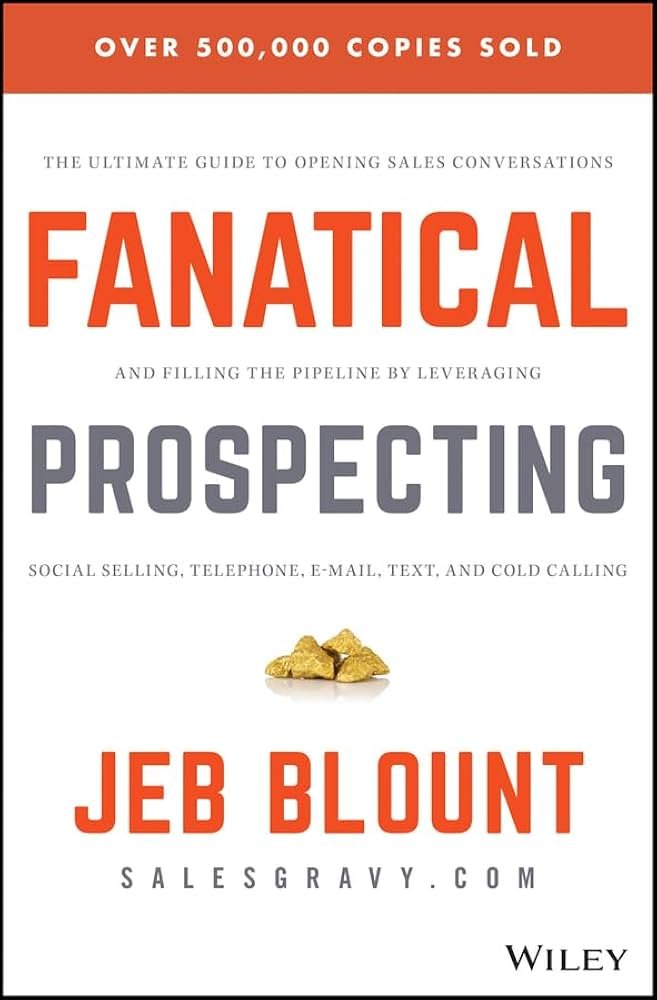
Fanatical Prospecting shatters the myth that sales success magically appears, asserting that consistent, high-volume, and strategic prospecting is the non-negotiable bedrock of a thriving pipeline. Blount and Arthur relentlessly drive home the point that in an increasingly competitive landscape, a proactive, systematic approach to finding new business isn’t just a best practice – it’s an existential imperative for growth. This book isn’t about how to close, but how to ensure you always have something to close.
In addition to the insightful perspectives offered in the book review of “Fanatical Prospecting” by Jeb Blount and Jeremy Arthur, readers may find it beneficial to explore related concepts in sales and strategy through the article on “Street-Fighting Mathematics.” This article delves into unconventional approaches to problem-solving and decision-making, which can complement the techniques discussed in “Fanatical Prospecting.” For more information, you can read the article here: Street-Fighting Mathematics – Book Review.Key Insights
The Iron Law of Prospecting: Activity Dictates Outcome
Blount and Arthur hammer this home: more qualified activity equals more meetings, more pipeline, and ultimately, more revenue. This isn’t groundbreaking, yet its consistent application is often the most neglected aspect of sales. For CX leaders, this translates directly to proactive outreach strategies. Are we fanatically prospecting for feedback? For engagement with at-risk accounts? For upsell opportunities that prevent churn? A systematic, high-volume approach to these CX-centric “prospecting” activities – like targeted surveys for specific segments, proactive health checks for low-engagement users, or personalized outreach to new feature adopters – directly impacts customer retention and lifetime value. Ignoring this iron law in CX means reacting to problems rather than preventing them, leading to higher churn and decreased customer satisfaction.
Multichannel, Multi-Touch: The Prospecting Cadence
The book advocates for a rigorous, multichannel approach, emphasizing that relying on a single outreach method (e.g., email) is a recipe for mediocrity. They lay out strategies for combining phone calls, emails, social selling, text messages, and even old-fashioned snail mail into a cohesive, persistent cadence. For operational efficiency, this insight is gold. Imagine a CX team that leverages an integrated cadence for onboarding new customers: a welcome email followed by a personalized video message, a quick check-in call after a week, and a link to a relevant resource on LinkedIn. This diversified, persistent engagement strategy not only reduces churn during critical early stages but also identifies potential issues before they escalate, minimizing the need for costly reactive support. Revenue growth is directly tied to the ability to effectively engage new customers and expand existing relationships. A “fanatical” approach to multichannel CX outreach ensures no opportunity for engagement is left unaddressed, driving both adoption and expansion.
Time Blocking and Energy Management: The Discipline of a Prospecting Ninja
Blount and Arthur dedicate significant space to the crucial role of discipline, time management, and energy preservation. Prospecting is hard, emotionally draining work, and without dedicated blocks of time and strategies to maintain motivation, it quickly falls by the wayside. This insight is incredibly pertinent for leaders focused on employee productivity and retention. High-performing teams, whether in sales or CX, don’t just know what to do; they do it consistently. Implementing dedicated “focus blocks” for proactive customer outreach, strategic problem-solving, or even internal team development can significantly boost operational efficiency. By protecting these critical time blocks from meeting creep and reactive tasks, leaders empower their teams to execute high-impact activities. Furthermore, acknowledging and addressing the emotional toll of customer-facing roles, through resilience training or structured breaks, contributes directly to employee retention and prevents burnout, which is a silent killer of CX quality.
The Power of Intentionality: No More “Winging It”
Fanatical Prospecting champions a deliberate, data-driven approach to every interaction. From crafting compelling value propositions to anticipating objections and developing follow-up strategies, nothing is left to chance. This intentionality directly correlates with improved customer experience. Imagine a CX team that not only responds to customer queries but proactively reaches out with tailored solutions based on usage data, predicts future needs, and educates customers on best practices before they encounter problems. This level of intentional, data-informed engagement transforms CX from a cost center into a strategic differentiator. For revenue growth, this means every touchpoint is optimized to deepen the customer relationship, identify expansion opportunities, and reinforce the value proposition, moving beyond simple support to true customer success.
Practical Application
- Implement a “Prospecting Power Hour” for Proactive CX: Dedicate a non-negotiable 60-minute block each day (or every other day, depending on team size and role) where CX team members engage in proactive, outbound customer interactions. This isn’t about responding to tickets; it’s about checking in with new users, identifying upsell/cross-sell opportunities, conducting health checks for at-risk segments, or gathering structured feedback. Track the number of proactive touchpoints and correlate it with churn rates, NPS scores, and upsell conversions. This systematic approach mirrors the prospecting discipline and directly impacts customer retention and potential revenue growth.
- Develop Multi-Channel “Engagement Cadences” for Critical Customer Journeys: Map out key customer journey stages (e.g., onboarding, feature adoption, renewal) and design a multi-channel, multi-touch communication cadence for each. For instance, for onboarding, combine an initial welcome email, a personalized video message from a CX representative, a targeted in-app message, and a follow-up phone call or personalized email after 7-10 days to check progress and offer support. This structured approach leverages the book’s multichannel philosophy, ensuring comprehensive engagement, improving customer retention by catching issues early, and ultimately enhancing operational efficiency by systematizing valuable customer interactions.
Final Verdict
Who must read this: Any executive, sales leader, or team manager responsible for revenue generation, customer acquisition, or pipeline health. This includes CX leaders who understand that proactive customer engagement and retention are direct contributors to the bottom line. If you feel your growth has plateaued, your pipeline is anemic, or your team is too reactive, this book offers the antidote.
Who can skip it: Individuals primarily focused on inbound lead qualification or existing account management without a direct mandate for new business development. If your role is purely reactive support or you have an overflowing pipeline from other sources, the core message of Fanatical Prospecting might feel less directly applicable to your day-to-day.
Bottom-line rating: 9/10 – A relentless, no-excuses masterclass in the foundational sales activity. Its principles are universally applicable to any role requiring proactive outreach and consistent pipeline generation.
In the realm of sales strategies, Jeb Blount and Jeremy Arthur’s “Fanatical Prospecting” offers invaluable insights into the art of effective prospecting. For those looking to enhance their skills further, a related article titled “A Practical Guide to Packing for Travelling Salesman” provides practical tips that can help sales professionals optimize their travel experience. By combining the techniques from Blount and Arthur’s book with the advice found in this guide, salespeople can ensure they are well-prepared for their journeys while maximizing their prospecting efforts.The Unwavering Philosophy of Consistent Outreach
Jeb Blount and Jeremy Arthur’s Fanatical Prospecting isn’t a book about silver bullets or ingenious closing techniques. Instead, it’s a relentless, almost evangelical sermon on the often-overlooked, yet singularly most critical aspect of sales: finding new opportunities. The authors strip away the romanticism often associated with sales, replacing it with a stark, pragmatic truth: sales success is a direct function of consistent, high-volume, and strategic outreach. This core philosophy resonates far beyond the sales floor, offering profound implications for any organization striving for growth, efficiency, and superior customer experience.
Blount and Arthur argue that in a world awash with distractions and competing priorities, the only way to ensure a healthy sales pipeline is to commit to a “fanatical” level of prospecting activity. This isn’t just about making calls; it’s about adopting a mindset where proactively identifying and engaging potential customers (or, in a CX context, potential opportunities within your customer base) becomes a non-negotiable daily ritual. They challenge the common excuses for not prospecting – “I’m too busy,” “my leads aren’t good enough,” “I hate cold calls” – by reframing prospecting as a discipline, a habit, and ultimately, the ultimate form of self-control over one’s own destiny and the company’s future.
Beyond Sales: CX as Proactive Prospecting for Retention and Growth
While explicitly a sales book, Fanatical Prospecting‘s insights are remarkably transferrable to the domain of Customer Experience. If we redefine “prospecting” as “proactively identifying and engaging opportunities for positive customer outcomes,” the parallels become undeniable.
CX as a Proactive Revenue Driver
Traditional CX often focuses on reactive problem-solving. A customer has an issue, and the CX team resolves it. While essential, this is akin to inbound lead qualification – waiting for the opportunity to come to you. Fanatical Prospecting encourages a shift to proactive CX, where the team “prospects” for opportunities to prevent churn, identify upsell/cross-sell potential, or deepen customer loyalty before an issue arises. This might involve data-driven outreach to users with declining engagement, personalized offers to segments ready for an upgrade, or proactive education to ensure customers fully utilize product features. By adopting a “fanatical” prospecting mindset, CX transforms from a cost center into a direct revenue driver and a proactive guardian of customer lifetime value.
Operational Efficiency Through Foresight
The book’s emphasis on systematic, consistent outreach is a powerful lesson in operational efficiency. Reactive CX is inherently inefficient; it involves firefighting and costly damage control. Proactive CX, inspired by prospecting principles, allows teams to anticipate and mitigate problems. Imagine a CRM populated not just with support tickets, but with “prospecting” activities like successful onboarding check-ins, feature adoption campaigns, and positive sentiment monitoring. This structured approach to customer engagement reduces the volume of reactive support, frees up resources, and creates a more streamlined, effective customer journey. The discipline of daily, time-blocked “prospecting” for positive customer outcomes means fewer escalations and more satisfied customers, a clear win for efficiency.
The Mental Game: Resilience and Discipline in Customer-Facing Roles
Blount and Arthur extensively cover the psychological aspects of prospecting. They acknowledge that it’s tough, often unglamorous work, fraught with rejection and frustration. Their advice on developing resilience, managing emotions, and maintaining a positive mental attitude is invaluable for anyone in a customer-facing role.
Building CX Team Resilience
CX professionals, like sales prospectors, face daily challenges, complaints, and sometimes, outright anger. The ability to bounce back, maintain empathy, and continue delivering exceptional service is paramount. Fanatical Prospecting offers frameworks for mentally preparing for outreach, handling rejection (or negative feedback), and celebrating small wins to fuel continued effort. Leaders can adapt these strategies to train CX teams, helping them build emotional intelligence and resilience, which directly impacts their ability to consistently deliver high-quality interactions and avoid burnout – a significant factor in employee retention and overall team performance.
Time Blocking for High-Impact CX Activities
A cornerstone of Blount’s method is rigorous time blocking. Just as prospectors dedicate specific, protected blocks to outreach, CX teams can benefit immensely from scheduling non-negotiable time for proactive, high-impact activities. This could include:
- Customer Journey Optimization: Dedicated time to analyze customer paths and identify friction points.
- Proactive Outreach Campaigns: Blocks for executing planned engagement strategies (e.g., onboarding calls, re-engagement emails).
- Skill Development: Protecting time for training, learning new tools, or sharing best practices internally.
By shielding these critical activities from the constant barrage of reactive requests, leaders ensure their CX teams are not just busy, but productive in ways that directly contribute to customer retention and long-term business health. This proactive approach to time management is a game-changer for moving CX beyond merely answering calls to strategically shaping the customer experience.
Crafting Value: The “Why” Behind Every Touchpoint
The book stresses the importance of understanding and articulating value in every prospecting interaction. It’s not just about making a call; it’s about making a call with a clear purpose and a compelling reason for the prospect to engage. This principle is equally vital in CX.
Personalized Value for Enhanced CX
In a CX context, this means every customer touchpoint, whether proactive or reactive, should be imbued with clear value for the customer. It’s not enough to send a generic “how are you doing?” email. Instead, it should be: “We noticed you used feature X extensively, here’s a tip to get even more out of it,” or “Based on your recent activity, we recommend this resource to help you achieve [specific goal].” This personalized, value-driven approach transforms routine interactions into opportunities to deepen the customer relationship, drive product adoption, and showcase the company’s commitment to their success. When customers consistently perceive value in every interaction, their loyalty increases, directly impacting retention.
Objection Handling and Problem Prevention
Blount and Arthur devote significant attention to anticipating objections and having ready responses. In CX, this translates to proactive problem prevention and expert issue resolution. By understanding common customer pain points, usage patterns, and potential roadblocks, CX teams can proactively address them through targeted content, educational webinars, or personalized outreach. When issues do arise, having well-prepared, value-driven responses not only resolves the immediate problem but also reinforces trust and demonstrates expertise, turning a potential churn event into a loyalty builder.
In conclusion, Fanatical Prospecting is more than a sales manual; it’s a blueprint for proactive engagement and relentless execution. Its principles, when thoughtfully applied to Customer Experience, can transform an organization’s approach to customer retention, operational efficiency, and sustainable revenue growth. The authors remind us that in the pursuit of any goal, consistent, disciplined effort is the ultimate differentiator.