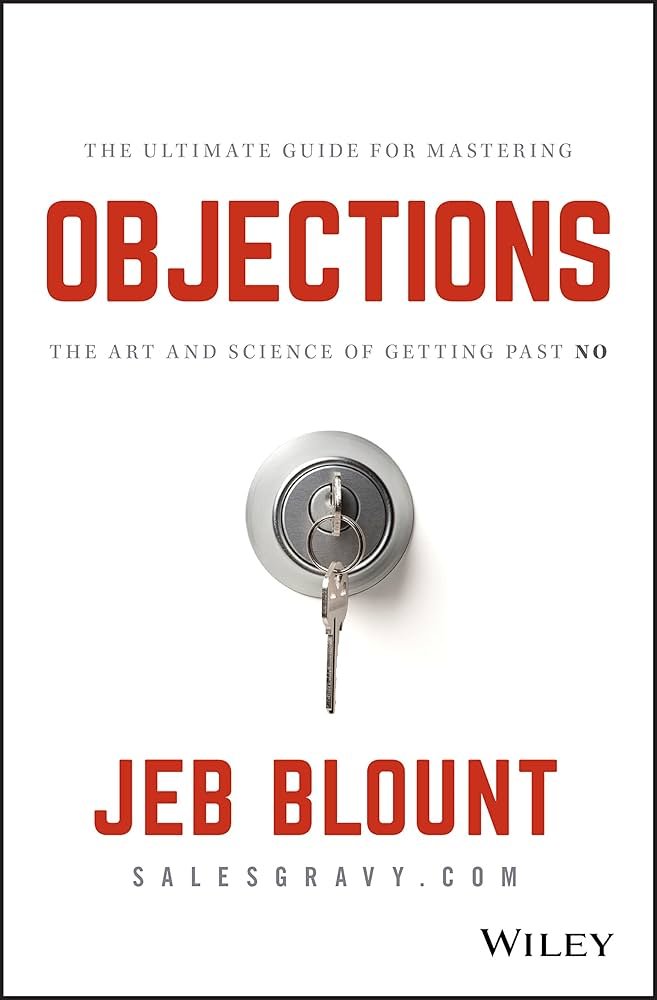
Jeb Blount’s Objections delivers a stark, no-nonsense truth: objections are not obstacles, but rather intrinsic components of every sales conversation. Blount dissects common customer pushback, offering a robust framework for understanding, acknowledging, and effectively navigating these interactions to drive revenue and enhance customer relationships. This book reframes objections from roadblocks to opportunities, asserting that mastery of this skill is paramount for sales success.
In addition to the insightful perspectives offered in Jeb Blount’s “Objections,” readers may find it beneficial to explore another thought-provoking piece that delves into the intricacies of human existence and genetics. The article titled “The Gene: An Intimate History” provides a comprehensive examination of how our understanding of genetics shapes our identity and experiences. For a deeper understanding of this fascinating subject, you can read the article here: The Gene: An Intimate History – Book Review.
Key Insights
1. Objections Are Inevitable and Informative
- The Inevitable Truth: Blount forcefully debunks the myth that a perfectly executed sales pitch eliminates objections. He argues that objections are a natural, often positive, sign of customer engagement and critical thinking. They indicate that the customer is processing information and considering the offer, rather than passively accepting or dismissing it.
- CX Connection: Feedback Loop: For CX leaders, this perspective is invaluable. Customer complaints, service requests, or product feature suggestions are often “objections” in disguise – expressions of unmet needs or perceived shortcomings. By embracing these interactions as informative rather than problematic, CX teams can transform negative feedback into strategic insights for product development, service improvement, and overall customer journey optimization. This proactive approach to “objection handling” in CX reduces churn by addressing pain points before they escalate.
- Operational Efficiency: Root Cause Analysis: Recognizing objections as data points allows operations teams to conduct more effective root cause analyses. Instead of simply resolving an individual customer’s issue, understanding the underlying objection (e.g., “This feature is too complicated,” “Your onboarding process is unclear”) can lead to systemic improvements, reducing the frequency of similar issues and improving operational efficiency across the board.
2. The “Feel, Felt, Found” Framework for Empathy
- Tactical Empathy: Blount champions the “Feel, Felt, Found” method as a powerful empathy-driven response to objections. It involves acknowledging the customer’s feeling (“I understand how you feel“), validating that feeling by sharing that others have felt similarly (“Many of our clients have felt that way”), and then pivoting to a solution or positive outcome (“However, what they found was…”). This structured approach prevents defensiveness and builds rapport.
- CX Connection: De-escalation & Trust: In CX, particularly in support and retention roles, this framework is a game-changer. When a customer expresses frustration or resistance (“Your pricing is too high,” “This problem has taken too long”), immediately validating their emotion (“I can absolutely understand why you’d feel frustrated given the wait time”) disarms them. It shifts the dynamic from an adversarial one to a collaborative problem-solving approach, significantly improving de-escalation success rates and rebuilding trust, directly impacting customer retention.
- Revenue Growth: Overcoming Price Sensitivity: For sales and revenue teams, mastering “Feel, Felt, Found” directly addresses price objections, competitor comparisons, and perceived value gaps. By acknowledging concerns without conceding, sales professionals can guide the customer toward understanding the long-term value, ultimately converting more leads and increasing average deal size.
3. Micro-Commitments & Incremental Progress
- The Power of Small Yeses: Blount emphasizes that successful objection handling often isn’t about immediate, grand solutions, but rather about securing micro-commitments. Each successfully handled objection should lead to a small step forward – gaining agreement on a minor point, scheduling the next touchpoint, or obtaining additional information. These small victories build momentum toward the ultimate goal.
- CX Connection: Churn Prevention: When customers express dissatisfaction or consider churning, CX teams can use micro-commitments to keep them engaged. Instead of trying to instantly resolve all issues, focus on securing agreement on small, actionable steps: “Can we agree to a 15-minute call tomorrow to review your account?” or “Would you be open to trying this one feature for the next week?” Each ‘yes’ increases the likelihood of full retention.
- Strategic Planning: Phased Implementation: For strategists, the concept of micro-commitments applies to internal stakeholder management and project implementation. When introducing a new initiative or significant change, anticipate and address objections in stages. Secure agreement on foundational principles, then on pilot programs, and then on broader rollout. This phased approach reduces resistance and improves the success rate of strategic endeavors.
4. The Objection-Handling Pyramid: Structure for Success
- Systematic Approach: Blount introduces a hierarchical model for objection handling, starting with active listening and clarifying the objection, then validating and neutralizing, and finally providing a solution or moving to the next step. This structured approach ensures no critical step is missed and prevents reactive, ad-hoc responses.
- Operational Efficiency: Standardized Playbooks: CX and sales operations can leverage this pyramid to develop standardized playbooks for common objections. By providing clear, step-by-step guidance, teams can respond consistently and effectively, reducing resolution times, improving first-contact resolution rates, and ensuring a uniform, high-quality customer experience. This standardization reduces training overhead and empowers frontline teams.
- Leadership Development: Coaching & Mentoring: For leaders, the pyramid provides a powerful framework for coaching and mentoring sales and CX professionals. It offers a diagnostic tool to pinpoint exactly where an individual might be faltering in their objection handling – are they failing to listen? Are they not validating? Are they jumping to solutions too quickly? This structured feedback leads to more targeted and effective performance improvement.
Practical Application

- Immediate CX Playbook Enhancement: Mandate the “Feel, Felt, Found” framework for all customer-facing teams (support, success, account management) dealing with complaints or resistance. Develop a concise cheat sheet with common customer sentiments and validated responses, ensuring that every interaction starts with empathy and validation. This will immediately improve de-escalation success and customer sentiment scores.
- Sales Pipeline Review with an “Objection Lens”: For your next sales pipeline review, go beyond deal stage and examine the specific objections encountered in stalled deals. Implement a “next micro-commitment” analysis for each opportunity – what is the smallest, easiest ‘yes’ we can get from the customer to move this forward? This shifts focus from closing the entire deal to securing incremental progress, increasing conversion rates.
Final Verdict

Who must read this: Every sales leader, individual sales contributor, customer success manager, and CX leader. If your role involves persuading, influencing, or retaining customers, the principles in this book are fundamental to your success. Executives grappling with customer churn, declining sales, or internal resistance to change will also find immense value in understanding the psychology and tactics of objection handling.
Who can skip it: Individuals in roles with absolutely no direct customer or stakeholder interaction, or those who believe that perfect products eliminate all customer pushback. If you thrive on avoidance rather than engagement, this book is not for you.
Bottom-line rating: 9.5/10. Objections is a masterclass in realistic, empathetic, and effective customer engagement. Blount’s direct style cuts through fluff, offering actionable strategies that will immediately impact revenue, retention, and operational effectiveness. It’s not just about overcoming “no”; it’s about building stronger relationships by skillfully navigating resistance.
FAQs
What is the book “Objections” by Jeb Blount about?
The book “Objections” by Jeb Blount is a guide to overcoming objections in sales. It provides strategies and techniques for handling objections effectively and closing more sales.
Who is the author of “Objections”?
The author of “Objections” is Jeb Blount, a sales acceleration specialist and the CEO of Sales Gravy, a global sales training organization.
What are some key takeaways from “Objections”?
Some key takeaways from “Objections” include understanding the psychology behind objections, learning how to anticipate and preempt objections, and developing the confidence to handle objections effectively.
Who is the target audience for “Objections”?
The target audience for “Objections” is sales professionals, including sales representatives, account executives, and sales managers, who want to improve their objection-handling skills and increase their sales success.
Where can I purchase “Objections” by Jeb Blount?
“Objections” by Jeb Blount is available for purchase online through various retailers, including Amazon, Barnes & Noble, and the author’s website. It is also available in e-book and audiobook formats.