Executive Summary
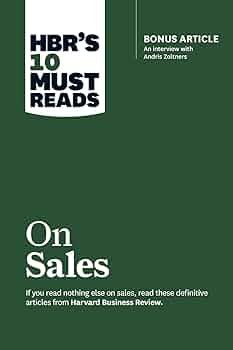
This curated collection transcends typical sales advice, offering a strategic playbook for executives to fundamentally re-engineer their sales organizations for sustained growth and profitability. It dissects the complex interplay between sales strategy, customer value, and organizational execution, providing a roadmap for converting transactional interactions into deeply embedded, value-driven partnerships. Leaders seeking to elevate sales from a departmental function to a core strategic advantage will find this compilation indispensable.
In addition to the insightful perspectives offered in HBR’s 10 Must Reads on Sales, readers may find value in exploring related strategies for product development and market alignment. A particularly relevant article is “The Road to Building Product Roadmaps,” which delves into the essential steps for creating effective product roadmaps that align with sales strategies and customer needs. This resource complements the sales-focused insights from Kotler, Zoltners, Goyal, and Anderson by providing a comprehensive framework for integrating sales efforts with product planning. For more information, you can read the article here.Key Insights
- Strategic Sales Specialization as a Revenue Driver (Rather Than Cost Center): This collection powerfully argues against a one-size-fits-all sales approach. Instead, it advocates for specialized sales forces meticulously aligned with specific customer segments, product complexities, and sales cycle stages. For CX leaders, this means understanding that exceptional customer experience often begins with a tailored sales journey. When sales teams are specialized to solve particular customer problems, they not only close more deals but also initiate a superior customer experience from the very first interaction. This specialization drives higher conversion rates and, critically, lays the groundwork for improved customer retention as expectations are set more accurately and value is articulated more clearly from the outset. Operational efficiency is enhanced as reps focus their expertise, reducing misaligned efforts and shortening sales cycles.
- The Shift from Product-Centric Selling to Value Co-creation: A recurring theme emphasizes moving beyond merely pitching product features to actively collaborating with customers to co-create solutions that deliver measurable value. This resonates deeply with modern CX principles, where understanding the customer’s business challenges and helping them achieve their goals is paramount. For CX and revenue growth, this insight is transformative: when sales acts as a strategic partner, deeply embedding themselves in the client’s operations and contributing to their success, the relationship transcends a vendor-buyer dynamic. This leads to increased customer loyalty, higher lifetime value, and opens doors for expansion within the client’s ecosystem. It positions the sales organization as a critical component of the customer’s success, directly impacting retention and advocacy.
- Optimizing Sales Force Structure for Profitability and Efficiency: The book provides frameworks for designing sales territories, compensation plans, and organizational structures that maximize both sales effectiveness and cost efficiency. For operators, this means rigorously analyzing current sales models to identify areas of redundancy, misalignment, or underperformance. By optimizing territory design and compensation, companies can motivate the right behaviors, reduce travel costs, and ensure that high-potential accounts receive adequate coverage, directly contributing to revenue growth and operational efficiency. Moreover, a well-structured sales force can more effectively manage customer expectations, leading to fewer post-sale issues and a smoother transition to customer success teams, thereby boosting CX.
- Leveraging Data and Metrics for Predictive Sales Management: Several articles stress the importance of robust data analytics in sales management, moving beyond lagging indicators to proactive, predictive insights. This is critical for executive decision-making. By analyzing sales performance data, customer churn rates, and engagement metrics, leaders can identify patterns, forecast future demand, and pinpoint areas for coaching or strategic intervention before problems escalate. This directly impacts revenue growth by allowing for agile adjustments to sales strategy and resource allocation. For CX, it means anticipating customer needs and potential pain points, enabling a more proactive and personalized customer journey, ultimately enhancing retention.
Practical Application
- Conduct a Sales Specialization Audit: Immediately assess your current sales structure against your top 3-5 customer segments and product lines. Identify where a generalist approach is creating friction or missed opportunities. Pilot a specialized sales unit for a high-value segment or complex product, measuring its impact on conversion rates, deal size, and initial customer satisfaction scores. This provides concrete data on the ROI of specialization.
- Redesign a Key Sales Compensation Plan for Value Co-creation: Choose one sales team (e.g., strategic accounts, enterprise sales) and revise their compensation structure to heavily incentivize metrics beyond just “closed deals.” Incorporate elements like customer adoption rates, customer lifetime value (CLTV), successful implementation of value-added services, or documented customer success stories. This shifts behavior from transactional selling to long-term partnership building, directly impacting customer retention and fostering a CX-first sales mindset.
Final Verdict
Who Must Read This: CEOs, CROs, CMOs, and C-level executives grappling with stagnant sales, high churn, or ineffective sales investments. This is also critical for senior sales VPs and directors tasked with transforming their organizations from reactive order-takers to strategic growth drivers. Anyone looking to bridge the gap between sales, marketing, and customer success should consider this mandatory reading.
Who Can Skip It: Junior sales reps looking for tactical closing techniques or individual contributor best practices. This book is about orchestrating the sales engine, not solely operating one. Those comfortable with status quo sales operations will also find its strategic imperative jarring.
Bottom-Line Rating: 9.2/10 – A masterful collection that redefines sales leadership for the modern enterprise.
In addition to the insights provided in HBR’s 10 Must Reads on Sales, readers may find value in exploring the article on Euclid’s Window, which delves into the historical and mathematical significance of geometry in shaping our understanding of the world. This article offers a fascinating perspective that complements the sales strategies discussed by Philip Kotler and his co-authors. For more information, you can check out the article here.Deep Dive into Strategic Sales Excellence
This Harvard Business Review compilation isn’t just another book on sales; it’s a strategic framework for rethinking and rebuilding the sales function from the ground up. It’s an essential read for executives who understand that sales is not merely an execution arm but a strategic lever that drives revenue, shapes customer relationships, and provides critical market intelligence. The selected articles, penned by luminaries like Philip Kotler, Andris Zoltners, and James C. Anderson, eschew quick-fix solutions in favor of robust, research-backed methodologies designed for sustainable impact.
The Evolution of Sales: From Transaction to Transformation
The central narrative woven through HBR’s 10 Must Reads on Sales is the undeniable shift in the sales paradigm. Gone are the days when a charismatic salesperson could consistently succeed by simply pitching product features. The modern customer—be it a B2B procurement officer or a sophisticated B2C buyer—is more informed, demanding, and discerning. They seek partners, not just providers. This collection dissects this evolution, presenting actionable strategies for sales organizations to adapt and thrive in this new landscape.
Understanding the Modern Buyer
The articles consistently highlight the increased complexity of buying decisions, particularly in B2B environments. Decision-making units are larger, buying cycles are longer, and the demand for demonstrable ROI is higher. This necessitates a sales approach that moves beyond superficial engagements, requiring reps to become expert consultants capable of articulating and quantifying value. For CX leaders, this underscores the importance of a seamless journey from initial sales engagement through to post-purchase support, as the seeds of customer satisfaction are often sown long before a contract is signed. When sales deeply understands the customer’s context and pain points, the likelihood of a successful long-term relationship, and thus high customer lifetime value, significantly increases.
The Imperative of Value Selling
A core tenet reinforced throughout the book is the transition from “product-centric” to “value-centric” selling. This isn’t just about listing benefits; it’s about helping customers recognize, measure, and realize the economic, strategic, or operational value that a solution provides. James C. Anderson’s work, in particular, emphasizes the power of “value propositions” – meticulously crafted arguments that clearly articulate the differentiated value an offering delivers relative to alternatives. For revenue growth, this is profound: when sales can precisely quantify the return on investment for a client, pricing pressure often recedes, and deal sizes expand. For CX, a strong value proposition ensures that customer expectations are set accurately and that the perceived value aligns with the delivered value, reducing churn and increasing advocacy.
Crafting a High-Performance Sales Organization
The book doesn’t just focus on the individual sales act; it zooms out to provide a holistic view of building and managing an entire sales ecosystem. This involves strategic considerations around structure, talent, and incentives.
Sales Force Design and Specialization
One of the most impactful themes is the strategic imperative of sales force specialization. The idea that a single sales team can effectively serve all customer segments, sell all products, and manage all stages of the sales cycle is debunked. Instead, the book champions a segmentation strategy where sales roles are specialized based on:
- Customer type: e.g., enterprise, mid-market, SMB, key accounts.
- Product complexity: e.g., simple transactional products vs. complex solutions.
- Sales cycle stage: e.g., lead generation, new business acquisition, account management, customer success.
This specialization isn’t just about efficiency; it’s about effectiveness. A specialized rep develops deeper expertise in their niche, speaks the customer’s language more fluently, and can deliver more tailored solutions. This directly correlates with higher win rates, larger deal sizes, and, crucially, a superior initial customer experience. From an operational efficiency perspective, it reduces wasted effort by ensuring reps focus on areas where they are most impactful.
Performance Management and Compensation Alignment
The articles delve into the critical role of performance metrics and compensation plans in shaping sales behavior. It argues that compensation should not just reward closed deals but should align with strategic objectives such as profitability, customer retention, and new market penetration. Misaligned compensation can lead to perverse incentives, such as selling to unsuitable customers who churn quickly, or discounting too aggressively, eroding margins. Executives are challenged to move beyond simple revenue targets to incorporate metrics that reflect the long-term health of customer relationships and the profitability of sales. This perspective is vital for CX, as compensation structures that reward customer satisfaction or successful product adoption can transform sales reps into de facto customer success advocates, ensuring a smoother transition and higher retention.
Data-Driven Sales Leadership and Strategic Imperatives
In an era defined by data, the collection emphasizes the shift from intuitive sales management to analytical, data-driven leadership. This means leveraging sales data not just for reporting, but for predictive insights and strategic decision-making.
Analytics for Predictive Insights
The book champions the use of sophisticated analytics to understand sales trends, predict future performance, and identify potential problems before they materialize. This includes analyzing:
- Sales funnel metrics: Conversion rates at each stage, deal velocity, average deal size.
- Customer data: Churn rates, customer lifetime value, product adoption, engagement levels.
- Sales rep performance: Activity metrics, quota attainment, average sales price, profitability per deal.
For executives, this data provides the intelligence needed to allocate resources more effectively, identify training gaps, refine sales processes, and even inform product development. For revenue growth, predictive analytics allow for more accurate forecasting and proactive interventions to hit targets. For operational efficiency, it pinpoints bottlenecks and areas where automation or process improvements can yield significant returns.
Integrating Sales with the Broader Enterprise
A powerful underlying message is that sales cannot operate in a silo. Its success is intrinsically linked to marketing, product development, finance, and, critically, customer service and success. The book indirectly advocates for a more integrated go-to-market strategy where sales is seen as a crucial interface between the customer and the entire organization. This means:
- Sales-Marketing Alignment: Ensuring that marketing campaigns generate high-quality leads for sales and that sales provides valuable market feedback to marketing.
- Sales-Product Synergy: Allowing sales insights into customer needs and competitive offerings to inform product roadmaps.
- Sales-CX/Customer Success Handover: Establishing clear processes for transitioning customers from sales to post-sale support, ensuring continuity and reinforcing value.
This integration is fundamental for robust CX. When sales, marketing, and customer success teams are aligned, the customer experiences a cohesive, consistent, and value-driven journey from initial awareness through to long-term partnership. This holistic approach is a cornerstone of sustainable revenue growth and exceptional customer retention.
In conclusion, HBR’s 10 Must Reads on Sales is not for the faint of heart or those seeking quick hacks. It is a strategic treatise for leaders committed to fundamentally re-engineering their sales organizations to meet the demands of the modern customer and the competitive landscape. Its insights are timeless, its advice is actionable, and its impact, when properly applied, can be transformative for any enterprise striving for sustained growth and customer delight.